
Thailand ranks 3rd in ASEAN for highest e-waste generation
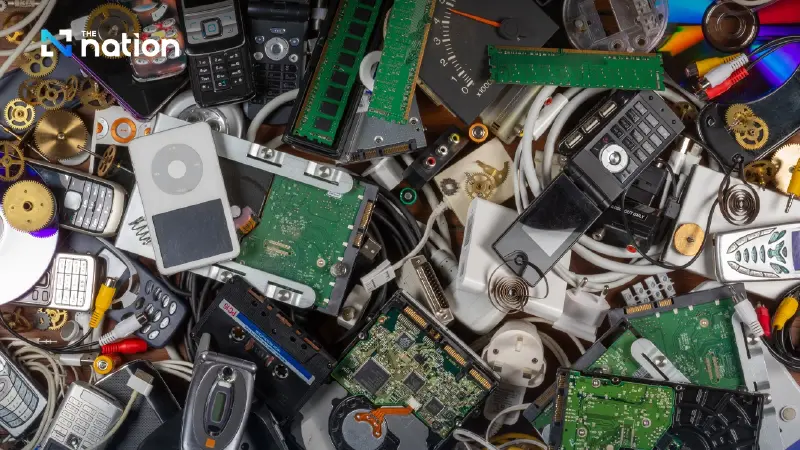


Thailand produces 439,000 tonnes of electronic waste each year, behind Indonesia and the Philippines, as the region’s e-waste climbs to 12.3 million tonnes.
When it comes to “Zero Waste,” many people still wonder whether separating rubbish really makes a difference - or if, in the end, everything simply gets mixed again. The answer, according to Saichon Supmakudom, head of corporate communications and public affairs at Advanced Info Service (AIS), is no.
Separated waste does retain value, and collection agencies do sort it again at the destination. Waste separation not only reduces global warming but also ensures recyclable materials are put to use.

The real danger, Saichon warned, lies in failing to separate electronic waste. E-waste is often contaminated with toxic chemicals, and when it is disposed of incorrectly, those poisons linger in soil, water and plants for generations.
Global projections paint a grim picture: e-waste is expected to rise to 72 million tonnes by 2030 and 110 million tonnes by 2050. In 2024, the figure stood at 62 million tonnes, but only 22% was properly treated.
In Southeast Asia, Thailand ranks third in e-waste generation, producing 439,000 tonnes annually. Indonesia tops the list with 1.89 million tonnes, followed by the Philippines at 537,000 tonnes. The ASEAN region as a whole produces 12.3 million tonnes, while across Asia the total reaches 25 million tonnes.

Improper disposal methods, such as landfill dumping or incineration, are a major source of long-term contamination of soil and water. Statistics show that only 10% of waste is collected each year, leaving 90% unaccounted for and dispersed into the environment.
In response, Thailand’s two major mobile operators, AIS and True Corporation, have launched ongoing campaigns to collect and recycle e-waste. Working with public and private partners, they provide collection boxes for items ranging from mobile phones to small household appliances. The waste is then sent to specialised facilities to ensure it is treated correctly, to reduce or ultimately eliminate it.
