
Earth hits hottest level in 125,000 years
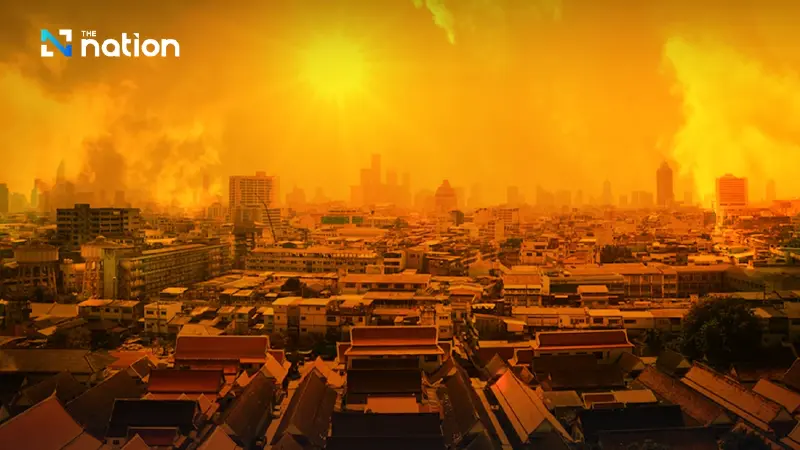


A global study finds 2024 was hotter than the peak of the last Ice Age, with record-breaking heat, ocean warming, and ice loss driving Earth toward irreversible tipping points.
A new report led by researchers from Oregon State University and Germany’s Potsdam Institute for Climate Impact Research (PIK) has found that 2024 was likely hotter than any period since the last Ice Age, which ended about 125,000 years ago.
The team tracked 34 “vital signs” of the planet—including global temperature, greenhouse gas levels, ice loss, and sea-level rise—to assess the Earth’s health. The findings expand on a framework first introduced in 2020 by William Ripple and colleagues, now endorsed by nearly 15,800 scientists worldwide who have declared a global climate emergency.
“We are seeing record-breaking planetary vital signs, surface temperatures, ocean heat content, sea ice loss, and tree cover decline due to wildfires,” said Johan Rockström, PIK director and co-author of the study published in BioScience.
Record-breaking heat and emissions
Global surface temperatures in 2024 surpassed levels seen during the last interglacial period. The decade 2015–2024 was the hottest on record, according to the World Meteorological Organisation.
By mid-2025, Earth’s surface temperature had risen 1.54°C above pre-industrial averages, the second-highest in recorded history. Rising greenhouse gas emissions from fossil fuel use continue to accelerate long-term warming trends.
Atmospheric concentrations of carbon dioxide, methane, and nitrous oxide all hit record highs in 2025. In May 2025, CO₂ levels at Hawaii’s Mauna Loa Observatory surpassed 430 parts per million, the highest in millions of years.
Meanwhile, extreme heat days reached a record high in 2024, with the frequency of temperatures above the 90th percentile of 1961–1990 averages spiking globally.
Oceans and polar ice at breaking point
Ocean heat reached unprecedented levels in 2024, triggering the largest coral bleaching event ever recorded, affecting 84% of the world’s reefs between January 2023 and May 2025.
The Global Tipping Points 2 report, published by researchers at the University of Exeter, warned that warm-water coral ecosystems vital for fisheries and coastal livelihoods may have passed a critical threshold, risking permanent collapse.
Wildfire-related deforestation also hit record highs, with tropical forest fires increasing 370% in 2023, releasing vast amounts of carbon and destroying biodiversity.
The Arctic and Antarctic continued to melt at alarming rates, with Arctic sea ice shrinking to 4.28 million square kilometres, among the lowest levels ever recorded. Greenland lost 5,540 gigatonnes of ice, while Antarctica shed 2,660 gigatonnes, accelerating sea-level rise.
Glaciers worldwide are thinning rapidly, and scientists warn that Greenland and West Antarctica’s ice sheets may be approaching irreversible tipping points, potentially adding several metres to global sea levels.
Fossil fuels still dominate
Despite a 16.4% rise in solar and wind energy use in 2024, fossil fuel consumption remains 31 times higher. The year saw record use of coal, oil, and natural gas, with energy-related emissions reaching 40.8 gigatonnes of CO₂ equivalent.
The top five greenhouse gas emitters were China (30.7%), the United States (12.5%), India (8%), the European Union (6.1%), and Russia (5.5%), together accounting for nearly two-thirds of global emissions.
Approaching irreversible tipping points
The report warns that several planetary systems—including ice sheets, permafrost, and tropical forests—are nearing irreversible tipping points. Crossing these thresholds could trigger self-reinforcing feedback loops, accelerating global warming and pushing Earth into a potential “Hothouse” state.
Global temperatures have risen faster over the past 50 years than at any time in the past 2,000 years. If trends continue, the planet could warm by up to 3.1°C by 2100, according to the UN Environment Programme.
“The escalating climate crisis is destabilising the Earth’s critical operating systems—from ocean currents to global water supplies,” Rockström said. “But our study also shows that decisive action can still stabilise the planet.”
Lead author William Ripple stressed the urgency of strong, immediate climate action:
“Effective mitigation strategies are available, affordable, and urgently needed. Every fraction of a degree we prevent from warming matters—for humanity and for all ecosystems.”
The authors call for a rapid phase-out of fossil fuels, massive investment in renewable energy, and the protection of natural carbon sinks such as forests and wetlands. To limit catastrophic impacts, renewable energy must account for 70% of global electricity generation by 2050, they warn — or the world will face higher costs, harsher climate extremes, and irreversible damage.
Krittapol Sutheepattarakool
