
Thailand regulates hydrogen fuel status for control and usage
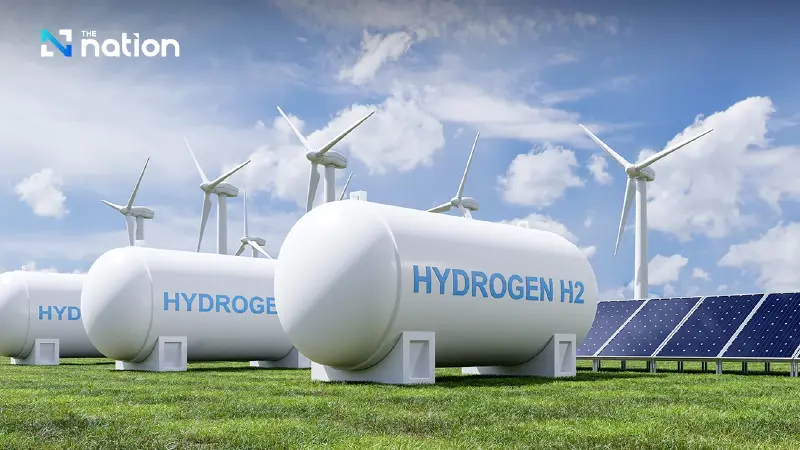


Thailand sets legal status for hydrogen and ammonia fuels. New usage regulations arrive by 2027, as International Energy Agency data shows growing demand and ASEAN supplies.
- Thailand's Ministry of Energy has officially designated Hydrogen Fuel and Ammonia Fuel as "fuel oils" under the Fuel Oil Control Act B.E. 1999.
- This reclassification is intended to establish a legal framework for creating safety regulations governing the use of hydrogen and ammonia as fuel.
- The regulations will specifically target the use of these fuels in electricity generation, industrial heating, and the transport sector.
- A timeline has been set to draft legislation, starting from 2026-2027 to define controlled businesses (storage, transport, stations) and from 2027-2029 to regulate their engineering safety and environmental aspects.
Forecasts from the International Energy Agency (IEA) indicate a significant surge in global hydrogen demand, expected to reach approximately 130 million tonnes by 2030, a 45% increase from 2023, and climbing further to 430 million tonnes by 2050.
This trajectory clearly signals the onset of the "hydrogen era."
In a move aligning with the government's clean energy and carbon reduction policy, Uttapol Rerkpiboon, Minister of Energy, signed a Ministerial Announcement on October 31, 2025.
This declaration designates Hydrogen Fuel and Ammonia Fuel as "fuel oils" under the Fuel Oil Control Act 1999.
The purpose of this announcement is to pave the way for issuing safety regulations to govern the use of hydrogen and ammonia, specifically when utilised as fuel for electricity generation, industrial heating, and the transport sector.
Timeline for Regulatory Implementation
Sarawut Kaewtathip, Director-General of the Department of Energy Business (DOEB), outlined the next steps for drafting the necessary legislation:
Fiscal Year (FY) 2026 – 2027: The DOEB will draft legislation to define the types of controlled businesses under its supervision. These will include:
- Hydrogen storage depots
- Pipelined hydrogen transportation systems
- Hydrogen transport tanks
- Hydrogen service stations
- Facilities using hydrogen and ammonia
FY 2027 – 2029: Further draft legislation will focus on regulating the engineering safety and environmental aspects for each business type to ensure the safe and sustainable use of hydrogen and ammonia fuels.

According to the IEA's Global Hydrogen Review 2025, global hydrogen demand grew to nearly 100 million tonnes in 2024, a 2% increase from 2023, consistent with overall energy demand growth.
This increase was driven by established applications in sectors like oil refining and industry. Demand from new applications accounted for less than 1% of the total, concentrated almost entirely in biofuel production.
Emissions and Low-Carbon Production
A major concern remains that the vast majority of hydrogen supply is still emissions-intensive, primarily sourced from fossil fuels, using 290 billion cubic meters (bcm) of natural gas and 90 million tonnes of coal equivalent in 2024.
While low-emissions hydrogen production increased by 10% in 2024 and is projected to reach 1 million tonnes in 2025, it still accounts for less than 1% of global production.
In ASEAN, hydrogen demand, which reached 4 million tonnes/year in 2024, is largely dominated by the chemicals sector, with supply predominantly derived from natural gas.
Indonesia leads the region, accounting for 35% of the demand, followed by Malaysia, Vietnam, and Singapore.
Nearly half of the demand is for ammonia production, followed by refining and methanol production.
Close to 80% of the demand is met by hydrogen produced from unabated natural gas, with the remainder coming from industrial by-products.
Hydrogen production consumes approximately 8% of the region's total gas supply and contributes over 1% of its energy-related CO₂ emissions.

Vietnam's Green Hydrogen Leadership
The outlook for low-emissions hydrogen projects in Southeast Asia is promising but underdeveloped.
Announced low-emissions hydrogen production could reach 480 thousand tonnes per year by 2030, mainly in Indonesia and Malaysia. However, only 6% of announced production has reached Final Investment Decision (FID), and 60% remains in the early stages of development.
An exception is the 240 MW electrolyser project under construction in Vietnam, one of the few large-scale projects outside of China to reach FID.
Approximately 40% of the output from these ASEAN low-emissions projects is targeted for export, largely as ammonia.
Domestic low-emissions hydrogen demand is mainly concentrated in the industrial and maritime transport sectors, involving ammonia production in Indonesia, Malaysia, and Vietnam.
Country-specific targets include methanol production in Malaysia to reduce natural gas imports, steel production in Indonesia and Vietnam to meet rising regional demand, and marine bunkering in Singapore for international shipping regulations.
The High Cost of Low-Carbon Hydrogen
Data from the World Economic Forum (WEF) indicates that green hydrogen remains significantly more expensive than conventional fuels. Although governments, like Japan, are pushing to reduce costs through scaling and innovation, uncertainty persists.
Recent studies suggest that while hydrogen production might fall to US$2 per kilogram, the cost to abate carbon is high, estimated at US$500 to US$1,250 per tonne of CO₂ equivalent.
Even with falling production costs, the next significant hurdles are the very high expenses associated with transportation and storage.
The transition from importing fossil fuels to importing hydrogen could be a profound energy shift, but its structural ability to mitigate risks is still fragile in several dimensions.
Therefore, Thailand's decision to designate hydrogen as a core fuel is a vital step into the energy future.
