
Beyond the QR Code: Thailand’s Quiet Conquest of Digital Finance
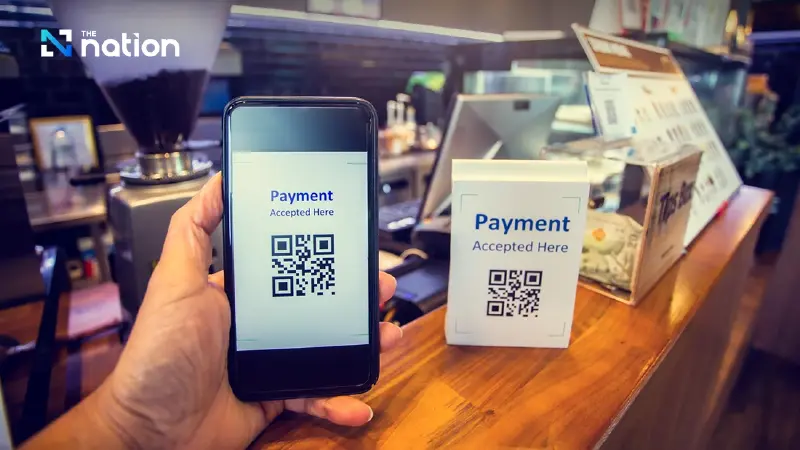


It’s more than just QR codes. Here’s how Thailand quietly became a global leader in digital payments, and what it means for the future of money.
In a remarkable digital shift, Thailand now has more registered mobile banking accounts (107.24 million) than people. This extraordinary saturation is not accidental; it is fuelled by overwhelming consumer demand, with 88% of Thais preferring merchants that accept instant payments over traditional cards. This transformation, powered by the revolutionary PromptPay system, is not merely a domestic success story. It is positioning the nation as a pivotal hub for financial innovation across Southeast Asia and the world.

The PromptPay Revolution: Forging a Cashless Society
At the heart of Thailand’s digital leap is PromptPay, the national real-time payment platform that has become the central engine of its economic transformation. The system’s integration into daily life has been profound; registrations have surged 14% to over 90 million, and it now processes transactions that exceed 74 million every day. This mass adoption has aggressively driven the country's transition to a 'cashless society,' a shift so profound the Bank of Thailand has curtailed the printing of new banknotes. Having achieved domestic dominance, PromptPay is now the foundation for connecting Thailand’s economy with the world.


From Domestic Dominance to Regional Connector
For a tourism-dependent economy, seamless cross-border payments are a strategic necessity. Here, Thailand has taken a decisive lead, establishing a web of cross-border QR payment linkages that serve as a model for regional integration. Key partnerships include:
- Singapore: The world’s first real-time payment linkage, connecting PromptPay with PayNow.
- China: Direct integration with major platforms including Alipay, UnionPay, and WeChat Pay.
- ASEAN and Beyond: Connections with key neighbours such as Malaysia, Indonesia, and Vietnam, as well as economic hubs like Japan and Hong Kong.
These linkages provide tangible benefits for tourists and merchants by enabling secure, low-cost transactions in local currencies at better exchange rates, advancing the goals of the ASEAN Payment Connectivity initiative.
Pioneering the Future of Global Finance
Thailand is graduating from technology adopter to infrastructure pioneer, actively co-creating the next generation of global financial systems. The nation is a key participant in Project mBridge, a groundbreaking pilot for wholesale Central Bank Digital Currency (CBDC) that enables direct, real-time international payments between central banks, eliminating intermediaries and reducing transfer times from days to seconds. Furthermore, through Project Ensemble, the Bank of Thailand is collaborating with Hong Kong to test the tokenization of assets for trade finance—essentially creating secure digital representations of physical goods to streamline commerce—placing it at the forefront of digital asset innovation.

The Road Ahead
Thailand’s journey from a predominantly cash-based economy to a digital payment powerhouse is a testament to strategic vision. While challenges remain, notably closing the digital gap for Small and Medium Enterprises (SMEs), the trajectory is clear. A crucial paradox highlights the task ahead: despite soaring digital transaction volumes, cash still accounts for 78% of total transaction value. Yet, with new digital bank licences on the horizon, this gap presents an immense opportunity. Having mastered the domestic digital landscape, Thailand is now exporting its model of interoperability, positioning itself not merely as a participant in the future digital economy, but as one of its primary architects.
