
BOI ready to adjust EV measures if needed
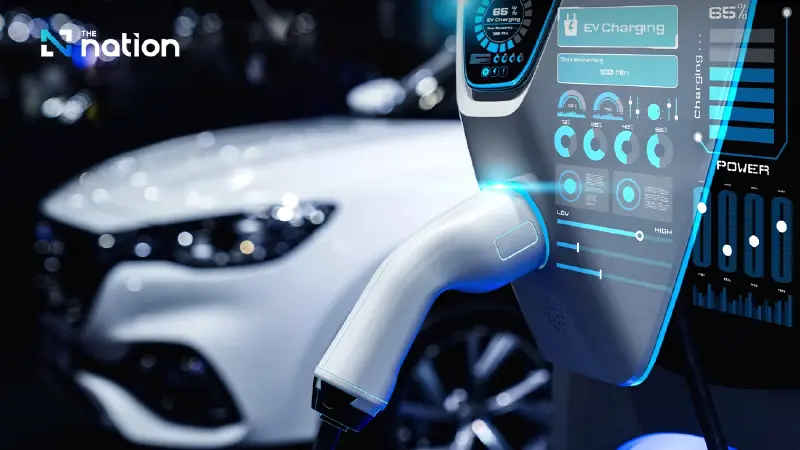


The electric vehicle (EV) industry in Thailand has continuously expanded following government support measures introduced in 2022, in particular, the price subsidy on purchases of EVs of 150,000 baht per car. Understandably, this has led to a significant increase in sales volumes.
Narit Theodsatheerasak , secretary-general of the Board of Investment (BOI), explained that the policy to promote electric vehicles in Thailand is considered a flexible measure that has been adjusted to align with global circumstances. It also involves listening to various opinions from the private sector.
The current EV 3.5 policy, which follows on from the EV 3.0 measures, appears to have been well received and electric vehicle reservations and registrations are continuing apace. However, the policy can be adjusted in the future should there be a need to update it to align with market and investor demands.
Narit also addressed the decrease in electric vehicle registrations last month, pointing out that the registrations in February cannot be directly compared to January, as the latter was the final month of the EV 3.0 policy. This led to a rush in transfers and registrations of a large number of vehicles. It is believed that the registrations in the following months will remain high, especially after the upcoming motor show featuring many new electric vehicle models to be sold in Thailand.

Danucha Pitchayanan, secretary-general of the National Economic and Social Development Council (NESDC), stated that the decrease in EV sales, when compared with the same period of the previous year, was due to exceptionally high sales the previous month driven by continuous government support measures. However, despite the numerical decrease, EV sales in Thailand still maintain a continuous order volume, indicating a sustained interest and demand for electric vehicles in the country.
Large automotive companies and technology firms, such as BMW and Mercedes-Benz, are reassessing their plans regarding EV production and distribution, with some considering phasing out the production and sale of internal combustion engine vehicles.
Apple's decision to cancel its electric vehicle research is attributed to the significant market share that Chinese car manufacturers have captured. The intense competition from these newcomers has made entering this market segment a challenging endeavour for many companies, leading to a reevaluation of their plans.

In addition to price competition, key factors contributing to the current decrease in electric vehicle (EV) prices include the declining cost of batteries. This reduction in battery costs can be attributed to advancements in technology and lower prices of raw materials used in battery production. Moreover, the availability of a large supply of EV batteries in Thailand, due to numerous battery manufacturing facilities established in the country, is also significant. In the future, these factors will likely lead to lower electric vehicle costs, thereby expanding the electric vehicle market.
The development of the electric vehicle (EV) industry in other countries with a significant number of electric cars on the market requires time to enhance supply chains domestically to support market expansion and EV users. Thailand, like other countries, also needs time to promote and push forward readiness in supply chains and various production systems to support continuous long-term growth.
It is undeniable that the automotive industry in every country is heavily reliant on extensive supply chain networks. As electric vehicles (EVs) have fewer components than internal combustion engine vehicles, it is crucial for businesses in the traditional automotive industry to transition to manufacturing components for EVs. This is a complex process that will likely take time to accomplish. However, efforts have begun, and continuous policy improvements are underway to facilitate this transition.
"Currently, BOI and the Ministry of Industry are striving to establish a comprehensive EV supply chain system. This initiative aims to create an ecosystem that supports the use and production of EVs in Thailand. Another approach is to promote the adoption of EVs plus plug-in hybrid, for which state policies must assist local automotive manufacturers in transitioning towards EV or plug-in hybrid vehicle production," Danucha said.
