
Fine Arts Department ready to restore conflict-damaged Prasat Ta Kwai
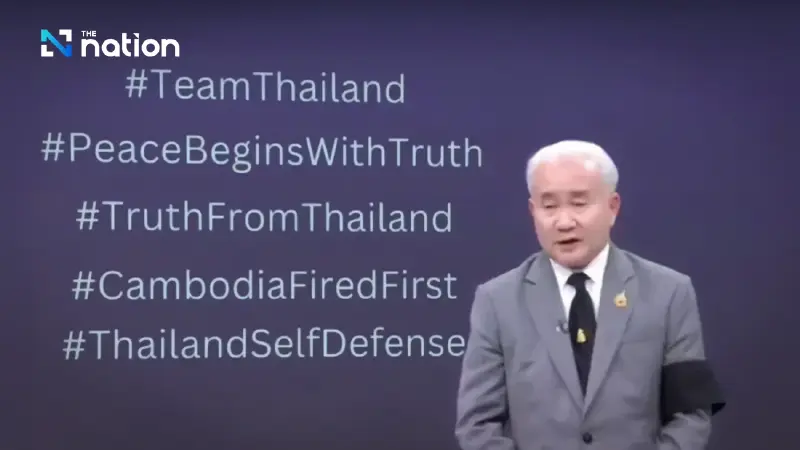


Fine Arts Department chief says Prasat Ta Kwai can be restored once the border situation eases and the site is secured, warning that lost lives cannot be repaired.
Phanombut Chantarachot, Director-General of the Fine Arts Department, said on Friday (December 26) that no archaeological site anywhere in the world should be destroyed because of war. He said countries have therefore agreed that archaeological sites must not be used as strongholds or bases for military operations.
He said there was clear evidence that Cambodia had breached this international norm by using Prasat Ta Kwai in Surin province as an operational site, stockpiling weapons there and laying landmines. As a result of the fighting, he said, Prasat Ta Kwai has been damaged.
Phanombut stressed that the Fine Arts Department is able to restore the site. He compared the situation to the collapse of Phra That Phanom in Nakhon Phanom about 50 years ago due to a natural disaster, noting that the department was able to restore the stupa to a stable, strong and beautiful condition.
He said there were two main constraints on restoring Prasat Ta Kwai. First, the Fine Arts Department has no authority to restore archaeological sites outside Thailand, meaning restoration can proceed only when the site is within Thai territory.
Before that day can come, the military would have to regain control of the area and raise the Thai tricolour at Prasat Ta Kwai; once the flag is flying, the department will be ready to begin restoration, he said.
Second, he said the department has specialised restoration technology and the capability to return damaged archaeological sites to their original condition. However, he added, there is no technology to bring back lives.
“People should distinguish between losses that can be recovered—archaeological sites—and losses that can never be recovered: the lives of soldiers who have been lost. So what can be done to bring this situation to an end as quickly as possible?” he said.
He said once military operations end, the Fine Arts Department’s work can begin immediately.
Under the Culture Minister’s policy, the department has also been instructed to survey all archaeological sites along the border. He said there are at least 30 such sites in the Northeast, and that the conflict has heightened public awareness of the need to protect and restore the nation’s heritage.
Phanombut said the department has sufficient capacity to restore archaeological sites damaged in this conflict, and he said he hoped the situation would end soon.
He added that once restoration at Prasat Ta Kwai is completed, it should serve as a reminder of two things: first, that war benefits no one and destroys both lives and cultural heritage that belongs to humanity; and second, that Thailand will never surrender, and will keep rebuilding and repairing.
He noted that places such as Sukhothai and Ayutthaya suffered damage from wars in the past, yet were later recognised as World Heritage sites.
Phanombut concluded by saying the Fine Arts Department’s duty is to protect archaeological sites nationwide, and that he had never sought to provoke the destruction of any site.
He said he had confidence in the Thai military and Thai soldiers to minimise damage as much as necessary, adding that if heavier weapons had been used, Prasat Ta Kwai could have been far more severely damaged—making the Fine Arts Department’s restoration task even more complex.
“Our job in the Fine Arts Department is to preserve, not to destroy,” he said.
