
Bongbong Marcos: Why are young Filipinos having a change of heart?
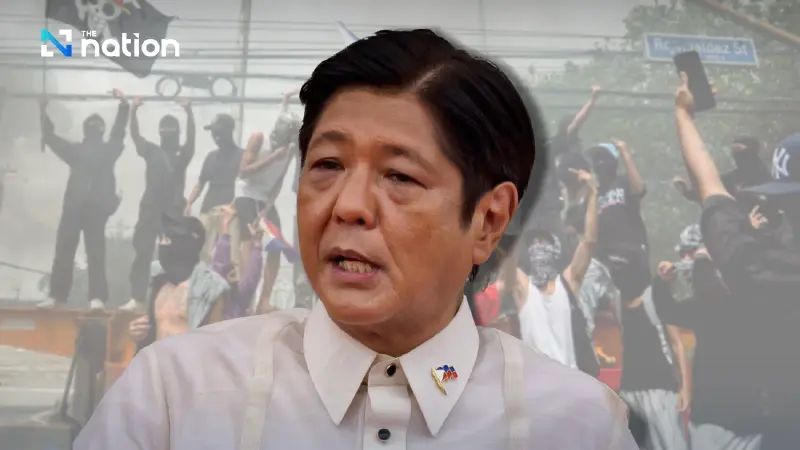


Winning the 2022 election with a modern, media-driven 'New Philippines' image, President Bongbong Marcos now faces a critical challenge as the key youth demographic that powered his victory begins to retreat visibly.
When Ferdinand "Bongbong" Marcos Jr. won the Philippine presidential election in 2022, he was seen as a symbol of change.
Despite being the son of a former dictator, he successfully built his political brand, "Bagong Pilipinas" or "New Philippines," which appealed to a large number of both general voters and young people.
He achieved this through the savvy use of digital media, image management, and modern political marketing. However, just a few years later, the support from the youth, who were once a key base, is visibly wavering.
The Rise of Popularity: "Bagong Pilipinas" and the Image of "New Continuity"
One of Bongbong's key strengths was his ability to create a "new narrative" about Philippine politics. He presented himself not just as the political heir of the Marcos family but as the one who would "seize the opportunity to move the country forward.
" He used digital communication to reach a younger generation through platforms like TikTok, Facebook, and YouTube, with visually appealing online campaigns.
The content was not deeply focused on policy but instead centred on a positive image, modernity, and the hope of a "better Philippines."
For young people who may have felt tired of the political bickering and conflicts of the past, Bongbong was seen as a "new alternative" who could bring stability and change simultaneously.
Why is His Popularity Declining?
However, high expectations have collided with complex political realities. Several factors are causing the younger generation to change their minds and question Bongbong.
1. Cuts to Education and State University Budgets
The budget cuts for State Universities and Colleges (SUCs) have created a significant backlash in Filipino society because these universities are the primary pathway for young people from lower-middle-class and working-class families to access education.
The budget cuts not only mean reduced support for infrastructure and educational resources but also directly affect scholarship programs, tuition fees, and the quality of basic university services.
Many students report that they have to bear higher costs, from increased tuition to living expenses, while their families, who mostly have limited income, are burdened with an unbearable load.
The dreams of many young people who hoped to use education as a ladder to better opportunities have been clearly undermined.
Moreover, these cuts have been interpreted as a sign that the government does not prioritise investment in the younger generation, even though education is a crucial tool for enhancing the country's long-term competitiveness.
Therefore, these reductions are not just a fiscal issue; they send a political message that many young people feel they are being abandoned and not included in the "New Philippines" vision that the government has been promoting.

2. Economic Hardship and the "Job Mismatch"
A critical challenge for young Filipinos is the "job mismatch", a misalignment between the skills learned in education and the demands of the labour market.
While numerous graduates emerge from universities across the nation, many struggle to find work relevant to their field of study.
This often forces them into unrelated jobs, such as service work, part-time positions, or even low-paying and unstable employment.
This problem is intensified as the cost of living in major cities like Manila and Cebu continuously rises, with soaring prices for rent, transport, and food, making already low incomes barely enough to survive on.
Furthermore, the country's long-standing reliance on exporting labour overseas, a fundamental economic structure in the Philippines, reinforces the youth's feeling that the nation cannot create genuine opportunities for them at home.
Many families depend on remittances from members working abroad rather than relying on the government to generate quality jobs domestically.
The issue of disguised unemployment and underemployment has become a clear reflection of policy failure.
For young people, this disconnect isn't just an economic matter; it translates into a feeling that "the government doesn't see our future.
" Investing heavily in education only to be unable to secure a stable career creates deep disappointment. This frustration, in turn, fuels the youth to question the government's ability to build a better future.
3. Perception of Prioritising "Propaganda" Over Actual Policy
Another factor contributing to the decline in Bongbong Marcos's popularity among young people is the perception that his administration prioritises image-building over delivering concrete policies.
A clear example is the rollout of political symbols and ceremonies, such as the “Bagong Pilipinas Hymn and Pledge,” which government agencies and schools were directed to sing or recite during various activities.
These measures were widely criticised as mere propaganda intended to stir up nationalism and create symbolic legitimacy for the government, rather than serving as tangible measures to address economic hardship or improve people's quality of life.
For young people who grew up with comprehensive access to information and are adept at fact-checking online, this emphasis on ritual is seen as "selling a dream" or creating an illusion without solving real problems.
The daily issues they face, such as high tuition fees, difficulty finding jobs, or rising living costs, cannot be fixed with a song or a slogan.
Such actions have only widened the gap between the "government's image" and the "reality of citizens' lives."
This criticism has continuously eroded youth confidence in the administration and created an atmosphere conducive to questioning the government's sincerity in pushing for structural change.
If the administration continues down a path that emphasises image creation over tangible reform, the risk of losing the young voter base will only increase.

Why the Youth's Stance is Shifting?
Viewing the change in attitude among the younger generation in the Philippines through the lens of social movement theory reveals several dimensions.
Their discontent isn't solely rooted in poverty but stems from a feeling that the government promised much but delivered little.
The appealing narrative of "Bagong Pilipinas" is now increasingly perceived as a mere illusion.
Young people use social media as a primary space for following news, criticism, and mobilisation, allowing dissatisfaction to spread rapidly.
Simultaneously, the Philippines retains certain freedoms that allow for public criticism and assembly.
This environment has enabled the youth's discontent to move beyond the digital world and escalate into a force on the streets.
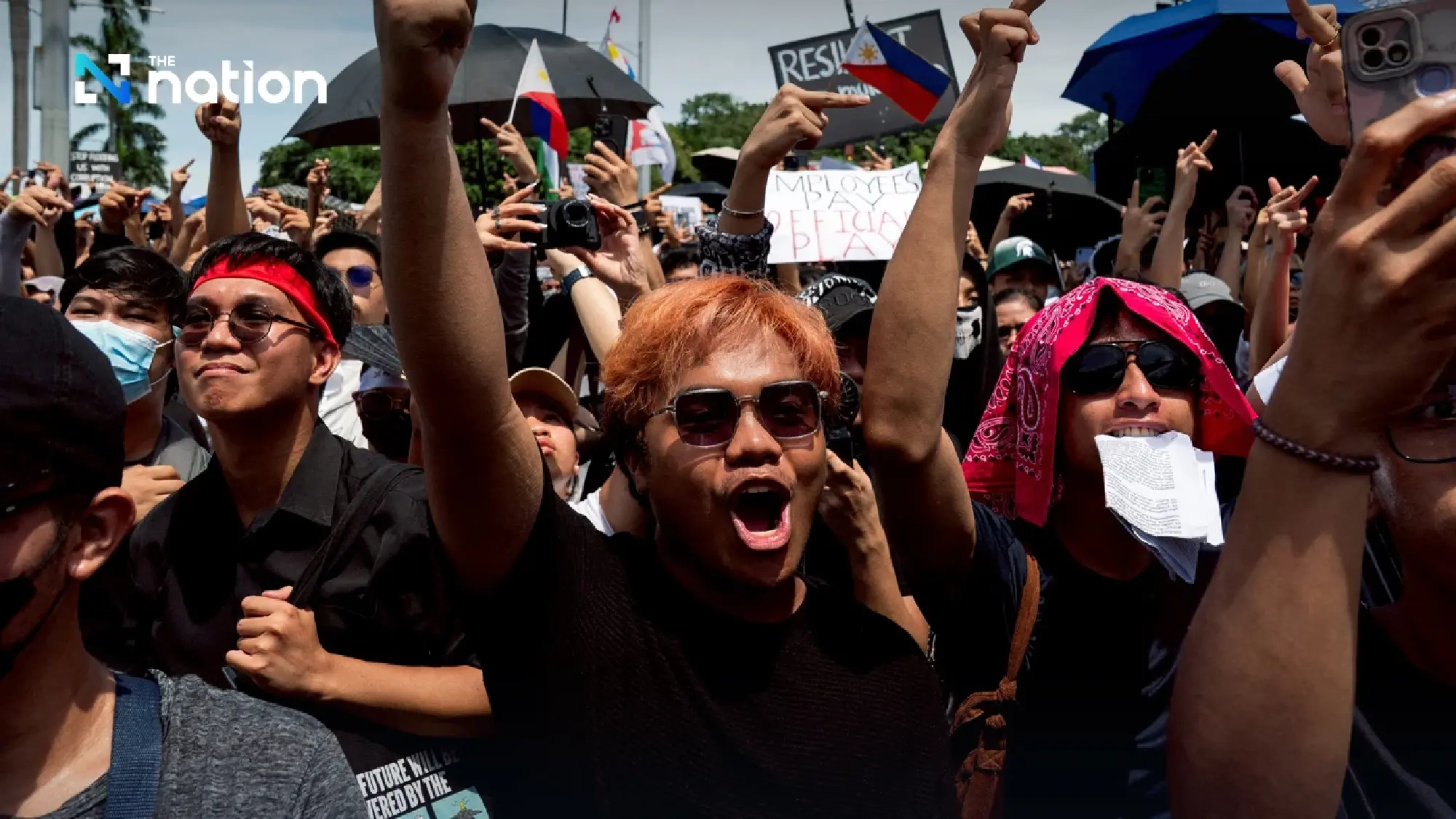
Following the exposure of a massive, multi-billion-dollar corruption scandal involving a flood mitigation project in September 2025, tens of thousands of protestors poured onto the main streets of Manila and other major cities across the country.
The demonstrators included not only students and young people but also religious groups, civil society organisations, and the general public, all enraged by the lack of transparency in budget spending.
This event did more than just underscore the social wound of corruption; it reflected how the youth's disappointment is transforming into a tangible political force on the streets.
Critically, the protest took place on September 21, the anniversary of former President Ferdinand Marcos Sr.'s declaration of martial law in 1972.
This timing gave the movement symbolic power, dramatically asking whether the Philippines was destined to repeat its history.
The Future for Bongbong and the Youth
This trend reflects a critical challenge for the Bongbong administration: maintaining the youth base cannot be achieved through symbolic communication or rituals alone.
It must be addressed by responding to real needs, such as education, stable employment, sufficient income, and genuine political participation.
If the government continues to ignore these demands, the youth may shift their support to the opposition or form new movements outside the traditional party system.
This would constitute significant pressure on the administration and could alter the direction of Philippine politics in the medium to long term.
The Bongbong case demonstrates that appealing to the youth with a positive image and symbolic communication can generate short-term momentum but is unsustainable if not connected to genuine structural change.
When the younger generation feels deceived or disappointed, they don't just withdraw support; they can become a crucial driving force for change.
For the Philippines, the relationship between the government and its young people is therefore a vital test of whether it will truly move toward a "New Philippines," or if it will regress into mere political rhetoric that is soon challenged from the streets.
By Stithorn Thananithichot
Faculty of Political Science, Chulalongkorn University
