
MoU — a memorandum of problems!
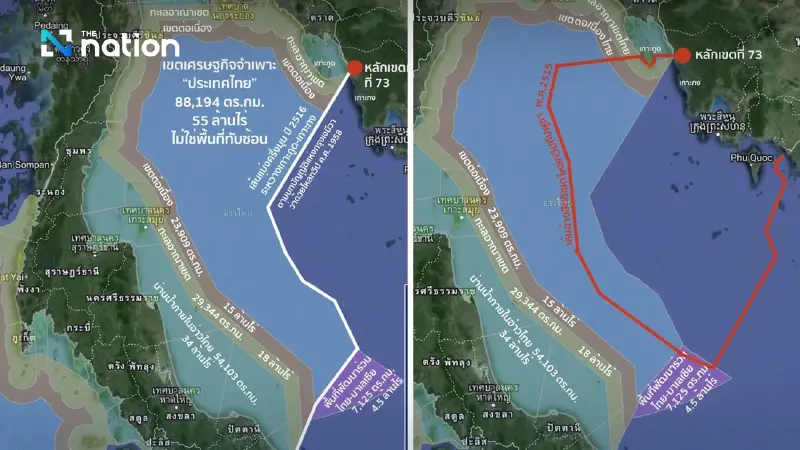


Thailand’s planned referendum on the Thailand–Cambodia MoUs on land and maritime boundaries has sparked nationalist fervour, deepening political and public divides over foreign policy and national sovereignty.
- A proposed public referendum on the Thailand–Cambodia MoUs is considered problematic, as the public is largely unfamiliar with the complex foreign policy issues involved, leading to decisions based on emotion rather than informed analysis.
- The surge of nationalism and militarism, promoted by far-right factions, is expected to cause voters to overwhelmingly reject the MoUs in what is being framed as a patriotic act.
- The anticipated rejection of the MoUs creates a significant problem for future negotiations and would likely push the dispute to the International Court of Justice — an outcome that favours Cambodia.
Having taught and worked on foreign policy for many years, I never imagined I would see the day when a Thai government announced a referendum on a foreign policy issue. Traditionally, Thai referendums have focused on constitutional matters.
This time, however, the government has surprised many by holding a referendum on the Thailand–Cambodia Memorandums of Understanding (MoUs) — two agreements signed in 2000 and 2001 concerning the land and maritime boundaries respectively.
Bringing foreign policy into a public referendum may create confusion among voters, as most people are unfamiliar with international issues that feel distant from their daily lives.

The rise of nationalism
This does not mean the government should never consult the public on foreign policy, but a meaningful referendum requires citizens to have at least a basic understanding of the issue. Decisions should be made based on comprehension, not emotion or momentum.
In the current climate of Thai–Cambodian tensions, nationalist sentiment can easily be inflamed. Discontent over Cambodia’s perceived provocations has fuelled public frustration — and whenever Thailand faces disputes with its neighbours, nationalism naturally resurfaces.
Nationalist fervour has also reinforced a growing sense of militarism, with the public showing sympathy for soldiers guarding the border. This sentiment has been amplified by political–military rifts revealed in a leaked audio clip of a conversation between two political leaders at the time.
With nationalism and militarism now surging together, it is almost certain that a referendum on these MoUs would see voters reject them overwhelmingly.

The far-right tide
The rise of nationalism and militarism clearly benefits the far-right faction in Thai politics, which has long taken a hardline stance on Cambodia. Since the Phra Wihan Temple dispute erupted in 2008, this camp has consistently called for the revocation of the MoUs.
Prime Minister’s proposal for a referendum plays neatly into their hands. Given that anti-Cambodian sentiment is running high, the chances of the MoUs surviving are minimal. One can safely predict that the pro-MoU side would lose decisively.
The right-wing movement’s central message is simple: “oppose Cambodia.” In this atmosphere, anyone expressing a dissenting view risks being branded “unpatriotic.” Many will thus vote “no” simply out of a belief that rejecting the MoUs equates to “loving the nation.” As the referendum draws near, expect far-right campaigns to urge people to “tear up the MoU,” while labelling opponents as “traitors.”

The people’s current
Critics of the referendum warn that voters lack sufficient understanding of the two MoUs, each of which will require a separate ballot — one for the 2000 land boundary MoU and another for the 2001 maritime boundary MoU.
The referendum will also coincide with votes on constitutional amendments and parliamentary elections, meaning voters may need to fill out six ballots in total — a recipe for confusion.
This complexity is further compounded by the lack of clear public understanding of the benefits and drawbacks of each MoU. Most voters are likely to cast their ballots under the influence of prevailing nationalist and militarist sentiment rather than informed analysis.
One must also acknowledge the reality that public sentiment has been largely shaped by the “media current” driving society — a current that tends to flow in a distinctly nationalist direction.
Few academics specialise in this issue, and those who do often disagree. Meanwhile, public trust in official information from the Foreign Ministry or the Royal Thai Survey Department is low. Bureaucrats themselves tend to align with political winds, leaving Thailand with no credible “neutral party” on the matter.

Conclusion
All signs point to one outcome — the MoUs will be rejected. Yet this poses a critical question: if the MoUs are scrapped, how will future boundary negotiations proceed? Would the two sides draft new agreements, and who would dare take responsibility for signing them?
Ultimately, repealing the MoUs paves the way for Cambodia’s preferred outcome — taking the dispute to the International Court of Justice. In that sense, “tearing up” the MoUs would mark Cambodia’s victory, achieved with the enthusiastic help of Thailand’s far-right, and facilitated by a government-sanctioned referendum.
