
Caring a big challenge for True Corp
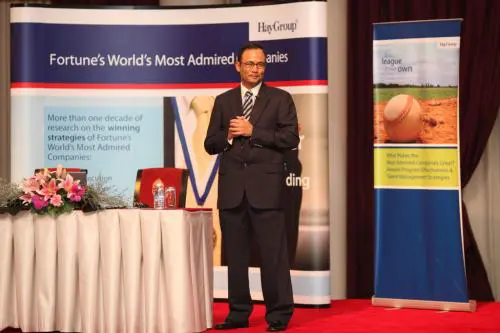


True Corporation's human resources director Thada Savetsila says caring is a big challenge for the diversified telecom company.
Speaking at the “World's Most Admired Companies 2011 Forum”, hosted by consulting firm Hay Group, Thada said everything at True began from “the brand belief”, which banked on a vision of “togetherness”– the convergence of all telecom-related technologies – from fixed-line and mobile phones to Internet access, pay TV and content businesses.
The group also operates its businesses on the basis of four core values: caring, creativity, courage and credibility.
“I sympathise with Khun Supachai Chearavanont [True’s chief executive], because he has no time at all. Now, when we want to talk, we have to converse through SMS. How will he find a way to manage his 18,000 staff and the 63 million Thai people [who are the firm's potential customers]? Caring is a big challenge for our company,” he said.
Thada said paying attention to messages and coming up with actions were important in helping staff and customers to understand that True cared for them. Among various measures, the company has conducted employee-satisfaction surveys every year because it believes that if its staff are happy, customers will also be happy.
“By being proactive, even though Khun Supachai may not have time to meet staff too often, these caring activities help people to engage their hearts,” he said.
Generation-Y employees account for more than half of True's total workforce of 18,000 people. They are multiskilled and can work very quickly, but are impatient. Thada said that to motivate generation-Y staff, companies should provide them with interesting activities that also help them to unite with their colleagues.
To motivate its generation-Y staff, True holds hundreds of “dialogue sessions”, involving staff from middle management to operational levels, at which employees are encouraged to speak up freely about various issues and problems, speaking either as individuals or in groups.
Thada said he took part in these sessions, which were organised around the country, to hear staff feedback for himself, because in Thailand, [written] reports could not be 100-per-cent trusted.
Lack of discipline and envy are among the weaknesses of Thais in general and therefore companies need to employ international systems to “balance” their people management. On the other hand, Thais are good at gathering to help one another in times of need, he said.
At present, in evaluating staff remuneration, value compliance accounts for 10-per-cent weighting, while work performance carries the remaining 90 per cent. To promote corporate values, True is thinking of increasing the weighting of value compliance to more than 10 per cent, Thada said.
