
Indorama Ventures on the acquisition trail in Middle East


Indorama Ventures' group chief executive officer, who regards periods of financial turmoil as the best time to acquire businesses, is taking advantage of the current global woes to pursue a new investment opportunity in the Middle East.
“It offers us an opportunity to get better deals,” Aloke Lohia said in Rotterdam, Netherlands.
Usually, sellers want to close deals quickly during financial-market volatility, said Lohia, who in recent years has aggressively expanded Indorama’s business by buying new factory facilities abroad.
Indorama, listed on the Stock Exchange of Thailand, is one of world’s leading vertically integrated polyester chain producers, manufacturing polyethylene terephthalate (PET), purified terephthalic acid (PTA), polyester and polyester wool.
He said the company was seeking an investment opportunity in the Middle East, in a deal whose size is expected to exceed any of its previous merger-and-acquisition activity.
The next deal could be worth about US$600 million (Bt18.6 billion), with Indorama holding 90 per cent of the shares and local partners investing the remainder, he said.
Cash is not a problem for the deal as the company has about $650 million in hand from previous fund-raising, he added.
The five largest banks in Thailand have also long supported the company, the group CEO said.
He said Indorama had room to expand its borrowing as the current debt-to-equity is only 0.45 time, while the company targets maintaining the ratio at 0.8 time.
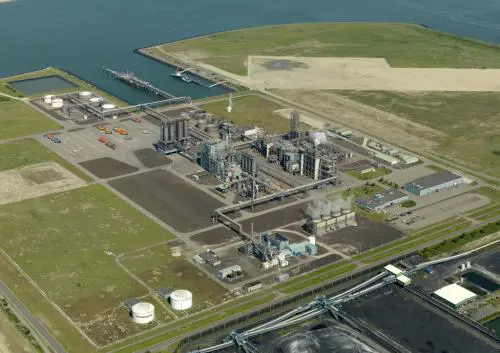
The company also plans to expand the production capacity for PTA and PET at its Rotterdam facilities, which were acquired from Eastman Chemicals Company in 2008, he said during a visit to the site.
He expressed confidence that the company would expand its market share in Europe despite the region’s sovereign-debt crisis.
He said slower economic growth did not adversely affect Indorama’s businesses, since the company’s products are necessities used to produce plastic bottles and textiles.
“So far, PET packaging technology is the cheapest way to produce plastic bottles, and it is environmentally acceptable due to the fact that it can be fully recycled,” said Lohia, adding wryly: “Our risk is people stopping drinking water.”
One of Indorama’s main customers in Europe is Coca-Cola, while in Thailand the company supplies plastic bottles to PepsiCo.
The recent global financial turmoil has, however, hit Indorama’s share price.
“It’s because of poor sentiment in the market,” he said, referring to investors worldwide getting out of equities because of rising fears over the debt crisis in Europe and the threat of a double-dip recession in the United States.
Group revenue is expected to rise 110 per cent this year, he said, against a target of 70 per cent.
The company expects to close a deal soon to acquire Wellman International, an Ireland-based polyester manufacturer and fibre-recycling business that also has facilities in France and the Netherlands. The deal is awaiting completion of the legal process, he said.
The deal to purchase 50 per cent of Polyprima Karyesreska in Indonesia is also expected to be completed this year. The factory, in Cilegon, Banten province, has the capacity to produce 465,000 tonnes of PTA per annum.
Indorama plans to increase the capacity to 500,000 tonnes.
The company aims to be among the world’s top 20 chemical manufacturers in the near future, a sharp rise from its current ranking in the range of 50 to 60, Lohia said.
Indorama’s competitive advantage in having facilities in many countries is that it can more successfully overcome trade barriers, the chief executive added.
