
SEC looks to boost its role
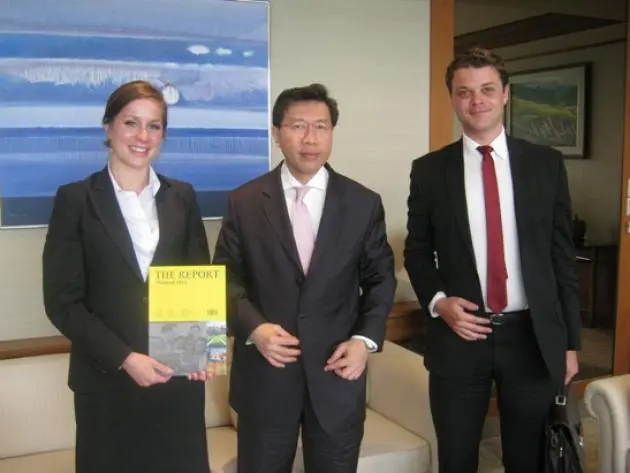


The Securities and Exchange Commission (SEC) is taking on an increasingly significant role as it looks to ensure a balance in regulating and developing the country's fledgling capital markets, according to its Secretary-General Vorapol Socatiyanurak.
In his interview with Oxford Business Group (OBG), he said that the SEC had begun introducing reforms aimed at bringing Thailand’s securities legislation in line with international standards.
He added that the commission had opted for a proactive approach which would allow it to take advantage of the current influx of capital into Thailand and bolster efforts to carve out a niche as a regional centre.
“Thailand is in a good geographical position, connecting neighbouring markets,” he said. “In our vicinity we have half of the world’s population and, with India, China and ASEAN, some of the strongest growth rates around. Thailand is the economic bridge for the whole region.”
The full interview will appear in "The Report: Thailand 2012", OBG’s forthcoming guide on the country’s economic activity and investment opportunities. The Group’s report will include a detailed, sector-by-sector guide for foreign investors, together with a wide range of interviews with the most prominent political, economic and business leaders. It will also include Bank of Thailand Governor Prasarn Trairatvorakul's interview.
Vorapol sees the need for more funds, especially infrastructure development.
“Infrastructure funds allow the private sector to replace spending by the government which can reserve its public funding for priorities such as education system, social welfare, and public healthcare,” he said. “Thailand needs US$3-$4 billion a year to develop infrastructure because of its location as an economic bridge for the region.”
He also highlighted the commission’s decision to pave the way for the introduction of real estate investment trusts (REITs) as an alternative financial instrument for developers seeking project funding. Socatiyanurak said Thailand’s healthy real estate sector could make REITs an attractive option for developers by providing them with more flexibility. “Unlike property funds, REITs allow more flexible investment and leverage,” he said. “The rules should be finalised during 2012.”
