
Asian nations must build resilience: ADB
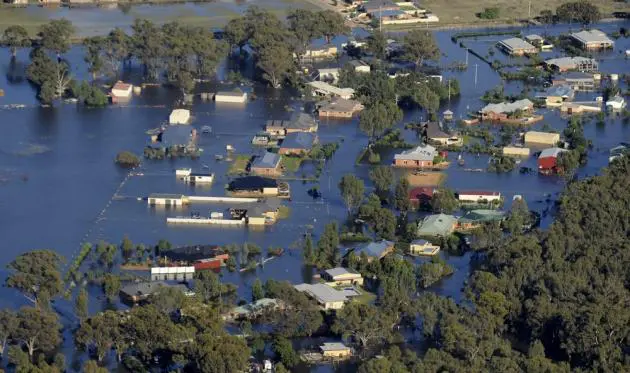


There was a pressing need for Asia-Pacific countries to accelerate efforts to adapt to the impacts of climate change, said Asian Development Bank.
“Public lenders and private investors cannot continue to channel billions of dollars to massive infrastructure projects without factoring in the realities of warmer temperatures, rising sea levels and more violent storms,” said Bindu Lohani, ADB Vice-President for Knowledge Management and Sustainable Development.
In his keynote speech at the Second Asia-Pacific Climate Change Adaptation Forum in Bangkok, he said that resources currently available to “climate proof” roads, sewers, bridges and pipelines are grossly inadequate, much less to improve data collection, early warning systems, and other activities vital to build climate resilient societies.
Latest estimates suggest that effective adaptation will require around US$40 billion per year through 2050 to cope with climate change in the region. In contrast, estimates for 2009-2010 indicated that only $4.4 billion was available for adaptation activities globally.
In 2011, the Asian Development Bank (ADB) approved a record 59 projects supporting environmental sustainability, which amounted to about $7 billion in financing. In 2012, ADB is seeking to mobilise significant funding for climate adaptation to help close regional gaps in knowledge, capacity and finance.
The two-day forum has attracted over 800 participants, including climate experts, development practitioners, policymakers, and members of NGOs and civil society organizations. Recent flooding in Bangkok and surrounding areas has served as a dramatic reminder of the impact of climate change on Asia and the Pacific and the need for urgent action.
The forum is organised by the Asia Pacific Adaptation Network, the Regional Climate Change Adaptation Knowledge Platform for Asia and ADB. ADB and other agencies supporting the forum have emphasised that climate change is a development issue, since poor communities are among the most exposed to climate change, but have the least capacity to deal with the impacts.
This year's forum focuses on "Adaptation in Action", signifying a shift from deliberations to decisions, plans to policies and policies to practices. The two-day event has attracted more than 800 participants, including climate experts, development practitioners, policymakers, members of NGOs and civil society organizations and representatives of youth and the private sector.
The forum will showcase knowledge, practices and experiences, and provide an "interactive space" to promote networking to maximise synergy, stimulate actions and facilitate experiential learning that supports the process of adapting to climate change. The forum will also encourage participants to link local level adaptation initiatives with those at the national and regional levels.
The ADB report, Addressing Climate Change and Migration in Asia and the Pacific will be launched at the Forum.
