
Technology must complement banking services: FIS
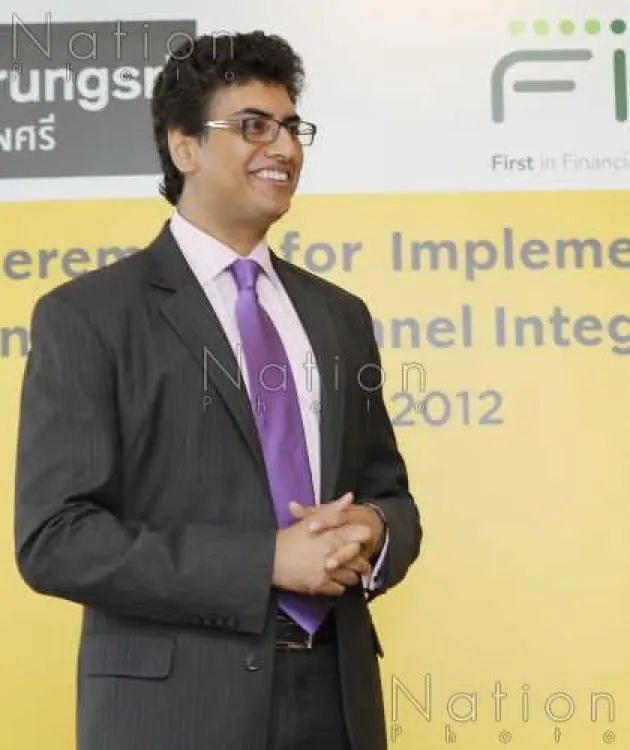


"Technology is nothing without customer benefits" is the advice of an executive of FIS, the world's largest provider of banking and payments technology, to all financial institutions in search of new solutions.
Raja Gopalakrishnan, group managing director for Asia and CEO of the Florida-based FIS, which provides core banking systems to eight Thai banks and the national payment system, sees increasing demand for modern technology. That investment would be worthwhile if the technology can address four main points – accommodating product launches, facilitating the payment system, improving services to customers, and lowering transaction costs, he said.
“Customers are not interested in technology, but in the banks’ offering,” he said during an interview last week. “The end is how banks can come up with flexible products with value for money and can differentiate their services.”
Since the financial crisis, banks’ risk appetites globally have plummeted. They are more concerned about new loans and new businesses. In return, they have reduced spending, with the focus on technology that can enhance their efficiency, help retain customers and promote product cross-selling. “It costs seven to eight times more to get new customers than to retain old ones.”
While demands from banks in matured markets are quite the same, there’s huge demand for new technology by banks in Asia. Banks here are coping with the technology divide, which resulted in two big groups of customers – one preferring traditional services offered by branches, and the young generation who are more familiar with new technology. It is a must for them to look for tailor-made products, which are customised to suit particular targets.
In light of the growing use of smart phones among Asian populations, which is pushing up mobile banking activities, technology is needed to let these banks make better use of electronic data. Technology should be based on the environment – customers and the banking ecosystem.
“I see a huge potential in this market. New technology is emerging with the huge increase of electronic payments, though cheques remain popular in the cash-economy region. Now everybody has mobile phones and smart phones are getting smarter,” he said.
In the future, more channels of mobile banking will emerge.
In this new divisive environment, banks will need to work on branch efficiency and enhancement of personal trust. This requires a mix of traditional and modern technology.
“It’s a must that technology must be tailored to banks’ strategies,” he said. “Like a building, a bank can be a brick and mortar building, which is equipped with a high-speed elevator.”
The company last week introduced its “TouchPoint” suite of branch and channel integration solutions at the Asian Banker Summit. Bank of Ayudhya was the first Thai client for the product, which provides the bank unified access to customer information received by tellers and other channels like ATMs. BAY with a greater focus on retail customers hopes that integrated information will enable to avoid bothering clients by offering them unwanted products and services.
Serving more 14,000 institutions in more than 100 countries, FIS believes that the Asia-Pacific region will be a source of significant growth in the coming years. In 2011, FIS experienced average revenue growth in Asia of 14 per cent.
Besides readiness to serve individual banks in Asia, FIS is now in discussions with all markets in Asean, which are moving towards a central payment network.
Operating ITMX in Thailand, which handles 2 million transactions daily, through over 25 years of presence in Asia, the firm also supports the national payment systems in the Philippines, Vietnam and India.
The integration of payment systems could lead to a cut in regional transaction costs, with eventual benefits to all consumers, he added.
