
Sacking of Piyasvasti stirs doubt, criticism


Play
THAI president turned national carrier's finances around; dismissal doesn't make sense, union says
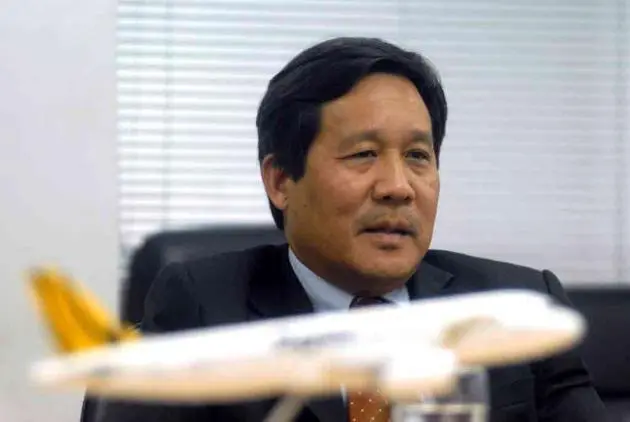
The move by the board of Thai Airways International Plc (THAI) to fire Piyasvasti Amranand as president of the national carrier was greeted with scepticism by the executive, who was appointed to his post during the Democrat government.
“I feel strange. Personally, I remain doubtful about the board’s decision,’’ Piyasvasti said. He has asked for the board to clarify its reasons.
The THAI board’s 15-12 vote put an end to widespread rumours that Piyasvasti would be removed, which started when Yingluck Shinawatra’s coalition government was formed.
The firing is sure to spark controversy in the corporate sector because Piyasvasti had a high key performance indicator (KPI) rating of 4.3 per cent out of 5 per cent for this year, down slightly from last year’s score of 4.6 per cent.
Board chairman Ampon Kittiampon said the reason they discharged Piyasvasti was his lack of ‘‘unity in communication’’ with the board and failure to push ahead some of the airline’s projects. Amphon denied that politics had anything to do with the president’s removal, adding that nine members of the board worked with the Democrat-led government.
Ampon said Piyasvasti had been a capable leader, working to keep THAI successfully ‘‘level’’ as it survived a financial storm of Bt12 billion in losses in 2011. Piyasvasti also oversaw an improvement of the company’s financial structure and launched a fuel-hedging fund to reduce the airline’s costs from rising oil prices.
But Ampon said THAI needed more action on marketing strategy and human resource development and a president who would work more closely with the board to achieve its profit goal of Bt6 billion this year. An additional challenge would be THAI’s launch of its low-cost carrier THAI Smile.
“We part ways peacefully,’’ Ampon said of his company’s former president.
Piyasvasti said the airline’s business performance had been significantly improved during his two years and seven months of heading THAI.
In the first quarter of this year, net profits increased to Bt3.64 billion, up from Bt618 million year-on-year, while its gain from the fuel-hedging scheme was Bt909 million. Overall outlook for the year remains optimistic, thanks to reduced operating costs and improvements in the fleet over the next seven years.
Piyasvasti said his employment contract allowed the board to remove the president without any reason but that it must inform him one month in advance and pay six month’s salary in compensation.
Jamsri Sukchotirat, president of the THAI labour union, said Piyasvasti’s removal did not make sense. She questioned what Ampon meant by “unity of communication”.
Since Piyasvasti started working with THAI, she said he regularly talked to the company’s workers about various issues, especially financial performance and profitability.
“I believe the reason for the removal comes from a conflict between the board’s chairman and the president,” Jamsri said. “The board’s chairman has not cared about the company’s staff. He is unreasonable and self-centred,’’ she said, adding that Piyasvasti’s firing could cause the airline to lose its standing as a listed company.
She said the union would move against the removal, submitting letters today to the ministries of Finance and Transport, and the Office of the Ombudsman to force the board to clarify its reasons. Tomorrow, the union will also submit a petition to Prime Minister Yingluck Shinawatra.
Piyasvasti started working at THAI in October, 2009. He served as Energy minister from 2006 to 2008 and chairman of Kasikorn Asset Management and chairman of the panel of advisers to the CEO of Kasikornbank. Prior to that, he was the secretary-general of the National Energy Policy Council.
In line with employment contract at THAI, he will hold the office of president for one month but without any authority. He will also be paid six months salary of Bt5.94 million plus meeting fees.
Chokchai Panyayong was appointed acting president. He has worked for THAI for 29 years, currently in strategy and business development. Ampon said there would be no disruption of operations because Chokchai was a capable executive. Also, the board would not allow any key person to appoint people to any new positions, including director, vice president and executive vice president, during this transition period.
