
Rice scheme to face graft probe
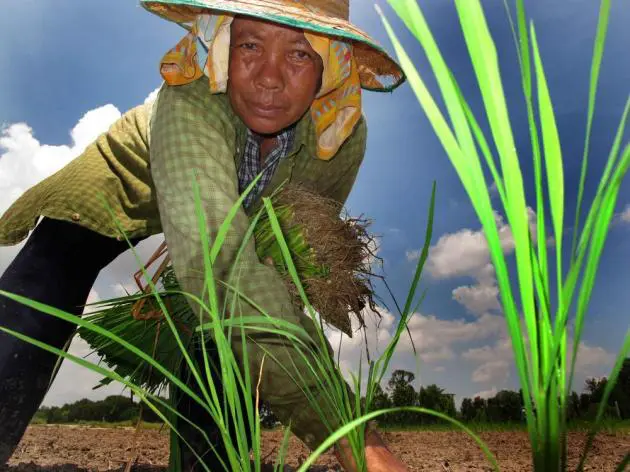


The National Anti-Corruption Commission (NACC) has agreed to conduct an in-depth investigation of alleged graft surrounding the government's rice-pledging project, after many complaints over questionable practices concerning the controversial scheme.
Meanwhile, the Commerce Ministry yesterday secretly tabled for the Cabinet’s approval the proposed sale of 5 million tonnes of rice to China under a three-year government-to-government (G2G) contract, as part of the ministry’s plan to release some of its stockpile.
The NACC’s decision to consider corruption allegations further came after the Anti-Corruption Network late last month officially asked the agency to deepen its investigation into the rice-pledging programme, after the receipt of information about certain officials benefiting from the project.
Vichai Assarasakorn, secretary-general of the Board of Trade of Thailand, yesterday said that the network, which is led by Pramon Sutivong, had proposed that the NACC look into the matter further.
The NACC has finally agreed to accept the case after acknowledging there is evidence of corruption and unfair practice by some officials, he said.
The commission is now considering setting up a subcommittee for an in-depth investigation of the pledging programme, which involves many government agencies as well as private enterprises.
“The NACC’s decision to accept the case for investigation shows that the Anti-Corruption Network’s monitoring is an efficient arm for suppressing corruption. The NACC’s investigation will help prove whether the pledging project has led to corruption and benefited some officials or any traders,” Vichai said.
The private sector is greatly concerned about the rice project, as it has to date cost Bt400 billion of public money, he said. If the government continued with the pledging policy, there would be an insufficient budget for developing other key parts of the economy and promoting sustainable development. Moreover, the pledging policy could lead to an unacceptably high level of public debt, he said.
The Board of Trade chief said the government should instead consider spending public funds on long-term development, such as increasing crop yields and reducing production costs for farmers.
For instance, it could spend just Bt20 billion in helping farmers reduce production costs for many years, compared with the huge outlay of Bt1.2 trillion for three years of rice pledging, he said.
Vichai said private enterprises were not against the government’s subsidy project per se, but they were concerned that it was being run at the expense of long-term development.
CHINA RICE DEAL
A source at Government House said the Cabinet yesterday had considered the proposed G2G sale of 5 million tonnes of rice to China from 2013 to 2015. The matter had been tabled as a secret agenda item.
Commerce Minister Boonsong Teriyapirom instructed a senior official from the Foreign Trade Department to provide details of the proposed sale to ministers, the source said.
Cabinet secretary-general Ampon Kitti-ampon asked why the ministry had not waited for Prime Minister Yingluck Shinawatra to be present before putting the matter before the Cabinet. She is currently on a visit to Laos.
An official from the ministry said China had agreed to sign the G2G contract, which would not involve any private traders. However, the two countries have not yet agreed on the trading price, as it would be negotiated based on the market price in each year of the three-year deal.
The G2G contract would mean a substantial increase in annual Thai rice exports to China, which currently stand at about 300,000 tonnes.
Boonsong said the contract should benefit this country, as the authorities would be able to release rice from the stockpiles in each of the next three years.
The ministry had to propose the issue as an urgent matter for Cabinet consideration as a representative from the Chinese government will visit Thailand next month, he added.
Deputy Prime Minister Chalerm Yoobamrung said the Cabinet had secretly considered the issue as it was an essential contract that should benefit the country, despite the fact that the Commerce Ministry had not wanted to make the matter public at this stage.
