
Bangkok gets first Starbucks community store outside US


Play
Thailand has been recognised by Seattle-base Starbucks as one of its potential markets with a plan to double the number of its stores in the country from 168 currently to more than 300 within the next five years.
Starbucks currently operates 19,000 stores in 62 countries around the world.
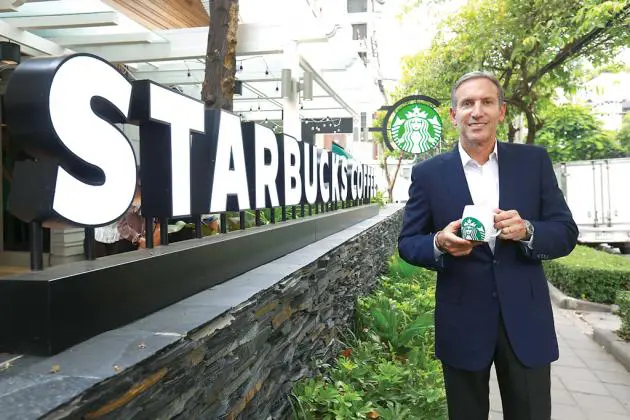
Howard Schultz, the chairman, president and CEO of Starbucks Coffee Co, yesterday inaugurated the first Starbucks community store outside the United States in the Langsuan neighbourhood of Bangkok.
For every purchase of a Starbucks handcrafted beverage, Bt10 will be directed to farming communities in the North.
As the chain accelerates its expansion in Southeast Asia, Thailand will play a critical role.
With 15 years in the country, “Starbucks is humbled by the strong relationship it has built with customers and is committed to continued innovation and community investment”, he said.
“As I join the team today to celebrate 15 years in the market, there is an unparalleled passion our partners [staff] demonstrate for delivering the Starbucks experience to our customers in Thailand. I have never been more confident in our ability to grow this market, doubling store count over the next five years,” he said.
“As we continue to grow, it is critical that we stay true to our more than 40 years of heritage, continuing to build our business with a focus on taking care of our people, creating moments of connection with our customers and giving back to the communities where we do business.
“The community store in Langsuan signifies our ongoing commitment to give back to communities, and more specifically, to support and sustain local coffee and farming communities in northern Thailand.”
This is the fourth community store globally – after Los Angeles, New York and Texas. Each store operates with a commitment to serving the local community, with the recognition that when communities thrive everyone benefits.
While the profit-sharing model of each store varies according to the specific needs of the local community, with the belief that when communities come together, there can be positive change.
