
Markets getting wider with 3G launch


Play
New era to bring cost-effectiveness in digital marketing, real-time data for public
From this month onwards, all three telecom carriers in Thailand – Advanced Info Service (AIS), Total Access Communication (DTAC) and True – will be providing full-fledged third-generation cellular services.
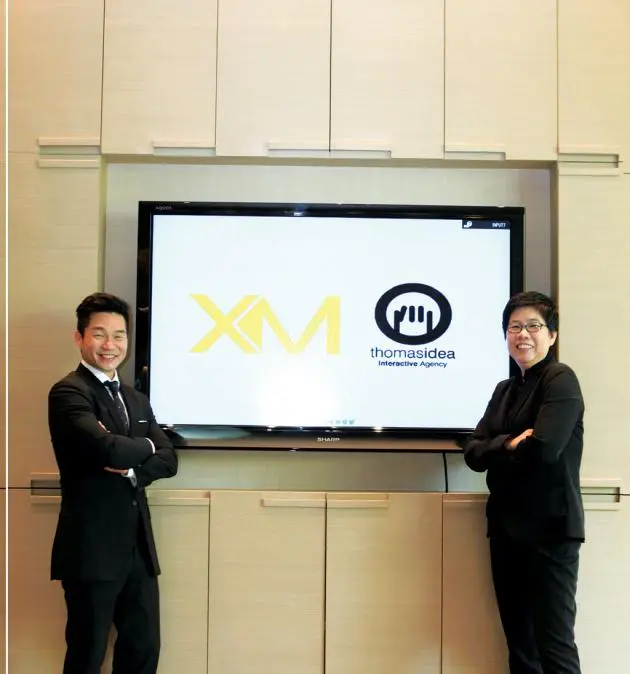
This should open up new business opportunities and accelerate the pace of digital marketing in the country, says Uraiporn Cholsirirungskul, chief executive officer of Thomas Idea Co. Her firm specialises in providing digital marketing solutions.
“The mobile telecom and Internet infrastructures that have nationwide coverage will allow the population to seek information and data in real time, which was not possible previously,” she said.
“For businesses and industries, wanting to expand into other Asean markets as Thailand joins the Asean Economic Community [AEC] in 2015, they will benefit from the cost-effectiveness of digital marketing and advertising.
“For instance, a TV-commercial campaign can now be scaled to suit all the 10 different Asean markets with local languages and dialects. Coke and MasterCard are among the leaders in this field.
“Now, they can start from one website design, which can be designed to cover more than 20 different markets. Last year, marketing executives in Thailand were certain that mobile commerce would boom. As a result, websites have become more responsive by introducing parallel mobile sites for both tablets and smart phones.
“Mobile sites need specific data, as they have less time and less screen space, so we need to focus on what they really need. Overall, companies need to have an appropriate digital strategy with comprehensive digital solutions, then digital marketing and online advertising plans,” she said.
Paul Soon, CEO of XM Asia Pacific, said: “The growth [of digital marketing] in Thailand and other Asean countries is being fuelled by the rapidly growing social platforms that are coming up, as well as by mobile technology. Therefore, smart phones are a major driver of this growth.
“In Thailand, the government has been putting more money in infrastructure to make sure that the Internet penetration rate rises to 95 per cent by 2020. Then the AEC will be coming on board as another key driver.
“Companies looking to do business abroad now have the chance to use the Internet as the leveller to boost their competitiveness.
“Take MasterCard’s global campaign covering 45 different markets as an example. It’s a global strategy that needs to be implemented locally. In Asean, we have 10 different versions of this campaign based on a single platform.
“This will capitalise on the strong branding with local content in Thai, Vietnamese, Indonesian and other regional languages.
“Recently, we launched a big campaign for Maxis, one of the largest telcos in Malaysia. We’ve taken away the silo business approach to make it easy for visitors to use the site and translate that into better e-commerce.
“We can target customers in KL or Penang differently and drive e-commerce from a social standpoint for the purchase of new phones or Internet packages or better call-centre services.
“We know each of the customers who visit our site and we can re-target them to satisfy their needs. For example, they might be looking for Internet packages or wanting to buy new phones. This means instant or real-real-time marketing and sales.
“The approach is outside-in, as we can sit at the back of consumer’s mind due to the availability of data and track records of these customers. In other words, we know what the customers are looking for.
“What the customers experience on desktops, we can move to the mobile sites, and the user experience will be better and we can better encourage users to have transactions. “Due to the high growth of e-commerce in Thailand, the migration to mobile commerce is easy but the challenges for a lot of brands is to quickly understand usability and design.
“Over the past three years, we have seen a big growth in online advertising, but it’s a small percentage of the overall budget. However, the budget for digital marketing is now significant, accounting for over 20 per cent of the total budget on average.”
