
Thailand’s green finance framework must now drive growth, experts say
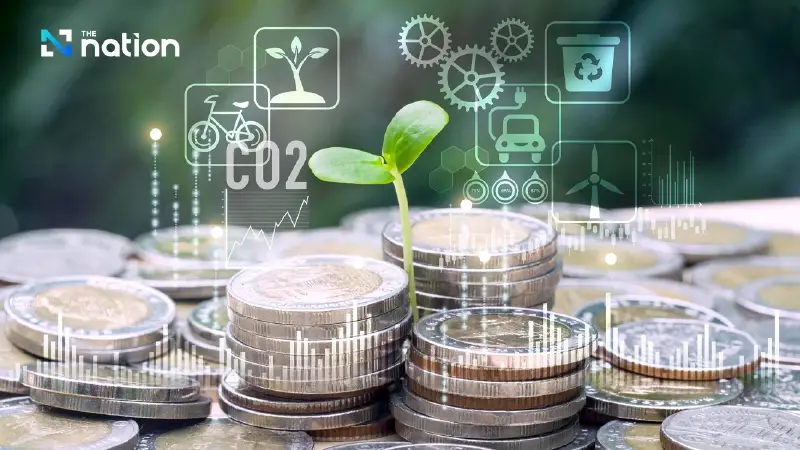


Thailand has built key sustainable finance foundations but must shift from policy to implementation to unlock green investment, support SMEs and drive long-term growth.
Thailand has laid important groundwork for sustainable finance, but experts warn that the country must now move decisively from frameworks to action if green finance is to become a mainstream driver of economic growth.
These remarks were made during the seminar, “Green Finance Pathway: Switzerland and Liechtenstein’s Expertise for Thailand’s Sustainable Future”, held at the Eastin Grand Hotel Phayathai in Bangkok and co-hosted by the Royal Thai Embassy in Bern and Chulalongkorn Business School.
During the panel discussion, “The Road to Thailand’s Sustainable Finance Ecosystem: Policy Levers & Industry Partnerships”, panellists agreed that while progress has been made, the real challenge lies in scaling implementation and mobilising capital effectively.
Foundations in place, but capital yet to scale
Thailand has introduced several key policy tools in recent years, including the Thailand Taxonomy, sustainability disclosure standards and a strengthened net-zero target for 2050. These developments signal clear momentum in aligning the financial system with climate goals.
“We have built some foundations in terms of policy and regulations,” said Pongsiri Vorapongse, Head of Sustainability Strategic Intelligence at SCBX.
However, despite this progress, the country remains in the “implementation stage”, where frameworks exist but capital has yet to flow at scale into sustainable activities.
Across ASEAN, green finance still accounts for only a small share of the financial system, with most funding concentrated in sectors such as energy and transport.
SMEs face barriers to access
One of the most pressing challenges is the limited participation of small and medium-sized enterprises (SMEs), which form the backbone of Thailand’s economy.
“SMEs have not really benefited much from green finance — it has been difficult for them to access,” said Ornsaran Pomme Manuamorn, Senior Financial Sector Specialist at the World Bank.
A key constraint is the lack of data and the high cost of green due diligence, which makes it difficult for financial institutions to assess smaller businesses. Experts also highlighted a shortage of bankable green projects, noting that available capital often exceeds the number of viable investment opportunities.
“There is a lot more green finance looking for bankable projects than there are projects currently available on the market,” Ornsaran added.
Climate finance as necessity and opportunity
Despite global geopolitical uncertainty, panellists stressed that Thailand must treat climate and sustainable finance as both an economic necessity and a strategic opportunity.
Without sufficient investment in climate mitigation and adaptation, Thailand’s GDP could be significantly affected in the coming decades. At the same time, green industries offer new pathways for growth and competitiveness.
“Without clear climate investment, Thailand could expect to be impacted in terms of GDP by anywhere from 7 to 14%,” Ornsaran warned.
She added that sectors such as electric vehicles, solar energy and energy-efficient technologies could accelerate growth and strengthen Thailand’s industrial base.

Moving beyond policy to real implementation
A key takeaway from the discussion was that sustainable finance must go beyond policy announcements and translate into real economic activity.
“The transition is already happening… the investments are already there, it just needs to scale,” said Mariam Ashroff, Head of Sustainability Management APAC at LGT Bank.
This requires not only stronger incentives but also better coordination across the ecosystem to ensure that capital flows into viable green and transition projects.
Balancing regulation and innovation
While regulation is essential for building trust and preventing greenwashing, panellists cautioned against overly rigid frameworks. Excessive regulation could create compliance burdens and slow innovation in sustainable finance.
“There can be regulatory fatigue,” Mariam said. “Overregulation could delay the return of innovation to sustainable finance.”
Experts emphasised the need for a balanced approach that provides clarity and credibility while allowing flexibility for market-driven solutions.
Data, incentives and collaboration key
To accelerate progress, the panel called for stronger collaboration between regulators and industry, as well as more practical policy support.
“Let’s talk to each other and be frank about where the issues lie,” said Erol Bilecen, Head of Sustainable Finance at the Swiss Bankers Association, stressing the importance of open dialogue.
Improving data infrastructure was also identified as a priority, particularly for supporting SMEs.
Ornsaran suggested developing integrated digital systems using proxy data and AI to reduce the cost of green assessments and expand access to finance.
In addition, more targeted incentives and stronger project development efforts are needed to build a pipeline of credible green investments.
Turning ambition into impact
The panel’s message was clear: Thailand has made a strong start, but the next phase will determine whether sustainable finance can truly transform the economy.
By strengthening implementation, supporting SMEs, improving data systems and fostering closer collaboration, Thailand can unlock the full potential of green finance — not just as a policy ambition, but as a core driver of future growth.
