
Middle East conflict hits Malaysian food riders as orders fall
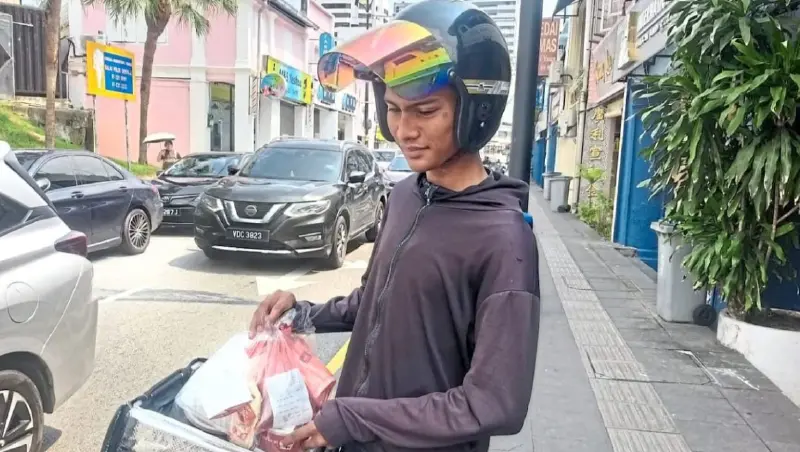


Riders in Johor Baru say weaker demand and lower delivery fees have cut daily takings, as more Malaysians cook at home recently.
- Malaysian food delivery riders are experiencing a significant drop in orders, which they link to more consumers cooking at home since the Middle East conflict began.
- In addition to fewer orders, riders' earnings have been slashed by reduced delivery fees (from RM4.50 to RM3) and lower commissions for double orders.
- The combination of fewer jobs and lower pay has caused a substantial income loss, with one rider's gross daily earnings falling from RM150 to RM100.
- Riders are concerned that a prolonged conflict could further weaken the global economy, leading to even less consumer spending on food delivery in Malaysia.
Five years into delivering meals, Rahmat Ramli says the job is no longer bringing in the same returns.
The rider, who was met in downtown Johor Baru, said most Malaysians had recently been turning to meals prepared at home instead of eating out or placing orders through online food-delivery services.
That shift, he said, had left riders with fewer assignments since the Middle East conflict began on Feb 28, while delivery fees had also continued to fall.
“Our delivery fees have been reduced from RM4.50 in 2024 to RM4 in 2025 and RM3 since early this year,” he said.
Rahmat said the cuts had also affected double-order commissions, even though riders should be paid more when they handle more than one order in a single run.
“Previously, I used to earn RM7 for a double order, but now it has gone down to RM5.”
In Malaysia, a double order, also known as a stacked order or group order, refers to an arrangement in which one rider is assigned to collect and deliver food for two or more customers or restaurants at the same time.
The system is intended to make deliveries more efficient and raise riders’ earnings by allowing several orders to be completed in one journey instead of through separate trips.
Rahmat said the lower delivery charges had reduced his gross daily income for two shifts, from 9am to 2pm and 5pm to 9pm, from RM150 to RM100.
“My gross daily income was RM150 for a two-shift job – 9am to 2pm and 5pm to 9pm.
“It is now RM100 after the cut in delivery charges,” he said.
Another rider, Danial Rozailan, said the pressure could become worse if the Middle East conflict continued into next year, as it would weaken the global economy further and may cause consumers in Malaysia to reduce spending even more.
Danial said the current situation was a sharp contrast to the Covid-19 period, when food delivery services became a vital lifeline for both consumers and businesses.
He said most riders earned well during the movement control order, which was implemented in Malaysia on March 18, 2020, following the pandemic.
But with food orders falling and commissions being reduced, Danial said riders’ earnings had been squeezed further.
“Nevertheless, a thin income margin is better than no income at all,” he said.
The Star
