
Sham marriage crackdown – Thailand screens three at-risk groups
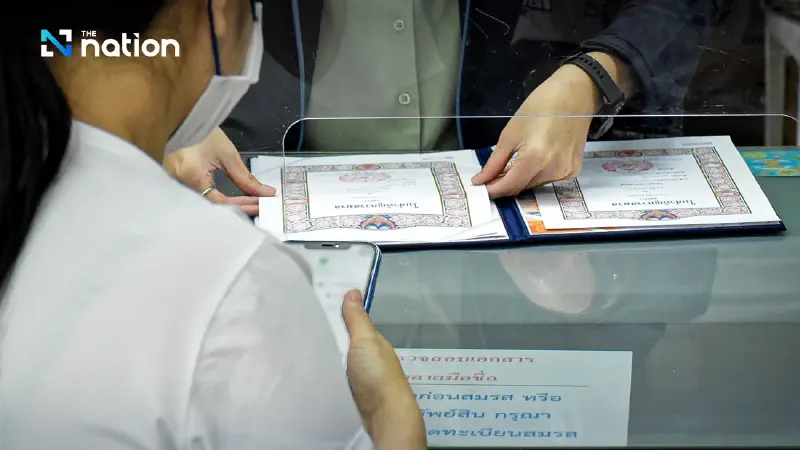


DOPA orders registrars nationwide to screen three risk groups more strictly to prevent sham marriages and registry fraud
Thailand’s Department of Provincial Administration (DOPA) has ordered registrars nationwide to tighten checks on marriage registration applications, warning that sham marriages are increasingly being used as a channel for unlawful benefits and by transnational criminal networks.
DOPA is the Ministry of Interior agency responsible for civil registration and local administration functions.

Narucha Kosacivilize, director-general of the Department of Provincial Administration, said on May 26 that technology crime and transnational fraud networks were increasingly exploiting registration systems and official documents to commit offences.
One method detected by authorities is “sham marriage registration”, which may be used to obtain rights or benefits unlawfully under Thai law. He said such practices affect national security and undermine confidence in Thailand’s civil registration system.
Complaints prompt tighter oversight
Narucha said the department had also received complaints about marriage registration work at some registration offices, with concerns that certain practices may not comply with regulations, laws and official guidelines.
As a result, DOPA said it was necessary to strengthen supervision and inspection measures across the country.
On May 22, the director-general signed a letter to all provincial governors instructing registration offices nationwide to strictly follow anti-corruption measures for marriage registration.
The move is aimed at preventing sham marriages from being used by fraudsters and transnational criminal networks to hide their activities or seek unlawful benefits in Thailand.
Three groups to face closer screening
The new guidelines require district registration offices, Bangkok district registration offices and local registration offices nationwide to carefully examine marriage registration applications, known as Form Kh.Ror.1, as well as the qualifications of both applicants.
The checks will focus on three key groups.
- The first group is foreign nationals, whose documents must be strictly verified, including documents certified by authorities in their country of origin or passports.
- The second group covers minority and ethnic groups, including persons classified as type 6, group codes 50-72, and type 7 under the registration system.
- The third group covers people without civil registration status, including those under codes 0-89 and 0-00.
Real-time checks and separate questioning
DOPA also instructed registrars to increase scrutiny at every step to prevent identity substitution and the misuse of legal loopholes.
The measures include real-time checks of marriage records through the marriage registration database to confirm that no applicant is already married.
If there are reasonable grounds to suspect a sham marriage, registrars must question each applicant separately to prevent them from coordinating statements.
Foreign nationals’ single-status certificates must also be strictly controlled. The documents must be translated and certified by the Ministry of Foreign Affairs before being used in the registration process.
DOPA has also introduced a new version of the investigation statement form, known as Por.Khor.14, in three languages: Thai, English and Chinese. The form must clearly state the criminal penalties for giving false information to officials.
Registrars may refuse suspicious applications
Narucha said that if registrars find circumstances giving reasonable grounds to believe that a marriage registration is a sham, they may exercise discretion to immediately refuse the application.
They must also explain the legal reasons to the applicants, who still have the right to appeal or proceed through the justice process.
He also instructed officials at all levels to perform their duties honestly and transparently.
Registrars are strictly prohibited from demanding or accepting any benefits other than the legal fees prescribed by law.
“If corruption or any facilitation of wrongdoing is found, decisive disciplinary action will be taken and the matter must be reported to the Department of Provincial Administration immediately,” Narucha said.
