
Mexican envy sees wide scope for bilateral cooperation, trade


Play
Countries' automobile production capacities singled out, looks to pact with Kingdom
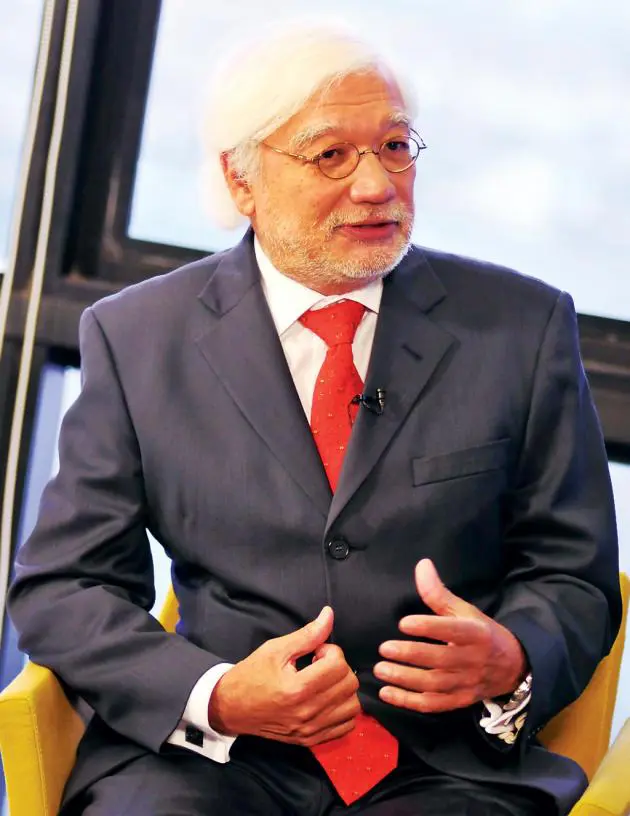
Jorge Chen, the Mexican ambassador to Bangkok, proposes that Thailand and Mexico work together to strengthen economic and business ties in the automotive, electronics and other sectors.
“While Thailand is a major automotive production centre in Asean [with an annual capacity of 2 million units], Mexico is also a major centre for the auto industry in North America, with capacity to produce 3 million units per year, with most of the output exported to the US.
“Some of the major auto companies have factories in both Thailand and Mexico, so they can exchange parts and components to make their cars more competitive.
“Mexico and Thailand also put together electronic products and computers for the world market [so we can also work together in these sectors].
“Thailand and Mexico started their formal diplomatic relations almost 40 years ago, but in the past during the Spanish [colonial period], Mexico was in charge of the Philippines, and we had shipments of goods and economic relations with Thailand long before the modern-day globalisation.
“Today, the bilateral relations between Thailand and Mexico are excellent. Politically, we don’t have any problem with Thailand. Economically, our bilateral trade has been growing at an annual rate of over 20 per cent, with last year’s total US$4 billion [Bt125 billion].
“Last year, almost 15,000 Mexican tourists visited Thailand, and that’s significant, since Mexico is geographically situated on the opposite side of Thailand.
“In terms of cross-border investment, there are a few major Mexican and Thai investors. In Mexico, the affiliates of petrochemical firm Indorama and hotel chain Banyan Tree from Thailand are among the major investors.
“Regarding Mexican investors, companies in the cement, auto-parts, metals, foodstuffs and tourism sectors are among the investors in Thailand.
“Over the past several decades, Mexico has changed its focus from agriculture and mining exports to industrial goods, with North America being our main market, accounting for 85 per cent of our total exports.
Mexico’s foreign trade now totals $750 billion per year. In other words, we’re trading [with] the US at a rate of $1 million per minute.
“Increased foreign trade under the North America Free Trade Area [Nafta] has had positive impacts on Mexicans, with per-capita [annual] income of close to $10,000.
“Regarding FTAs [free-trade agreements], we should not be afraid of this kind of arrangement.
After Nafta, we have signed over 50 other FTAs, amid debates among the population on the pros and cons of FTAs.
“In the end, we could say that FTAs have boosted the population’s income [and] expanded our domestic markets, and we became a much stronger country.
“Regarding Thailand, we see the Asean+6 and TPP [Trans-Pacific Partnership] as major developments and will make a decision after the results are clear.
The Asean+6 free-trade area involves Thailand and nine other Asean countries plus China, Japan, Korea, India, Australia and New Zealand.
“As for the TPP, Mexico is negotiating with 11 other member countries led by the US, Canada, Australia, New Zealand, Japan, Vietnam and other Latin American countries [while Thailand has also been invited to join the TPP negotiations].
“The main objective of both Asean+6 and the TPP is to expand trade and make it more transparent. In other words, they can be quite complementary.
“We will have to make a bilateral decision when the Asean+6 and TPP evolutions are clear.
If Thailand is not in the TPP framework in the future, Mexico could work with Thailand on a bilateral basis.”
