
PTT: No gains from household LPG price hike
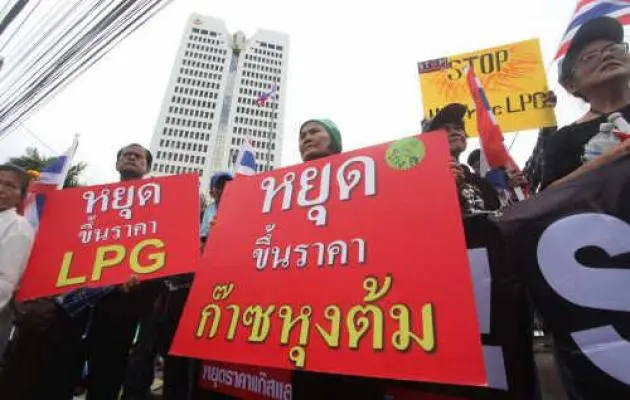


PTT has rebutted the accusation from some people that the company benefits from the decision to hike the price of LPG (liquefied petroleum gas) for household use on September 1, and that it sells the gas to the petrochemical industry at a lower price than
PTT chief executive officer Pailin Chuchottaworn yesterday said that it was the government, not PTT, that had devised the price-hike policy – and the company was obliged to follow the government’s policy.
PTT gains no benefit from the government’s decision, he insisted, but the policy would however benefit the Oil Fund by reducing the burden on the fund.
The LPG price structure is determined by the government. The price at the refinery gate is US$333 (Bt10,630) per tonne, or Bt10.20 per kilogram.
The LPG price for household use is Bt18.13 per kilo, while that for the transport sector is Bt21.38.
The price for the industrial sector is Bt30.13 per kilo, while that for the petrochemical sector varies dependent on petrochemical product prices.
It was Bt24 per kilo on average last year, not Bt16 to Bt17 as believed by some groups of people, said Pailin.
He said the information had been distorted to suggest that the LPG price for the petrochemical sector is lower than that for other sectors. In reality, LPG is just a feedstock to the plants, while LPG for other sectors is a final fuel product and as such is subjected to other taxes such as excise duty and the Oil Fund levy, which increase the final price, he said.
PTT’s CEO explained that the LPG price at the gas-separation plant is Bt19.50 per kilo, on top of which it pays a combined Bt2.20 to the Oil Fund and in value-added tax.
The price from the refinery is currently Bt28.30 per kilo – although it varies in line with the price of crude oil – therefore the average LPG price for the petrochemical sector is Bt24 per kilo.
"The LPG feedstock price is set according to the investment cost and benefits to consumers and the entire economy. The feedstock is turned into many products, like chemicals, plastics and textiles.
"If feedstock is [more] expensive, this cost will be pushed on to consumers. Indeed, the petrochemical industry has produced hundreds of billions of baht and created many jobs," he added.
He pointed out that the new LPG price of Bt18.13 per kilo for household use after the hike was still lower than the price of household gas in neighbouring countries, where it averages around Bt40 per kilo.
The revised price will rise by 50 satang per month until it reaches Bt24.82 per kilo.
PTT’s gas-separation plant units produces 3.6 million tonnes of LPG per year, of which half is sold to the petrochemical sector and the rest to households.
Last year, the petrochemical sector used 900,000 tonnes of LPG from refineries, and 1.7 million tonnes from the gas-separation units.
Nattachart Charuchinda, PTT senior executive for downstream petroleum business, said that if the price of plastic pellets increased, the price of the LPG would move up accordingly.
While PTT has been criticised of monopolising pipeline-based LPG transmission, he said the transaction fell under the regulations of the National Energy Regulator, and the fee the company imposed on delivering gas via its pipelines was "not that high".
Yesterday, a group of people protesting the hike in the price of household LPG gathered at the PTT Complex on Vibhavadi-Rangsit Road in the late afternoon.
However, PTT had told the staff of companies in the complex to leave their offices at noon.
The overall complex houses a number of buildings, including PTT’s headquarters. Next to the HQ is the Energy Complex, where the Energy Ministry is located along with some energy companies. The Board of Investment’s building is also located in the complex.
