
Innovation-focused Creative Power launches |new intelligent electrical-protection device


Play
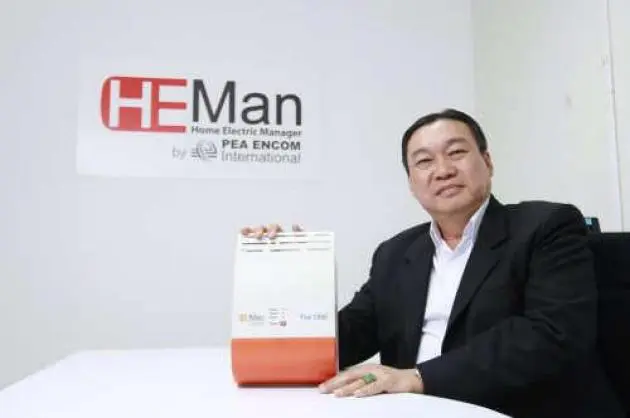
FIVE years after linking up with Rajamangala University of Technology Thanyaburi, Creative Power has launched its first innovative product, HEMan - an intelligent electrical-protection device targeted to sell more than 100,000 units this year.
HEMan will completely cut off a household’s electricity when its automatic censor system detects a risk to the property and its inhabitants, which is different from the commonly used safety-box system currently in the market.
“Our business strategy will focus on innovative products related to engineering under research and development with the university, because that will provide more value for our business in the long term,” Creative Power chief executive officer Thitisak Skulkroo said during an interview with The Nation on Wednesday.
Create Power was formally established last year with registered capital of Bt20 million by engineers interested in developing innovative products to serve both local and global demand.
“We are interested in developing products researched by the university into products for commercial use, because that will support Thai research and also our own innovative ideals.
“This is better than making other products for which there are more competitors,” he said.
Ready for promotion
After successfully taking HEMan to the production stage, and securing the intellectual copyright, the company is now ready to promote it on the market both in Thailand and overseas, initially appointing a local manufacturing plant to produce the devices this year.
Overseas, the company is negotiating with a global brand to provide HEMan in Asia, the US and Europe in the future.
“This is our technology, so when foreign investors need to use it, they have to contract with us to do so. This is key to enabling our business to focus on innovation,” said Thitisak.
Following the successful development of HEMan, the company is now collaborating with Rajamangala University of Technology Thanyaburi to develop other engineering-related innovative products.
The company expects to launch up to five products by the end of next year, he added.
The company also plans to develop HEMan for larger-scale industrial use, as well as for households, as soon as possible.
Meanwhile, in the initial stage, the company targets sales of about 100,000 units this year for residential use, with the system costing about Bt8,000 per unit, said the CEO.
