
Safari World heir tastes success in F&B
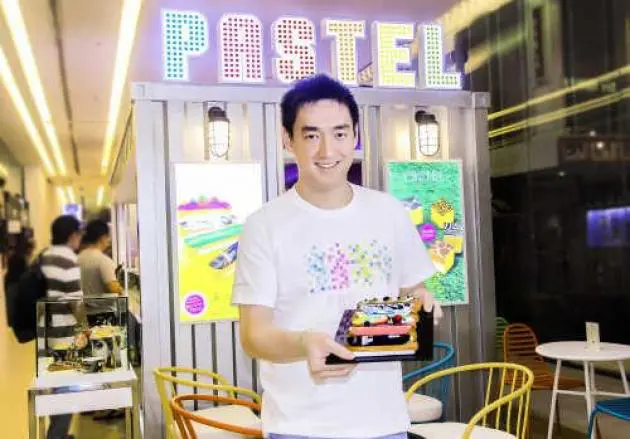


RIT KEWKACHA, a member of the second generation of the family that founded Safari World, a tourist attraction based in Bangkok, speaks to The Nation about the diversification into a food-and-beverage business formed with his brothers.
Rit, 32, is vice president of marketing and business development of Safari World. He is also the eldest son of Pin Kewkacha, founder and chairman of the executive board at the Safari World.
WHY DID YOU AND YOUR YOUNGER BROTHERS BECOME INTERESTED IN ENTERING THE BAKERY BUSINESS? WHAT WAS THE KEY INSPIRATION?
It was for both personal and entrepreneurial reasons.
First, it was a dream for me and my four brothers [Amnaj, Litti, Dej and Duang Kewkacha] to build something, a business, together in addition to our family’s long-standing businesses built by our dad. We also share a common interest in foods, especially Japanese foods. We travel together several times every year to Japan to taste its delicacies, and we all speak Japanese, so that facilitates communications with Japanese people.
But we felt the market for Japanese food was near saturation, with too many big players. So we looked into other sectors. Luck also played a part as we were introduced to a bakery chef who was named “Ice Cream King” from Ice Cream City, Tokyo, when he was looking to expand overseas. Furthermore, my brother Dej has some background in making desserts, ice cream and cakes while he was studying in the UK. So that was the key inspiration.
Then, as we conducted market surveys, we found a niche in the bakery business – there wasn’t any cafe serving just desserts. They were all coffee shops or bakeries, most also selling quick snacks and fast food. There was nothing like Dessert Cafe when it was set up seven years ago (September 2007). I thought the fast-moving lifestyle of modern consumers meant inevitably there’s more stress at work, and desserts are the perfect stress-reliever. I was confident that Dessert Cafe would suit Thais’ sweet-tooth appetite, especially with the all-year summer in Thailand.
DO YOU PLAN ON EXPANDING YOUR OWN-BRAND OUTLETS INTO NEIGHBOURING MARKETS, SUCH AS MALAYSIA, AS YOU MENTIONED?
We see an opportunity with our newer brands – strong, quality brands that we built with an F&B brand consultant from Japan, namely the Kyo Roll En brand that has the perfect combination of food (desserts), service and design aesthetics.
We modelled our stores on the traditional machiya wooden houses in Kyoto and serve authentic Japanese desserts using bamboo charcoal to make black ice cream and roll cakes, and also imported matcha milled green tea from the Uji region in Kyoto – known as the best matcha in the world. We are aggressively expanding the brand because of overwhelming feedback from customers. After two years, we now have eight branches and will add eight more this year.
Many investors from abroad have also approached us about opening Kyo Roll En outlets overseas. I think it has lots of potential, as the products we are serving are premium and original – there’s no other brand or similar concept anywhere in the world.
Initially, I explored the possibility of opening in Singapore, where I grew up and am very familiar with the market. But I found the rents for F&B space to be impossible – even higher than that in Hong Kong or Japan.
Then last year, we were approached by several investors from Malaysia inquiring about setting up Kyo Roll En (and Teraoka Gyoza) there. We are currently studying their proposals and hope to come to a conclusion by the end of the first quarter. It will be on a franchise basis for our Malaysian counterpart.
But our initial research found the market to be very similar to Bangkok – apart from similar wages and rents, there’s a growing, fast-moving, young consumer base that places more and more emphasis on “lifestyles” outside their homes.
Japanese food and products are also gaining more popularity, although not as prominently as in Thailand – which is positive news, because that means there’s much more room for Japanese restaurants and cafes to grow there. Obviously, the question of whether to serve halal products is something we are seriously considering.
WHAT WAS THE BUSINESS PERFORMANCE IN THE FIRST YEAR IN TERMS OF SALES, AND THE EXPANSION STRATEGY?
We adopted a “slow but sure” approach in the beginning, as F&B [food and beverages] was a totally new business for our family. Our Japanese partner was also venturing into a foreign market in Thailand. So we chose a very “local”, non-fancy location for our first branch – Future Park Rangsit – that would offer us the clearest understanding and insight into local F&B consumers’ behaviour.
Our goal has always been to expand the dessert business aggressively in Thailand but we had to be patient initially. So it was only after 14 months after the first opening that we expanded into the city centre with the Central group of shopping centres.
MAY WE HAVE AN UPDATE ON YOUR BAKERY BUSINESS BY THE END OF LAST YEAR, IN TERMS OF SALES AND NUMBER OF STORES – DIVIDED INTO YOUR OWN BRANDS AND FRANCHISE BRANDS?
Our company currently operates seven F&B brands, in 40 locations:
Original brands:
1) Sfree Dessert Cafe
2) Parferio by Sfree (luxury concept of Sfree)
3) Sfree JR (express concept of Sfree)
4) Kyo Roll En – Kyoto Lifestyle Cafe
5) Pastel – Paris-style eclairs and pastries
6) Aldy’s Coffee Lite (in-house healthy coffee brand)
Franchise brand:
7) Teraoka Gyoza (master-franchise licence throughout Asia outside Japan – owner is a seven-time Gyoza Champion from Gyoza Stadium, Tokyo).
Our goal is to reach Bt500 million in revenue by the end of 2016.
IN YOUR DREAMS, WHAT WOULD YOU LIKE YOUR F&B BUSINESS TO ACHIEVE IN THE MEDIUM TO LONG TERM?
In the long term, I just want Kacha Brothers [their company] to be an equally strong branch in our family’s business tree. That means we still have long way to go to catch up on the tourism empires that my dad has built in Bangkok and Phuket.
In the medium term, it has always been my dream to set up our brands abroad. I grew up overseas for 20 years and I always ask myself, as a consumer, why there are not many, if any at all, Thai restaurant/cafe brands in the international scene. I think the answer, though not definitive, has to do with offering a really unique concept that is never before seen anywhere in Asia or the world – not just a copy of other brands.
With that in mind, I created the Kyo Roll En brand that pays the most detailed attention to the tiniest touch-points – like the black detox-charcoal ice cream, the bamboo-design ice-cream cups and jugs, or the wooden cake box that’s ecologically friendly.
It creates a total brand experience that would attract consumers not only in Thailand but, I believe, internationally.
In the short term, I just want our customers to leave our stores with a smile. It’s really that simple a goal I have every day.
DO YOU HAVE A FIVE-YEAR BUSINESS PLAN FOR THE F&B FIRM?
The cafe business is so fast-moving it’s difficult to make a definite plan. Plus, we have a policy of not franchising our stores domestically – we run all our stores ourselves in order to control the quality of food and customer experience. Therefore, it’s of no use to set ambitious goals in terms of the target number of stores. We are not a public company – we are driven by just numbers.
We currently operate around 45 branches with more than 300 staff members. I believe that sets us up as the second-largest player in the ice-cream-cafe business in Thailand. We still have a long way to go to become No 1. My plan is to keep innovating F&B concepts that would be equal
ly, if not more, successful as the previous ones – and the ultimate indicator will simply be customers’ satisfaction. Thailand is a very fragmented market, especially in terms of purchasing power. I don’t believe there’s such thing as a one-size-fits-all brand any more. So we need a multi-brand strategy to capture different markets, from B- to A+.
HOW DO YOU SEPARATE YOUR TIME BETWEEN YOUR OWN F&B BUSINESS AND THE FAMILY BUSINESS OF SAFARI WORLD? HOW DID SAFARI WORLD PERFORM LAST YEAR AND THIS YEAR?
In order to juggle both businesses, I just put in more hours than others – I work seven days a week, 14-16 hours a day – like my parents. Even at their age [Pin is now 74 years old, and Apar is 62] they work tirelessly, non-stop. Maybe not as aggressively as before, as we children have come back to help out, but there’s no such thing as a holiday for us – or rather, we work in a theme park, so every day is basically a holiday.
My F&B business is largely delegated to Dej, 30, my brother, who is executive vice president of the company. He runs the whole production process as well as the operations of stores. I provide directions for the company and drive the marketing and business-development aspects. It’s bliss to be working with your brothers – there’s absolute trust and understanding among us.
People might see me as running two completely different businesses. But in actual fact, it’s in essence the same business, the same job, the same goal: At the end of the day, whether it’s through ice cream or animals, our ultimate goal is that our customers walk away with a smile. And my job every day is to ensure that happens at both companies.
And, of course, Safari World is on a much larger scale – we have more than 900 staff members here. I currently oversee the marketing, IT, HR and training departments – in essence the back end of the business.
I’m still learning the details of running the animal aspects – we have more than 50,000 animals of more than 300 species, so it’s going to take a bit of time. Luckily, we have a team of professionals with more than 25 years of experience, including my dad, who knows all about taking care of animals. We are always creating something new at Safari World, so that customers do not get bored as they visit each year. We recently transformed our grand buffet restaurant to be a state-of-the-art facility that can host major MICE events [meetings, incentives, conventions and exhibitions].
We re-launched an all-new “Mini World” where visitors can hand-feed small sun conure parrots last year, and it’s attracting huge number of visitors already. Phuket FantaSea is also readying Phase 2 of the park.
Unfortunately, the tourism outlook is not that positive after the political unrest in our country. One major problem we have is martial law, which deters lots of visitors because of the problem of getting travel insurance. Also, we lost a huge market of Russian visitors because of their economic crisis – in essence, it now costs twice as much to visit us than before because of the depreciation of the currency. Russia was our No 2 market, so we need to boost other sectors, especially China. A visa-fee waiver will help tremendously.
Our target this year is 20-per-cent growth from last year, but even then it will fall short of the level we achieved in 2013, more than Bt2 billion in revenue [consolidated for Safari World and Phuket FantaSea). It’s like we are starting all over again with each crisis we face.
