
SCG hits twin global themes - green and the elderly


SOME products witness wildfire sales after a launch, some flop and some experience a slow start but a constant turnover in the years ahead.
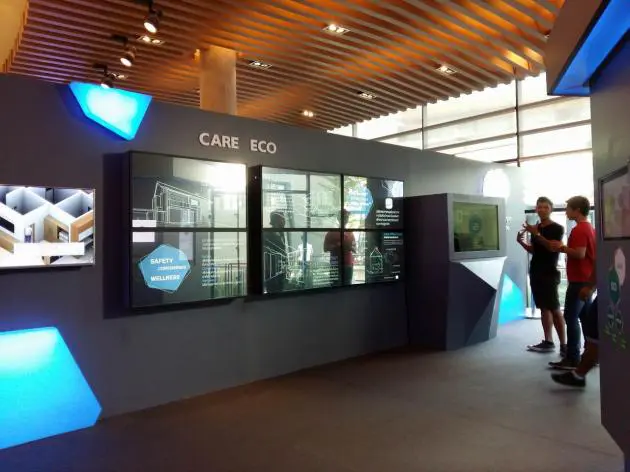
It seems Siam Cement Group (SCG) is putting itself in the third category, launching new innovative products this month. An extensive range of products is now shown at SCG Experience, capturing two global themes – green and the elderly.
At the press conference, journalists were seated on bio-plastic chairs made of wood, flour and polypropylene.
In the exhibition zone, more chair designs were shown, along with the origami palm melamine tableware containing a mixture of oil palm meal – a by-product of palm oil production. On the side were the eco bricks made of waste from the manufacturing process, such as coal, biomass and solid fuel.
The bricks are recommended for all types of construction work, as research shows they lose no strength resistance – even though 60 per cent are made from ash. While Heim home – a joint product with Japan’s Sekisui – is selling well with designs that incorporate safety and ventilation features, SCG moves forward with "The Nest".
Standing for "the next eco-sustainable technology for home", the Nest balances the concept of a smart, eco-friendly and caring home. It includes a combination of innovative properties that allow the elderly to live an independent and active lifestyle. Greater ventilation features as well as solar power dependence also mean less energy consumption. SCG is proud that this technology was the first in Asean to be awarded the "Energy Plus House" title thanks to its energy-efficiency.
"We cannot ignore the impact of climate change," Kan Trakulhoon, president and chief executive officer, said last week.
Another highlight of the exhibition is "Eldercare Solution".
At a mock-up room, senior citizens experience a space where they can comfortably spend their time. Stepping into the room, they can test the artificial wooden floor, which promises more absorption properties than conventional wood, reducing the impact should they slip and fall.
A reclining armchair is placed next to the bed, which emits light instantly as elderly feet touch the floor.
Tips offer ideas on how to help the elderly. For example, stored items should not be placed above 170cm to increase their accessibility. Hand rails – installed according to the height of the occupant – are also recommended to ensure safety.
"This is a result of multi-disciplinary collaboration. Aside from customer insight, we have blended ideas from experts in engineering, architecture and material, among others," said Nithi Patarachoke, vice president for SCG Cement – Building Materials.
This message is also echoed in bathrooms where sanitary-ware and accessories are installed accordingly to their physical condition.
At the exhibition zone, gait (walking) analysis is provided, to measure the elderly occupant ’s foot planter pressure. This is believed to gauge the risk of a fall – the leading cause of injury. Their children can also try on a set of goggles, to experience the changing eyesight of their parents; or earplugs that give a hint of how the elderly endure buzzing in their ears.
"The solution is vital. Thailand’s elderly population is high and this is also the trend around the globe," Kan said.
At present, people aged over 60 years old constitute 10 per cent of Thailand’s population. By the middle of this century, the number of people aged over 65 across Asia is expected to rise from 300 million to around 1 billion.
SCG, with help from over 100 PhD holders in its research and development activities, as well as outside institutions, is showcasing other innovative products. Some offer greater convenience, like poly-cast. Submerged in 60-degree water, the cast can be shaped to fit a patient’s arm.
Some promise less waste and lower costs. For example, lightweight plastic is used in the manufacture of medical tools.
"We have famously created a good balance in growing our economy, society and environment," Kan said.
While demonstrating a MiniSure Kit for carpel-tunnel retractor operations, Cholanat Yanaranop, president of SCG Chemicals, said the plastic tools would cost only 10 per cent of metal kits. Notably, this meant greater affordability for hospitals and lower medical costs.
Stressing the importance of innovation for the company’s sustainable future, Kan noted that 34 per cent of the R&D budget is now allocated to outside institutions. Among them is the National Science and Technology Development Agency, which this year has been allocated Bt30 million.
Since 2004, SCG has allocated a huge budget to R&D activities. In the first nine months of this year, R&D spending reached Bt2.35 billion or 0.7 per cent of sales, against Bt2.7 billion spent throughout last year.
And the exhibition, opening through this month, will show what this company, celebrating its first centennial anniversary two years ago, wants to become in the future.
The exhibition followed the announcement that SCG, for the fifth consecutive year, had been selected by the prestigious Dow Jones Sustainability Indices (DJSI) as the Industry Leader in Construction Materials. The award emphasises the corporation’s exemplar of sustainable development in Asean and the world, ready to distribute its rich know-how to businesses across Asean.
"From now on, SCG is hoping to expand our sustainable network by providing essential support to those who wish to tangibly adopt our SD models into their businesses. We have begun by distributing our know-how to our own affiliations, from our suppliers and contractors all the way to our clients and partners who learn from our advice and lessons," Kan said.
"We are also hoping to build a corporate network that brings together businesses that wish to take the sustainable path which will lead to real socially and environmentally sustainability in the region. All of this is based on our four philosophical pillars and the values we put onto our personnel - our most valuable asset for the past century of our operation".
