
KBank adopts strategy for AEC+3
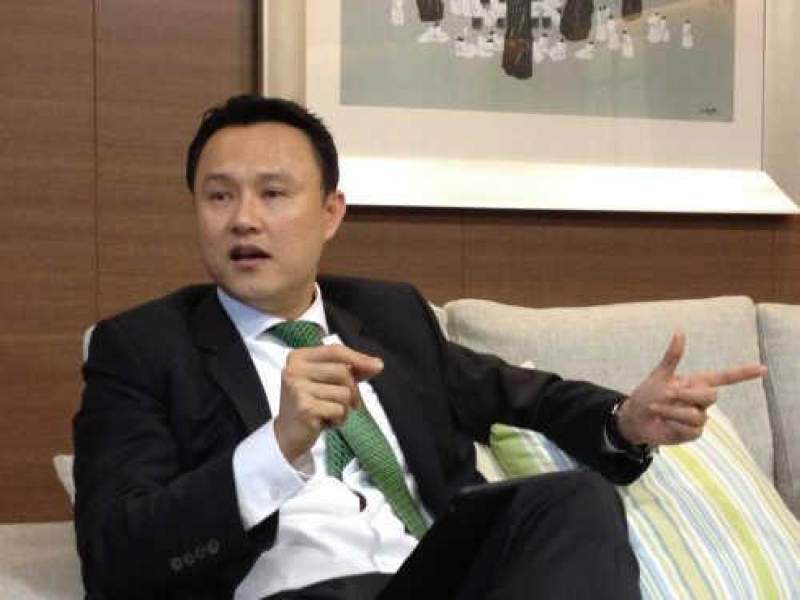


KASIKORNBANK plans to set up regional headquarters to manage the operating costs of its overseas footprints once it has full physical branches in Vietnam, Indonesia and Myanmar, senior executive vice president Pipit Aneaknithi said yesterday.
KBank wants to upgrade its representative offices to branches in the three markets next year, but the actual execution timetable is unpredictable because regulations in those countries do not currently permit the granting of additional banking licences to foreign banks, he said.
Given KBank’s aspiration to be a regional bank for AEC+3 (Asean Economic Community, plus China, Japan and South Korea), an integrated regional operating platform can help manage costs and human resources as opening a presence in a foreign market normally requires at least five years to reach break-even point, he explained.
Its business in Laos, however, was able to generate a profit after just one year of operating as a local bank, because Laotians were familiar with the KBank brand, he said. It will therefore open a second branch in the country in September to cater to wealthy customers.
KBank has seven branches overseas – four of them in China – as well as eight representative offices.
As part of the bank’s integrated regional operating platform, when it receives a local banking licence in China, KBank will consolidate its representative offices in the country and set up a regional headquarters in Shenzhen.
Last October, KBank spent US$22 million (Bt784 million) to acquire Shanghai-based Starbright Finance, although this business will not be included in the regional operating platform, Pipit said.
He added that if it received a foreign-bank licence in Vietnam, it would consolidate its representative offices in Hanoi and Ho Chi Minh City into a single branch.
KBank has shifted its foreign focus from Western economies to AEC+3, as the latter is a new consumption powerhouse and the world’s next manufacturing hub, while the growing number of middle-income people is the key to attracting an influx of regional cross-border business, he said.
"Vietnam is an outstanding example of growing [numbers of] middle-class consumers, with the country making a big jump forward and achieving major growth in Asean.
"In banking business in Vietnam, the number of branches there might be enough, but competition has provided room for KBank to maximise interest among potential customers," the executive said.
The bank has adopted three models to cater to Asean+3 business, as not all markets are suited to having a physical footprint, but cost, competition and competitiveness are crucial to each of them, he said.
The three models are: a physical footprint; digital banking, which should support cross-border multi-currency settlement, cross-border direct settlement in baht, and cross-border retail payment; and partnership.
"Cooperation with partners across the region will help our customers find potential trading partners who are financially reliable," he said.
As banking nowadays will have to move increasingly to include cross-border, value-added non-financial services, KBank has set up two new teams: cross-border advisory services, and cross-border business matching.
Business-matching activities will play a more important role because Asean has enormous room to grow in terms of intra-regional trading, Pipit said, citing the fact that intra-trade now represents 24 per cent of all Asean trading, while intra-European Union trade accounts for 64 per cent of all EU trading.
KBank president Predee Daochai said the combined gross domestic product of AEC+3 within five years was currently estimated to be $27.6 trillion, against $17.8 trillion last year. There would be an investment injection of least $110 billion in the region from the Asian Development Bank and the Japan International Cooperation Agency.
To ride the opportunity, the bank will hold a seminar called "AEC+3 Business Forum 2016: Reshaping a New Paradigm for Growth" on March 16 to disseminate knowledge and advice, and to stage business-matching activities for Thai and foreign businesspeople looking for new opportunities in Asean, China, Japan and South Korea.
