
VN ‘attractive’ for investors


VIETNAM will remain an attractive destination for labour-intensive industries for at least another five years, thanks to a big pool of young labour. Guaranteeing investment inflows is also the country’s membership of the Trans-Pacific Partnership (TPP), a
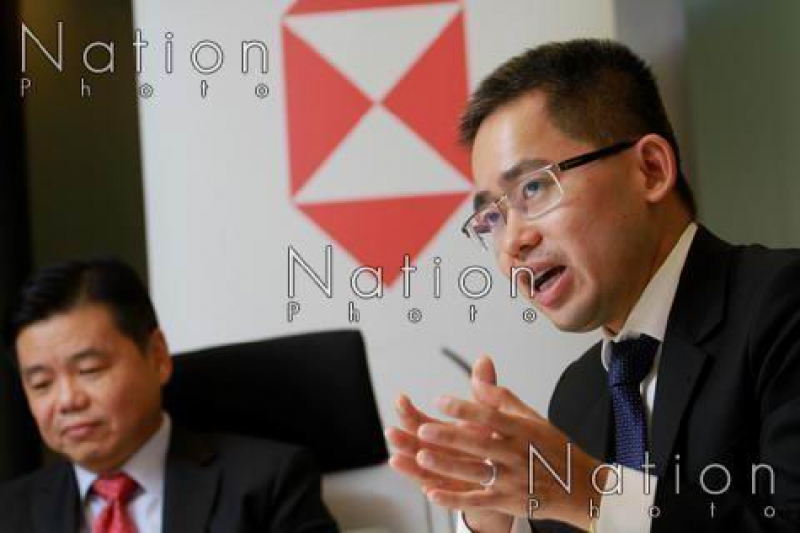
Vietnam stands out because of its cheap labour, its big market with a population of 90 million, and free-trade agreements with 55 countries, aside from political stability and promised economic reforms, said Pham Hong Hai, chief executive officer of HSBC Vietnam.
Optimism will remain high as long as geopolitical risks in the region do not escalate and if the Vietnamese government does not become unhappy with past reforms and slow down future moves.
Another risk is wages moving up and ruining the country’s competitive advantage. Vietnam’s minimum wage is about US$120 (Bt4,200) a month, compared with about $300 in Thailand.
“Overall those are the risks, but I don’t think they will be concerns in the short term, given [that] the government is very committed [to] reforms and 60 per cent of population still lives in rural areas, ensuring that wages [will] not move up soon,” he said during a visit to Bangkok last week.
The government is now in the process of privatising state-owned enterprises, which generate 35 per cent of gross domestic product, and focusing on efficient use of budget deficits to avoid hyperinflation.
Meanwhile, reforms in the banking sector have reduced the rate of non-performing loans from 10 per cent three years ago to 2.9 per cent now. Reforms are also taking place to improve the ease of doing business. Above all, the US-led TPP – a pact with 11 member countries that together control 40 per cent of global trade – is a highlight.
Hai said textile and garment manufacturers from mainland China and Hong Kong moved to Vietnam a year before the TPP agreement was wrapped up to enjoy the associated benefits. He expects more of these, as well as other industries, to come, and warned that Thai companies should not miss the boat.
While the manufacturing and processing industries look attractive because of cheap labour, he said this would increase demand for services and logistics. With an increasing middle-income population, Vietnam also needs more investment in retail, healthcare services and education services, which are Thailand’s strengths.
Hai noted that in the early stage of development, Vietnam welcomed all types of foreign direct investment, though it was selective in terms of high-quality, high-value-added industries.
“The Vietnamese government’s mindset and sentiment is very pro-foreign investment. Given incentives, taxes and benefits, this will create a favourable environment,” he said. “I see bigger investments in the future.”
HSBC claims to be the biggest foreign bank operating in Vietnam. It is expected to play a big role in assisting foreign clients of the bank, which has a presence in seven of the 10 member countries of Asean. With about 1,400 staff, the Vietnam office plans to hire more to cope with business expansion.
High-value investment
Besides labour-intensive industries, some high-tech multinational companies have made inroads into Vietnam. According to Viet Nam News, Apple plans to set up a research and development centre in the country. Samsung’s planned $300-million R&D centre won the government’s approval last week, following its $3-billion investment in a manufacturing facility in 2013.
According to Hai, this followed the success stories of others such as Intel and Bosch. Intel faced difficulty in finding engineers at first, but now it looks to expand further. Meanwhile, Bosch has also set up an R&D centre, after a manufacturing facility. Some textile companies have also set up design centres.
He noted that the government had tried to ease the shortage of talent in Vietnam by facilitating the hiring of foreign workers. The Asean Economic Community should somewhat ease this obstacle.
“Vietnam has the skill sets [already]. What the country needs is someone to train them, so that they can add value to the process. That’s a great way for the country to move forward. We need to move up the value chain. If you rely on cheap labour costs, you can’t compete for long,” the banker said.
Of the members of the CLMV (Cambodia, Laos, Myanmar and Vietnam) sub-region, Vietnam is very attractive, said Kevin Tan, CEO of HSBC Thailand. Cambodia’s attractiveness is on the rise, and Laos and Myanmar could be more attractive in the near future.
“But from the point of view of political stability and infrastructure, Vietnam is still better than those countries. Relatively, VN is very attractive,” he said.
Hai acknowledged that recent interest in Myanmar served as a wake-up call for Vietnam, that it needs to move up the value chain.
