
Ambitious Japanese hospital group takes over Thai school for nursing assistants


Play
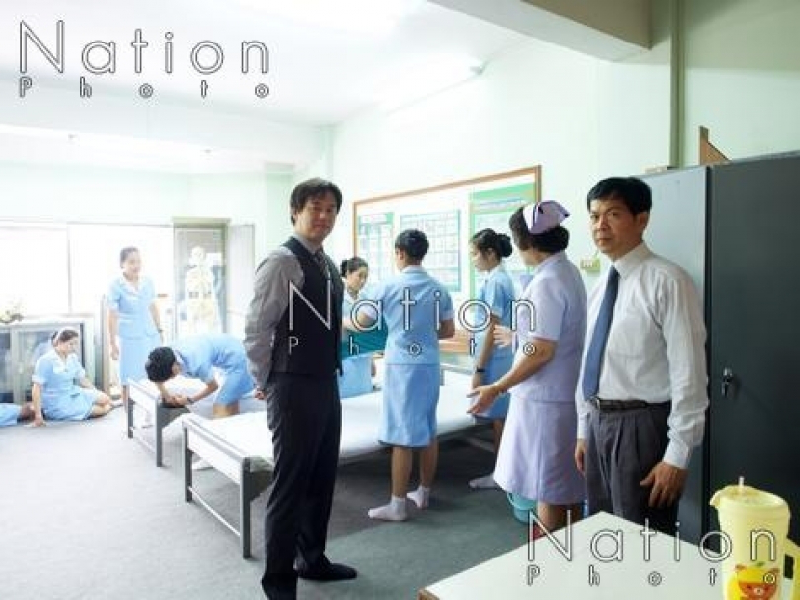
With an eye to establishing Thailand as a regional centre for nursing homes for the elderly, Japan’s Itabashi Hospital has taken over a nursing-aide school in Chiang Mai from the previous Thai owner.
Kazunori Aoki, managing director of Keisokai , a subsidiary of Itabashi Hospital, said the group and its Thai partner, Yindee Co, had spent Bt20 million to acquire Ramborirug Chiangmai School last September.
Yindee, part of Bangkok Shuho Group, holds 51 per cent of Ramborirug, with the balance taken up by the Japanese hospital group.
Aoki said the acquisition was Itabashi’s first overseas investment and – to his knowledge – the first Japanese investment by any party in the Thai nursing-assistant school sector.
“Previously, we had planned to set up a nursing home here. But we had not realised that we would not have [qualified] personnel to take care of the residents. Japanese clients are rather mindful about the quality of care. Hence, we go by the concept of ‘man before products’,” he said.
Ramborirug Chiangmai School will prepare certified nursing assistants for the planned long-term care facilities for elderly people that Itabashi now plans to build in Chiang Mai in the next five years.
Itabashi also expects to commence its first elderly-care centre in Japan in the next two years.
Apichat Dangbuav, executive director of the Chiang Mai school, said it had recently started to offer a Japanese language course to its students, who would have a chance to practise their work in Japan after completing their nursing assistant and additional Japanese language programmes.
Established 20 years ago, Ramborirug Chiangmai School is still the only nursing-assistant school to have been bestowed the Royal Reward School accolade from His Majesty the King.
About 200 students complete the six-month training course at the school annually, he said.
Aoki said Itabashi had set up Keisokai to spearhead its expansion into the business of nursing homes for the elderly, for which demand in Japan for nursing aides outstrips supply by around one million people.
As part of a bid to tackle this shortage, the Japanese government has amended its laws to allow Thais to work as nursing assistants in Japan for the first time this year.
“Next year, we will start to send out our students to practise in Japan, where they can earn the same monthly salaries of about ฅ180,000-ฅ200,000 [Bt56,620-Bt62,900] as Japanese practitioners. This is a win-win for both Thailand and Japan. This is not just about earning money, but a ‘heart-to-heart’ service. Among Asians, Thais should be the closest to sharing the same ‘sense’ as Japanese,” the managing director said.
The group is also eyeing the same opportunity in Thailand, which is stepping fast into ageing demographics, Aoki said.
It also has its sights on setting up a Japanese language school in Myanmar, before putting up a nursing-assistant school there, he added.
