
Resort shows Betagro’s environmental concerns
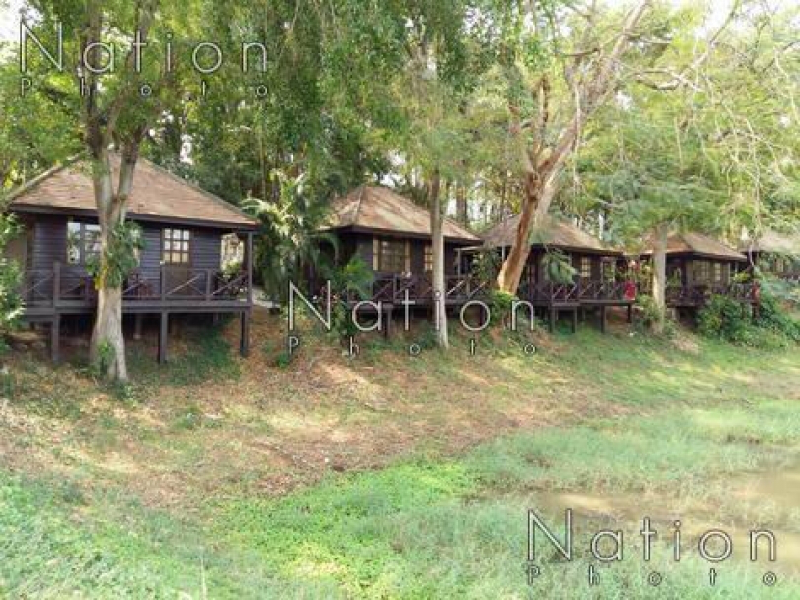


PASAK HILLSIDE Resort is only a small business unit of Betagro Group, an agribiz and pharmaceutical company that boasts annual revenue of more than Bt10 billion. But the group has a high aim for the resort:
The business must be financially viable and also reflect Betagro’s guiding principle, “Let’s Make Life Better.”
"This resort is just a tiny part of Betagro’s business, but it can be sustainable. At the same time, it can be a showcase of the group’s compliance to environment-friendly practices,” said Kriengluck Naruethep, Betagro Group’s assistant vice president for food-complex and resort management.
Lop Buri, 139 kilometres north of Bangkok, is now the largest business base of the group. Various businesses and manufacturing premises occupy much of the group’s 6,000 rai (960 hectares) of land. One-sixth of it houses a teak forestation project, with some plots sold to individual buyers.
Pasak Hillside started in 1993 as the clubhouse for the buyers. With just 16 rooms at the beginning, it now offers 36 rooms, catering to both the group’s business and outside guests, who contribute half of the revenue.
Kriengluck said that despite the size of the complex, the group’s SHE standards – safety, health and environment – are strictly applied at this resort, particularly environmental ones. Much of the focus goes to waste management, energy consumption and community interests.
At Betagro’s factories, waste segregation and recycling is highlighted as well as strategies to reduce the use of raw materials. This policy is replicated at the resort. Styrofoam containers are prohibited. Separate waste bins are available for different types of waste.
The kitchen has closely monitored flows of raw materials. While fresh vegetables are supplied from the group’s adjacent community learning centre, the kitchen makes sure that the supply matches daily consumption. Leaves are turned into fertiliser to educate farmers nearby that this is better than torching the leaves.
“Waste is generated by people. We need to ensure that our consumption does not harm the environment. It is difficult to raise awareness among Thais, even in the next 10 years ... We’re trying to show them successful results quickly,” Kriengluck said.
On energy consumption, for the past few years, the resort has stocked nothing in the guestroom refrigerators after observing that guests do not consume all the items. Guests can instead buy the items at the kitchen and keep only those they want cool in the fridge. The prices are set only slightly above retail so guests need not drive to an outside shop.
Compared with 2007, the electricity bills have gone down by 20 per cent, Kriengluck said.
“There is a solution to everything. Guests are satisfied. They have the items they want without having to waste time and fuel driving out of the resort,” he said.
Applying for a green hotel certificate sped up the process of making the resort environment-friendly. After the application was made, advisers arrived to train the staff. Kriengluck said the staff were very supportive, understanding that they were helping save the Earth.
Nearly all of the 98 staff are local residents. On Thursdays, after a communal exercise session, they discuss what they did in the past week and brainstorm how to improve their work. Knowledge at the workplace is also replicated at their houses and their communities.
Guests are also urged to help by not changing bed sheets and towels every day and reducing water consumption. There are no bathtubs. The resort has a large reservoir, ensuring that it does not need to compete with farmers for water from natural sources during the dry season.
“We have received good support from guests,” he said.
The resort in January was certified a green hotel, winning the Gold Class award from the project that recognises environment-friendly accommodations nationwide.
Under the initiative of the Environmental Quality Promotion Department, to win the Gold Class award, assessment scores must exceed 80 per cent. The fact that it won the high score in the first year brought overwhelming joy to all staff – and encouraged them and the property owner to do more.
The lighting system was recently changed to energy-saving bulbs. Under discussion is sourcing half of the vegetables from the community learning centre, to reduce consumption of fuel to transport food. Kriengluck has also floated an idea of changing the menu to match seasonal output from the centre.
Many guests check in to the resort for seminars and day activities that include rope climbing, kayaking and water slides. A bicycle track zigzags through the teak forest, where horses and wild birds live.
Four or five bungalows have been erected in the woods to satisfy guests who seek complete privacy.
“We earned the hotel award because of the staff’s support and the clarity of our mission. In return, we save money and help raise awareness on environmental protection.
“Benefits come in various dimensions. Our aim is not just to draw more guests, but also to reduce costs and ensure that this business is operated in a sustainable way,” Kriengluck said.
