
Centuries-old Lee fish traps now a thing of the past
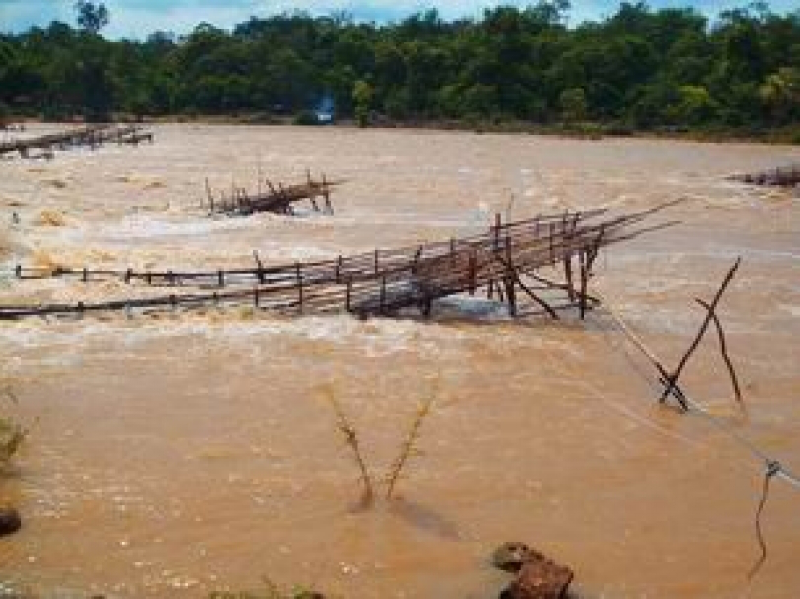


CENTURIES OLD Lee traps, or basket-type fish traps fashioned out of wood and bamboo, which have been used by southern fisherman for hundreds of years, are in the process of being removed.
The Done Sahong Hydropower Project (DSHP) is working in cooperation with local authorities in Champassak’s Khong district to inform fishermen they should end the longstanding practice to preserve fish stocks for the future.
Some Lee traps blocking the passage of fish are now in the process of being removed.
In 2010, the Lao government enacted the Fisheries Law, which made Lee traps illegal, but people are continuing the practice as they view it as a traditional practice.
Khamphou Lithisack, deputy governor of Khong district, said the district is working with 14 families in six villages to teach them that the use of fish traps is illegal and also an unsustainable form of fishing in the longer term.
Khamphou said that earlier this year, district authorities from the Done Sahong project removed 100 Lee traps out of 380 to make it easier for fish to migrate upstream to breed over the wet season, with their migration normally taking place from May to July.
According to figures collected by district authorities, some 20 per cent of local fishermen are using Lee traps.
While this method has been established in the local community over many generations, it is no longer sustainable in the way that it was for various reasons.
First, the fishing community is larger than it was, meaning there are many more traps in place.
Second, better transport means there is now greater access to markets in which to sell the excess fish, making it very much a commercial venture.
In past generations, isolated fishing communities would catch only enough fish to sustain them and then maybe retain a little extra to make padaek as a cash commodity.
But today every single fish caught in the traps is either eaten locally or sold in markets in Champassak or further afield.
This means that many species of fish are at risk of extinction because in the dry season, particularly during peak periods of fish migration, these traps can catch very large amounts of fish in a short period of time.
The Done Sahong authorities conducted studies of reported fish catches by local villagers while also installing underwater cameras to try to establish the number of fish making their way upstream in the wet season to spawn.
Khamphou highlighted the destructive nature of some of the fishing methods in the area.
Studies indicated that most fish sold at Khone Falls in the 2016 dry season were caught by destructive methods – 70 per cent by bombing, 20 per cent by electro-fishing and 10 per cent by substances toxic to fish.
Fisheries team leader for the Fisheries Sustainable Management Project from DSHP, Somphone Phomannivong, said the project is continuing to cooperate with district authorities to dispose of illegal fish traps but some communities are against these methods generally because only a few people reap most of the benefits.
Enforcement is difficult because the activities are carried out secretly and it is costly to patrol the river and enforce the laws.
For example, some fishermen are employed by fish traders to use illegal equipment to hunt fish, especially in the breeding season, which threatens many species of fish with the prospect of extinction.
People who see these illegal activities may be scared to report the matter as they fear the consequences.
This poses a challenge for district authorities and requires logistical and financial support to improve the enforcement of the laws.
DSHP is actively supporting enforcement by the responsible agencies via the Done Sahong Fisheries Management Committee.
The Fisheries Law prohibits the use of large gear like LuangKhang and Lee traps, which block fish migration.
Some families have owned these fish traps for many years but with the growing population many more such traps are being built, including by commercial traders.
Of course, the owners of these traps do not want to remove them because they provide a valuable source of income.
However, it is necessary to preserve fish stocks, which support many more people than just the owners of the traps.
Removing such traps also aims to spread the catch among more fishermen who use ordinary fishing gear to guarantee their food security and a supplementary income on a good day.
Somphone said eliminating the large gear will allow fish migration for spawning.
A healthy fish population is in everyone’s long-term interests, especially the fishermen themselves.
The DSHP has also installed fish conservation zones and spawning areas, which will serve as important measures towards fish habitat protection as well as fish breeding prospects.
The project has registered local fishermen and their families, as well as fishermen’s organisations, in an effort to help boost their incomes and offer them alternative livelihoods.
DSHP is working to raise awareness among local fishermen of the importance of fish conservation as well as sustainable fishery, such as training them to inspect their catches for fish species that are at risk of extinction and releasing them back into the river.
After completing their training, some of them will be employed by DSHP to serve as fish conservation rangers who enforce legal fishing methods and help to ensure sustainable fishing methods in the local community.
Removing the Lee traps will of course affect their owners but the project is looking forward to helping impacted fishermen to adapt through ventures such as fish farming on the Mekong to preserve their incomes.
Between the options available, including fish farming, and the possibility of employment as a fisheries officer, local fishing communities should be better off in the long term.
