
Creativity vital to progress of society, economy: Adobe study
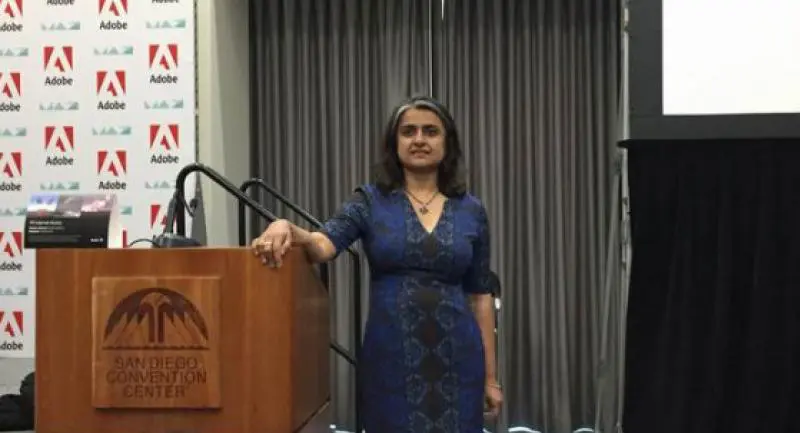


ADOBE SYSTEMS, a US-based multinational computer-software company, sees strong growth in use of its Creative Cloud product in Asia-Pacific countries because the number of subscribers outside the United States grew almost 50 per cent as of end of the third quarter.
The 46-per-cent year-on-year subscription growth outside the US was very significant and important, Mala Sharma, vice president and general manager of Creative Cloud Product, Marketing and Community at Adobe Systems Inc, said in a press conference with media from Japan and other Asia-Pacific countries.
However, she declined to break down the number of users by country.
Sharma showed new figures from the Adobe “State of Create Study”, which dug into what people think about creativity and its impact on business. The study found that globally 70 per cent of participants agreed that being creative was valuable to society, while 64 per cent said that same trait also contributed to the economy.
The survey also showed that Japan is considered the most creative country by 34 per cent of respondents and Tokyo as the most creative city by 26 per cent.
The country getting the second most votes was the United States (28 per cent), while New York was the second-most-favoured city (23 per cent).
Any nations that care about creativity will try to invest in it more as they believe good design is good for business, Sharma said.
“So you’ll see 52 per cent of Japanese respondents believed it is important for business to focus on good design,” she said.
The study was done on 5,000 consumers aged 18 and older in the United Kingdom, Germany, France, the US and Japan.
Adobe Creative Cloud is a subscription-based software service from Adobe Systems that gives users access to a collection of software developed by Adobe for graphic design, video editing, Web development, photography, and cloud services.
The demand for creativity could also result from the number of members of Behance, which claims to be the leading online platform to showcase and discover creative work, she said.
When Adobe acquired Behance four years ago there were 1 million members, but now that number has increased to more than 8 million, she said.
The number of job postings on the Behance creative community across Japan and the Asia-Pacific region has grown 200 per cent year on year, she said.
“There was significant engagement of creativity. People wanted to create their ideas there,” Sharma said.
However, Sharma believes the journey of Creative Cloud since its launch four years ago is only beginning. She pointed to three figures to support this belief.
First, there were more than 35 per cent customers that used Creative Cloud for the first time (see graphics).
They were creative professionals, students, photo enthusiasts, chief marketing officers and chief information officers, Sharma said.
Second, the group of users outside the US, mostly in Japan and Europe was growing. And third, there were 35 million Adobe IDs created on mobile devices.
Last month, Adobe revealed “APAC Creative Pulse 2016”, its annual survey analysing the role played by technology in today’s fast-changing digital marketplace. It found that almost 90 per cent of respondents thought creativity and design thinking were becoming more important to business.
The survey polled more than 1,700 creatives across the region, including graphic designers, Web designers, photographers, and artists in Australia, New Zealand, India, Southeast Asia, Greater China and South Korea.
The overview also found that 94 per cent of respondents thought creatives were increasingly working across multiple media and disciplines, while 85 per cent thought technology was enabling creatives to be more in control of their professional destiny.
