
Middle East war drives deeper energy and economic pain for Thailand
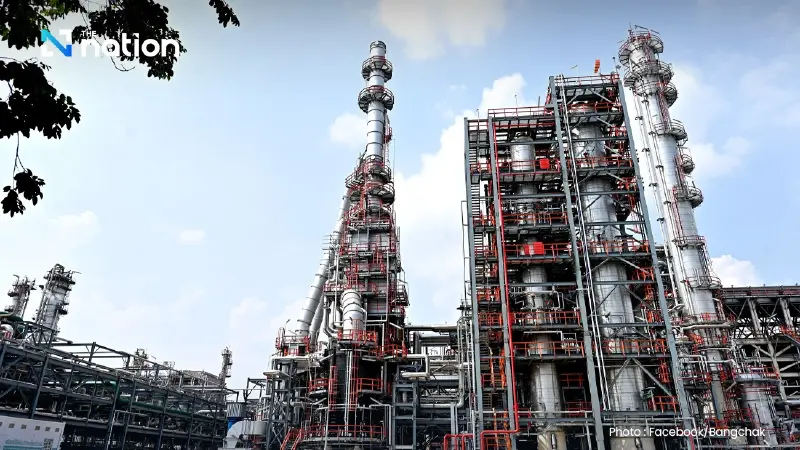


Thailand enters level 2 energy crisis as Hormuz risks disrupt supply, forcing refineries to prepare for all crude types and raising cost pressures
- The conflict has pushed Thailand into a "level 2" energy crisis, where fuel supply is available but at a significantly higher cost due to the country's reliance on the disrupted Strait of Hormuz for 50% of its oil imports.
- Rising crude prices, along with hidden costs like increased insurance and freight charges, are causing immediate economic damage to sectors like SMEs, manufacturing, and petrochemicals, which face surging material costs.
- Thailand's vital tourism industry is experiencing strain from a sharp rise in airfares and a 50% reduction in flights transiting through the Middle East, threatening the sector's recovery.
- In response, the Thai government has activated an emergency plan to manage supply, monitor for hoarding, and prepare for more severe measures like fuel rationing if the crisis escalates further.
Thailand is preparing for deeper energy disruptions as authorities warn that the global crisis, triggered by escalating conflict in the Middle East, has entered a more serious phase, with supply pressures now beginning to feed through the system.
At a roundtable titled “Navigating the energy crisis: Thailand’s survival path”, organised by PostToday under the Nation Group on April 2, officials and industry leaders agreed that the situation has moved into “level 2” of the energy crisis, where supply remains available but at significantly higher cost.

Dr Veerapat Kiatfuengfoo, Deputy Permanent Secretary for Energy, said the crisis can be divided into three stages. The first involves market panic without real supply disruption, while the second, where the world now stands, begins to affect supply chains and drives prices sharply higher. The third stage would represent a severe shortage, where fuel becomes unavailable regardless of price.
A key concern is the vulnerability of global energy transport routes, particularly the Strait of Hormuz, where disruptions have removed up to 20 million barrels of oil per day from the system. This has rapidly reversed earlier oversupply conditions in both oil and liquefied natural gas markets, pushing prices up from around US$60 per barrel at speed.
Less visible, however, are the hidden costs now feeding into the system, including crude premiums, insurance and freight charges, which are adding further pressure to downstream energy prices but remain underreported.

Thailand is particularly exposed, relying on imports via the Strait of Hormuz for around 50% of its oil demand. While supply can still be secured, the country faces constraints over crude quality that matches its refining configurations.
“If the situation escalates to level 3, Thailand may have no choice but to accept crude from any source, regardless of quality,” Veerapat warned.
Domestic consumption remains high, with diesel usage averaging 60–70 million litres per day and petrol around 20 million litres. The challenge, he said, lies in sourcing crude that aligns with refinery systems.
Thailand’s total oil reserves across storage, tanks and contracted shipments are currently sufficient for 104 days, and authorities say supply continues to flow into the system.
To strengthen oversight, the Energy Ministry has introduced daily oil dashboards to monitor flows across refineries, storage facilities, service stations and industrial users. The system is designed to detect irregularities such as hoarding or imbalances in distribution.
“If any service station claims to have run out of fuel ahead of a price increase, authorities will investigate immediately,” he said.
Officials acknowledged that volatile prices have created incentives for speculative stockpiling, particularly as price gaps between domestic and international markets have widened to more than 10 baht per litre. This has prompted tighter monitoring of supply routes.
Refineries are also facing mounting complexity in pricing structures, as crude costs and refined product prices move in different directions. Gross refining margins (GRM), once seen as a key profitability indicator, are now being eroded by hidden costs, with some products, particularly petrol, showing negative margins in global markets.
Authorities also flagged distortions in fuel usage, including the diversion of subsidised “green oil” intended for fisheries into land transport, as well as uneven distribution between major stations and smaller operators, which is affecting agricultural supply.
“Fuel remains available, but the issue lies in management and distribution. Panic could cause supply to drain faster than normal, creating the perception of shortages,” officials said.
The Energy Ministry has outlined a three-tier emergency response plan
At level 1, where disruptions last more than seven days, measures include increasing crude imports from alternative sources and boosting biofuel blending. Additional steps involve adjusting refinery yields, increasing production capacity, sourcing crude and condensate from overseas concessions and the Malaysia–Thailand Joint Development Area (JDA), and promoting energy conservation.
At level 2, where fuel stocks approach legal reserve thresholds and supply disruptions persist, authorities may suspend fuel exports, increase stock requirements, relax fuel quality standards, ban crude exports by concessionaires, procure oil through government-to-government agreements, and tighten controls on distributors to prevent hoarding. Energy-saving measures, such as limiting operating hours for malls and petrol stations, may also be introduced.
If the crisis escalates to level 3, with supply disruptions exceeding one month and reserves falling to critical levels, authorities may impose fuel rationing and enforce mandatory energy-saving measures nationwide.
The economic impact is already being felt across sectors
Sangchai Theerakulvanich, honorary chairman and strategy chairman of the Federation of Thai SMEs, said small businesses are among the first to be hit, particularly in agriculture, manufacturing, food and services. Raw materials account for 30–70% of SME costs, while utilities and transport add another 11%, meaning energy price increases feed through immediately.
He called for a review of the entire energy pricing structure, including refining and marketing margins, and urged authorities to address hoarding and smuggling. He also proposed measures under a “reduce-freeze-support-save” framework, including price stabilisation, financial support schemes and the introduction of an “Energy Wallet” via the Paotang app.
In the industrial sector, Chaiwat Nantiruj, Group CEO of EKA Global Group, said prices of plastic pellets have surged by 30%, with some types rising as much as 80–90%. While supply remains available, rising costs have forced some producers to halt deliveries and adjust prices, potentially affecting more than 90% of downstream goods.
“If the conflict drags on and disrupts upstream feedstocks like gas and oil, the petrochemical sector could face tighter supply conditions,” he warned, calling for temporary tax relief on imported plastic resins and incentives for recycled materials.
Retail operators are also bracing for delayed impacts. Chatrchai Tuongratanaphan, vice president of the Thai Retailers Association, said it typically takes three to six months for cost pressures to reach the sector. He stressed the need for clearer government communication on fuel pricing to help businesses adjust.
Meanwhile, the tourism sector is already seeing signs of strain. Thienprasit Chaiyapatranun, president of the Thai Hotels Association, said the impact has become clearer one month after the Middle East conflict began. Airfares have surged, with some European routes already doubling in price, while flights requiring transit through the Middle East have dropped by around 50%.
He warned that the outlook for the second quarter is increasingly fragile. Thailand is moving into the low tourism season, and the domestic market, once seen as a buffer, is now under threat from rising oil prices. Although Songkran remains a global draw that will continue to bring in foreign visitors, certain destinations are more exposed, particularly Chiang Mai, which is facing severe PM2.5 pollution.
Thienprasit also pointed out that hotels are in a difficult position compared with other sectors, as they cannot easily raise room rates despite rising costs. Operators are therefore focusing on maintaining occupancy and generating enough revenue to cover fixed costs, rather than passing on price increases.
He urged the government to introduce direct cost-support measures for businesses, including tax relief such as reductions in land tax, to help the sector cope with mounting pressures.
