
Seeing is believing for farmers at Asia-Pacific learning centres
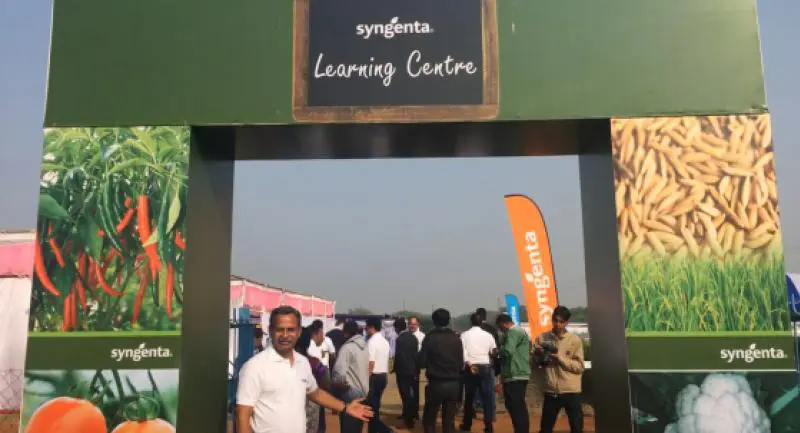


SYNGENTA, an agrochemicals company headquartered in Switzerland, has set up learning centres for farmers across Asia-Pacific in an effort to help address future food shortages.
“We are approaching a food crisis. The world population is growing exponentially and growers worldwide are lacking the capability to provide for the increasing number of mouths. Currently, 870 million people go to bed hungry each night, and every day the world’s population increases by 200,000,” said Tina Lawton, Syngenta’s Asia-Pacific regional director.
“By 2050, the global population will exceed 9 billion and we have no idea how to feed them all,” she added.
Syngenta believes that the answer to this problem is to tap into the potential of smallholding farmers, which make up the majority of the agricultural profession.
Some 86 per cent of all growers in India are smallholders, supporting a single family with a mixture of cash crops.
To help tap into this potential, Syngenta sets up learning centres to teach farmers to maximise yields while keeping costs the same.
The aim is to increase average productivity of the world’s major crops by 20 per cent without using more land, water or other inputs, she explained.
“Rural economies could add at least US$2 trillion [Bt70.9 trillion], the equivalent of India’s gross domestic product, to the rural economy by 2030 if we take a few key steps to help farmers provide the right products, at the right time, at the right dose to maximise the yield, maximise quality and maximise the family incomes,” Lawton said.
Farmers are taught via the centres to use chemicals sparingly and only use specific herbicides and pesticides during different lifecycles of the crop.
For example, pesticides required for the flowering stage are very different to the ones used in the harvesting stage, she said, adding that the targeted use of chemicals would improve effectiveness and reduce cost.
Growers are also educated on best practices in terms of crop rotation and water management in the face of decreasing arable land and water availability, which is in line with Syngenta’s philosophy of “More food, Less waste”, the regional director said.
Meena Netam, 44, is a farmer who regularly visited the learning centre in Raipur, a city in central India.
She is proof of the centre’s success, saying it had improved her yields of rice, tomatoes and hot peppers in the four acres of her small farm.
“I never knew about different types of pests before [coming to the learning centre], and what pesticides I should use against them,” she said.
The learning centres teach by “seeing is believing”, Lawton said.
While it sounds counterintuitive that Syngenta should want to decrease the use of chemicals as its revenue comes from the sale of chemical products, this strategy is how the business differentiates itself from its competitors, because it seeks to build a loyal customer base, instead of maximising short-term sales.
After learning the proper use of pesticides, as demonstrated in learning centres using Syngenta products, farmers would be more likely to buy the company’s products to use in the same way, she said.
Moreover, the learning centres provide comparison between the flourishing Syngenta-practice crops and lacklustre standard-practice crops, showing that the former system offers greater yields and less pests, she said.
Learning centres are a form of tangible, practical marketing targeted directly at the farmers because they are integrated into their communities, Lawton said, adding that this marketing strategy is also packaged to address farmers’ needs, such as reducing input costs and boosting output yield.
“We believe that as long as the farmers use the crop protection at the right time, in the right dose and the right way, it can ensure productivity in their fields, while both users and the environment are in good health. That’s why the growers trust and are confident in our products,’ said Siripun Suntornvijitr, country manager for corporate affairs of Syngenta Thailand.
Syngenta’s Thai programmes
In Thailand, two permanent learning centres were established – in Suphan Buri and Phitsanulok – in 2010.
They educate farmers on an integrated rice solution, which has increased their average productivity by around 20 per cent, he said.
Syngenta also has an alternative model to the learning centre – reference farms.
This entails respected farmers in a community being selected to become the pilot project for implementing Syngenta’s practice on their farms.
The crop yield and income of the reference farmer are monitored and compared with other benchmark farms in the area. If the reference farmer is doing well, they then teach the rural community about the best practices they have learnt.
There are currently two reference farms in Thailand, in Chiang Mai and Roi Et.
The focus is on these two areas because Syngenta plans to reach out to growers who lack access to sophisticated irrigation and harvesting technologies.
The learning centres and reference farms are part of Syngenta’s commitment to its “Good Growth Plan” goals, some of which involve boosting crop productivity, rescuing more farmland and empowering smallholders.
