
Cigna Thailand to focus more on health policies
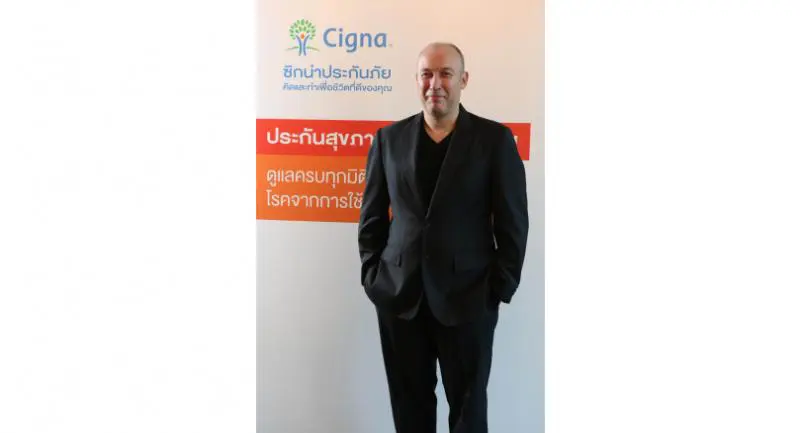


CIGNA Thailand, the local unit of a global health-services company, will embrace health insurance as a flagship product to drive up premium income thanks to the rising health concerns of white-collar workers.
Julian Mengual, chief executive officer and country manager of Cigna Thailand, said health-insurance premiums represented 40 per cent of the company’s portfolio, which could go to 50 per cent in the long term as Thais are more aware of the cost of medical treatment.
In the health-insurance category, Cigna has a market share of 12 per cent, ranking second.
The other 60 per cent of its premium income is contributed by travel insurance and personal-accident insurance.
The 11th National Development Plan has noted that Thais are at risk of chronic illnesses such as hypertension and diabetes. Statistics from the Department of Health also show that 60 per cent of working-age Thais are suffering from “office syndrome” symptoms, caused by unhealthy habits and misuse of muscles on the job.
The Office of the National Economic and Social Development Board has a long-term national development plan to help prevent and minimise the occurrence of chronic and critical illnesses.
Cigna wants to position itself as a supporter of a sustainable national health policy, for which it has designed a new “enhanced health insurance plan”. It focuses on lifestyle-induced illnesses such as cancer, office syndrome, diabetes and hypertension.
The insurance plan can be personalised, allowing customers to select the coverage they want at a price they can afford, Mengual said.
The company targets this new health-insurance plan to generate premium income of Bt100 million next year. That estimate is based on the assumption of each customer paying Bt6,000-Bt7,000 per year in premiums on average.
As of October, Cigna’s net premium income this year was Bt1.13 billion, growth of 13.56 per cent from the same period in 2015.
Mengual believes the company will enjoy strong growth next year from health insurance and that this kind of insurance will be a key driver of targeted premium-income growth of 15 per cent.
