
Thai food exporters risk losing US buyers over safety records
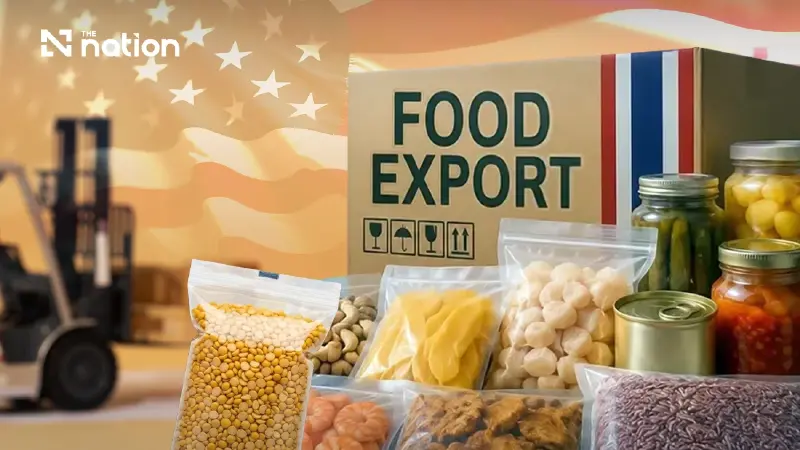


Thai food exporters risk losing US customers and facing shipment delays if FSVP safety and traceability records are incomplete, the DITP says.
Thai food exporters could lose US customers or face costly shipment delays if they fail to provide the safety and traceability documents importers need to comply with US food regulations, Thailand’s trade office in Chicago has warned.
The Department of International Trade Promotion, citing the Thai Trade Center in Chicago, said US buyers were increasingly considering regulatory compliance alongside price and product quality when selecting overseas suppliers.
Thai producers unable to provide sufficient food-safety evidence could expose their US importers to regulatory risks, prompting buyers to delay shipments or consider sourcing products elsewhere, the department said in an advisory published on July 8.
Compliance becomes a supplier-selection test
The warning centres on the US Food and Drug Administration’s Foreign Supplier Verification Programs, or FSVP, established under the Food Safety Modernization Act.
The rule places the primary legal responsibility on US importers, which must conduct risk-based checks to verify that food from overseas suppliers meets applicable US safety standards. Importers must also ensure that the food is not adulterated and, in the case of food for human consumption, complies with allergen-labelling requirements.
The FSVP rule is not a new measure. It took effect in January 2016, but the Thai trade office said its continuing enforcement had made suppliers’ documentation increasingly important to US buyers.
Although importers bear the legal responsibility, Thai exporters play a central role because buyers depend on them for information about factory controls, production processes and product safety.
Without adequate supporting evidence, an importer may be unable to demonstrate that it has properly evaluated and verified its foreign supplier.
Importers need product-specific records
Under the FSVP framework, importers generally need verification programmes and supporting records for each food product obtained from each foreign supplier, although the exact requirements may vary according to the product, supplier and any applicable exemption.
The required work can include identifying known or reasonably foreseeable hazards, assessing the risks associated with the food, evaluating the foreign supplier’s performance and conducting appropriate verification activities. These may include sampling and testing, reviewing food-safety records or arranging on-site audits.
The Chicago trade office advised Thai manufacturers to prepare hazard analyses, product-testing results, traceability records, quality-control documents and details of their FDA facility registration.
They should also be ready to provide evidence of inspections and food-safety controls so their US partners can respond promptly when the FDA requests FSVP records.
FDA guidance states that records held away from an importer’s premises must be retrievable within 24 hours of a request. When the agency makes a written request for electronic submission, it generally expects the records within 72 hours. Records kept in another language must be translated into English within a reasonable period when requested.
Documentation gaps threaten shipments
Failure to supply complete documentation can have consequences beyond formal regulatory action, according to the trade office.
An importer that cannot complete its supplier assessment may delay the import process while seeking additional information. Such delays can raise storage, logistics and administrative costs and disrupt the continuity of supply.
Buyers may also decide that working with an inadequately prepared supplier presents too great a compliance burden and move their orders to another producer.
The trade office said the FSVP had therefore become more than a legal obligation for importers. It was also being used as a commercial tool to assess the reliability of foreign suppliers and their suitability for long-term partnerships.
Certified systems offer an advantage
Thai manufacturers with established food-safety management systems are likely to be in a stronger position when approaching US buyers.
These may include Hazard Analysis and Critical Control Point systems, Good Manufacturing Practice controls or certification under a food-safety scheme recognised by the Global Food Safety Initiative.
Laboratory test results, effective traceability systems and well-maintained quality-control records can further strengthen an exporter’s credibility.
The ability to supply complete and readily accessible documentation can reduce the workload faced by a US importer, build confidence in the producer and improve its prospects of securing repeat orders or long-term supply contracts.
However, certification alone does not remove the need to provide the product- and supplier-specific information required by the importer’s FSVP.
Exporters urged to review readiness
Thai food companies planning to enter or expand in the US market should review their factories’ food-safety systems before approaching importers, the trade office advised.
They should ensure that hazard analyses, testing records, traceability information and factory-registration details are current, properly organised and available when requested.
Exporters should also coordinate closely with their US importers to establish which records are needed for each product and how frequently the information must be updated.
The trade office said stronger documentation would not only help importers meet FDA requirements but could also increase buyer confidence, improve market opportunities and strengthen the long-term competitiveness of Thai food products in the United States.
