
China auto brands to top 2025 global sales, overtaking Japanese rivals
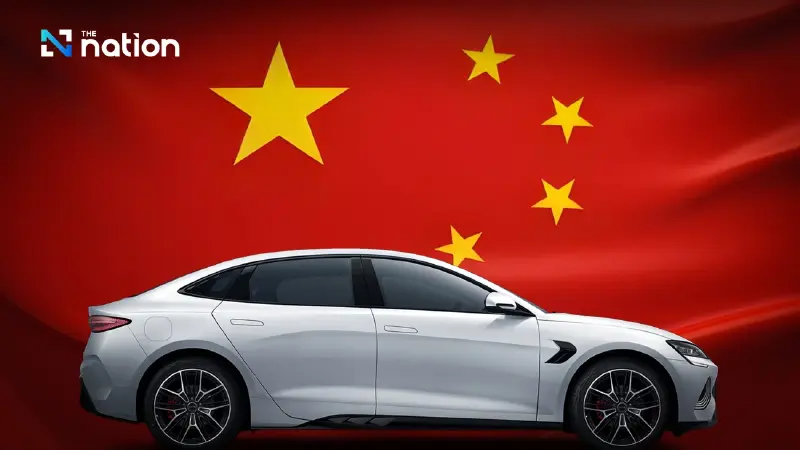


Nikkei Asia reports China is set to top global new-car sales in 2025, overtaking Japan, driven by EV growth, price wars and exports
2025 is shaping up to be a major turning point for the global automotive industry, with Chinese carmakers expected to climb to the top spot in worldwide new-vehicle sales for the first time, pushing Japan — which has held the crown for more than two decades — down to second place.
Nikkei Asia reported that Chinese manufacturers are on track to rank No.1 globally in new-vehicle sales in 2025, based on full-year sales figures announced by automakers and data from S&P Global Mobility covering January to November. The dataset includes commercial vehicles and covers both domestic sales and exports.
The report estimates global sales by Chinese automakers will rise about 17% year on year to roughly 27 million vehicles. After China became the world’s largest car exporter in 2023, it is now poised to become the top market leader by total global sales this year.

China, which accounts for about 70% of total sales by Chinese automakers, has been strongly promoting electric vehicles and plug-in hybrids. New-energy vehicles now make up nearly 60% of passenger-car sales in the country.
By contrast, global sales by Japanese manufacturers are expected to be broadly flat at just under 25 million units. The United States and Japan were once the main rivals for global leadership, and at Japan’s peak in 2018 its sales climbed to nearly 30 million vehicles.
Japan’s advantage over China — about 8 million units in 2022 — has effectively disappeared within just three years, the report said.
At the same time, China is facing rising overcapacity, intensifying price competition. Leading EV makers including BYD and others have turned to price cuts, according to the China Association of Automobile Manufacturers. From January to November, the best-selling price band for new-energy passenger cars was 100,000–150,000 yuan, accounting for 23% of total sales.
As competition at home worsens, Chinese automakers are increasingly relying on exports through aggressive pricing, shipping surplus EV supply from the domestic market overseas.
In ASEAN — a region long dominated by Japanese manufacturers — sales of Chinese vehicles are expected to jump 49% to around 500,000 units this year, the report said.
Thailand is cited as a key example of shifting market share. Japanese vehicles accounted for 69% of new-car sales as of November, down sharply from about 90% roughly five years ago, according to data from Toyota Motor’s Thai unit.
In Europe, sales of Chinese vehicles are expected to rise 7% to about 2.3 million units this year. Despite the European Union imposing additional import tariffs on China-made EVs, Chinese manufacturers have responded by raising the share of plug-in hybrid exports, which are not covered by those measures.
In emerging markets, Chinese vehicle sales are also expanding, with growth expected to reach 32% to 230,000 units in Africa, and 33% to 540,000 units in Latin America.
As China becomes a major automotive power, the report said global trade tensions are likely to intensify, with more countries adopting measures such as import tariffs and new standards to protect domestic industries.
(Source: Nikkei Asia)
