
Existing EV owners not required to change plates, DLT clarifies
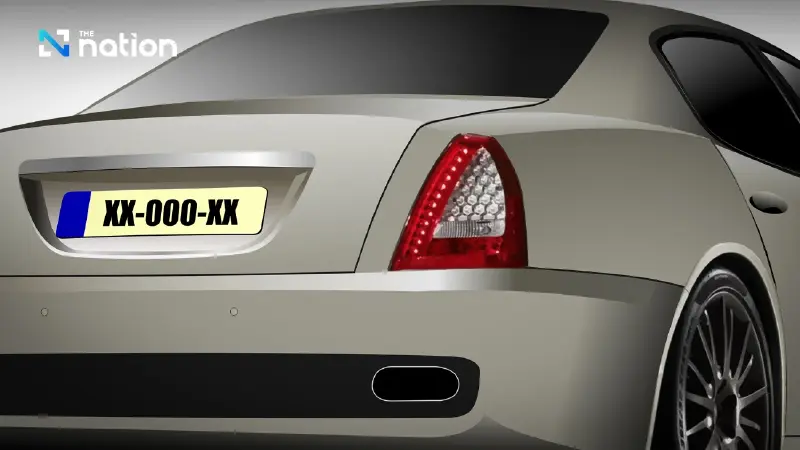


Thailand’s Department of Land Transport has clarified that existing EV owners will not be required to change to new reflective blue licence plates, as the draft regulation remains under public hearing until 30 June 2026.
Thailand’s Department of Land Transport has clarified that electric vehicles already registered in the country will not be required to change to new reflective blue-background licence plates, easing concerns among EV owners over possible additional costs.
Sorapong Paitoonpong, Director-General of the Department of Land Transport, said the proposed ministerial regulation on EV licence plates is still undergoing a public hearing process and has not yet come into legal effect.
He stressed that the DLT has no policy to force EVs that have already been registered to replace their existing licence plates, whether they are ordinary plates, auction plates or original white plates.
Existing EV owners can keep current plates
The DLT said owners of already registered EVs will still be able to use their current licence plates as usual.
However, once the ministerial regulation takes effect, existing EV owners will be required to attach a special mark to their current plates within one year.
The clarification comes after reports that the DLT was preparing to introduce reflective blue-background licence plates for electric vehicles, raising questions among motorists over whether all EV owners would need to pay for new plates.
Three EV groups under the proposed rule
Under the proposed regulation, EVs will be divided into three main groups.
For newly registered private EVs, reflective blue-background licence plates will be used from the start after the regulation comes into force.
For public EVs and special-purpose EVs, the vehicles will continue using licence plates in their existing colours, but they will be required to display an additional special mark on the current plates.
For EVs of all types that have already been registered, owners will not need to change to new licence plates. They will only be required to add the special mark within one year from the date the regulation becomes effective.
DLT says visible EV identification supports safety
Although the DLT already records the energy type of every vehicle in its system, Sorapong said clearly identifying EVs from the outside would provide important practical benefits.
The first is safety and rescue response. In the event of an accident, officers would be able to immediately identify the vehicle as an EV, which may require specific procedures and equipment due to its high-voltage battery system.
The measure is intended to help reduce risks related to electrical leakage, battery-related incidents or fire during emergency response operations.
Rule could support future EV privileges
The DLT also said clearer EV identification would support long-term vehicle supervision, including possible monitoring of battery quality and temperature once vehicles reach an age requiring closer attention.
In addition, visible EV identification could help support future benefits for electric vehicle users. Expressway operators, shopping centres or Zero Emission Zones may be able to grant privileges to EV drivers more quickly without needing to check database records.
Public hearing open until 30 June 2026
Sorapong reiterated that the draft ministerial regulation is still at the public hearing stage.
EV drivers and members of the public can submit their opinions through the central legal system website under the topic “Amendment to the ministerial regulation on vehicle licence plates (electric vehicle licence plates)” until 30 June 2026.
The DLT said public feedback will be used to improve the draft regulation before it is finalised and enforced, with the aim of ensuring that the measure benefits road users and responds to practical needs.
