
Supavud urges Bank of Thailand to address 17% baht appreciation
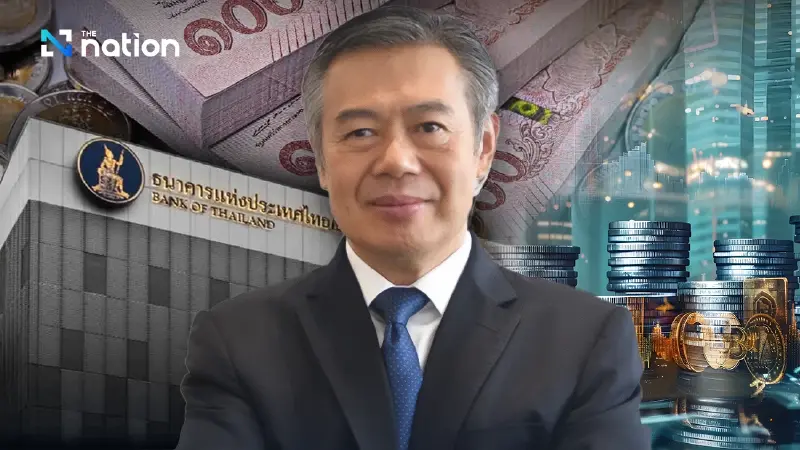


Supavud urges the Bank of Thailand to address the baht’s 17% appreciation over 17 months, which is severely impacting the Thai economy.
- Supavud Saicheua has urged the Bank of Thailand (BOT) to address the baht's 17% appreciation over the past 17 months, noting that a significant 10% of this is against major trading currencies, not just due to US dollar weakness.
- He identified three fundamental factors driving the appreciation: Thailand's lower inflation rate compared to other countries, a consistent current account surplus, and the BOT's slow, reactive intervention policies.
- Supavud clarified that previously suspected "mystery money" (net errors and omissions) is not the primary cause of the baht's strength, emphasising that the three underlying economic factors are the more significant issues for the BOT to manage.
Supavud Saicheua, Chairman of the National Economic and Social Development Council (NESDC), revealed that the issue of the baht’s appreciation remains unresolved. Specifically, the baht has strengthened by 17% over the past 17 months, moving from a low of 37 baht to US dollar in April last year to less than 32 baht today.
He explained that this appreciation is not solely due to the weakening of the dollar. When considering the exchange rate against major currencies that Thailand trades with, the baht has strengthened by 10% in the same period, with the remaining 7% attributed to the dollar’s depreciation.
This 10% appreciation against other currencies is the main issue affecting various parties, and he stressed that it is the responsibility of the Bank of Thailand (BOT) to manage the currency.
Mystery money not the main culprit
Regarding the concerns about "mystery money" or net error and omission (NEO) in the balance of payments (BOP), which was previously believed to affect the baht’s appreciation, Supavud acknowledged that updated data from the BOT showed a revision in the mystery money figures for 2024.
Initially reported at 530 billion baht, it has now been adjusted to 230 billion baht, reflecting the true situation.
The BOT clarified that much of the previously unaccounted money can be traced back to other sources, including:
- Import price adjustments by the Customs Department: It was found that the actual cost of imported oil was lower than initially reported by the department, leading to a reduction in the previously overestimated outflow of funds, amounting to $2.1 billion.
- Foreign direct investment (FDI) adjustments by the Department of Business Development: The amount of foreign investment was higher than initially reported, adding an additional $2.7 billion.
- Trade credit: Importers took out loans for goods that they had yet to pay for, adding $4.2 billion to the figures.
However, there remains about $5 billion annually that still cannot be fully explained. Despite this, Supavud emphasised that this unaccounted-for amount is unlikely to be the primary cause of the baht’s substantial 17% appreciation over the past 17 months.
Three key factors driving baht’s appreciation
Supavud identified three fundamental factors contributing to the baht's appreciation, which the BOT must address:
- Lower inflation than other countries: Over the past decade, the baht has depreciated by only 1.1% annually, compared to 2.85% for the dollar. This inflation disparity has led to long-term baht appreciation, in line with the principle of purchasing power parity.
- Consistent current account surplus: Thailand has experienced continuous inflows due to a sustained current account surplus. This issue is partly driven by weak domestic demand, causing Thailand to rely heavily on exports.
- BOT’s gradual and reactive interventions: The central bank’s slow and reactive approach to intervention prevents rapid currency appreciation but has led market participants to anticipate steady long-term profits from holding baht, as the currency strengthens by 1-2% annually.
Supavud emphasised that the baht’s 17% rise over the past 17 months remains a key concern for many, and the three underlying issues are more significant than the mystery money problem.
