
Thai Regulators Launch 'Quick Win' Reforms to Revitalise Capital Market
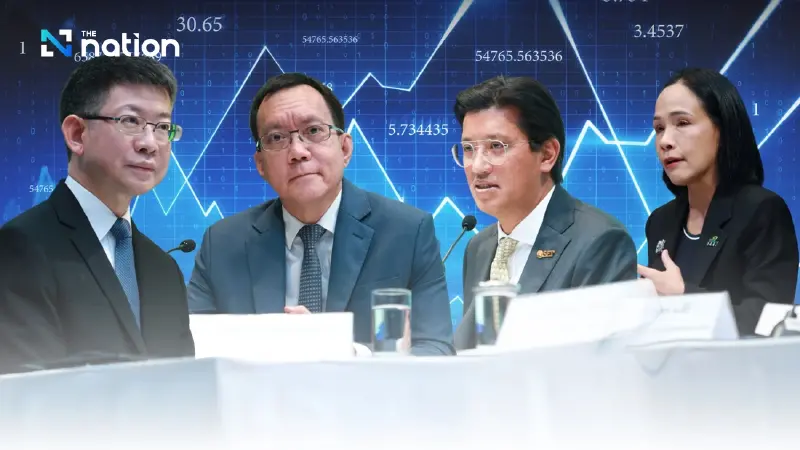


SEC and SET partner with government bodies to overhaul IPO rules, introduce a major new savings account (TISA), and fight 'Old Industry' image within four months
- A task force of Thai financial regulators has launched "Quick Win" reforms to be delivered within four months, aiming to revitalize the nation's capital market and shed its "Old Industry" image.
- The reforms prioritize attracting "New Growth Economy" companies by streamlining the IPO process and fast-tracking the Thailand Individual Savings Account (TISA) to generate long-term investment.
- To restore investor confidence, the plan includes using advanced technology for faster detection of market irregularities and removing operational hurdles for both foreign and retail investors.
The Thai capital market, struggling against global competition and perceived as an "Old Industry" with a declining market capitalisation relative to GDP, is set for a major reform push.
Regulatory and private sector leaders have united in an operation dubbed "Measures to Enhance the Thai Capital Market’s Appeal," with a mandate to deliver urgent, tangible results.
This strategic Taskforce brings together the nation’s key financial bodies: the Fiscal Policy Office (FPO), the Securities and Exchange Commission (SEC), the Stock Exchange of Thailand (SET), and the Federation of Thai Capital Market Organizations (FETCO).
Their joint goal is to overcome structural limitations and secure immediate successes, known as "Quick Wins," within four months to ensure a long-term economic restructuring.

Four Pillars of Transformation
The operation is focused on four main areas to build sustainable strength and attract new investment:
1. Quality Demand: The TISA Savings Revolution
The Taskforce is advocating for the Thailand Individual Savings Account (TISA) project as a major national reform to generate quality long-term funding and reduce market volatility.
Dr Pornanong Budsaratragoon, Secretary-General of the SEC, expressed confidence that the Taskforce will establish the "first concrete steps" of TISA within the four-month timeframe, despite the scheme’s original 2026 launch date.
Dr Kobsak Pootrakool, Chairman of FETCO, hailed TISA as a necessary unification of retirement, ESG-focused, and youth savings under one structure.
"This is a reform of Thai personal savings," he stated, noting FETCO has already approached the Ministry of Finance to push for government benefits related to the scheme.

2. Attractive Supply: Breaking the 'Old Economy' Barrier
A critical aim is to attract New Growth Economy firms and shed the market’s "Old Industry" image. The SET and SEC are collaborating with the Board of Investment (BOI) to streamline the IPO process and adjust regulations to make capital raising easier for high-potential technology and future-industry companies.
Assadech Kongsiri, President of the SET, highlighted the Jump+ programme, which currently supports 61 listed companies in planning three-year growth strategies, as a source of immediate success.
He expects the plans from the companies involved, including new economy firms, to become clear and show fast results. The ultimate goal is for the capital market to become the true funding hub for industries of the future.
3. Trusted Market: Tech-Enabled Enforcement
To restore investor confidence—a significant recent challenge—the SEC will employ advanced regulatory technology to improve efficiency in rapidly detecting market irregularities.
This move aims to ensure swift and effective law enforcement against wrongdoers. Internally, the Taskforce is focused on strengthening governance by elevating standards for listed companies’ Internal Control systems, auditors, and independent directors.

4. Supportive Ecosystem: Removing Hurdles
The final pillar involves reviewing market infrastructure and addressing operational obstacles that deter investment.
This includes:
Retail Access: Adjusting regulations to allow the public to invest with smaller sums.
Foreign Investment: Urgently addressing operational impediments for foreign investors, such as the complexity surrounding e-proxy voting for shareholder meetings.
Dr Warotai Kosolpisitkul of the FPO affirmed that this collective commitment is aimed at restoring confidence for both foreign and domestic investors.

Dr Kobsak concluded that while four months is tight, it is enough time to "unlock" many of the issues necessary to attract the New Growth companies the BOI is currently working with.
