
AWC targets THB 218bn in assets by 2025, doubling down on sustainability and community growth
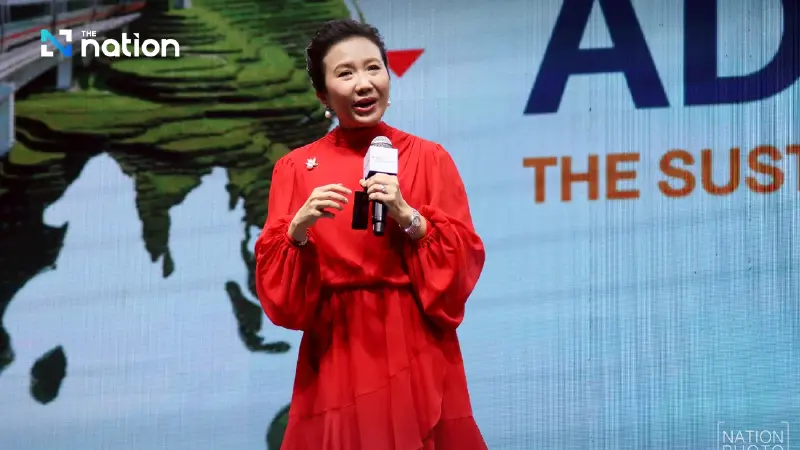


Asset World Corporation (AWC) plans ambitious growth in Thai real estate, focusing on sustainability, community engagement, and economic value creation.
Prominent real estate company Asset World Corporation (AWC) Plc has announced its target to increase its total asset value to THB 218 billion by the end of 2025 and to reach THB 300 billion by the end of 2029, aiming to deliver lasting happiness and sustainability to the tourism sector.
Wallapa Traisorat, CEO of AWC, said the company’s role is to develop diverse real estate projects across Thailand that create destinations attracting tourists from around the world.
“What will truly add value and meaning is being part of creating sustainable impact, in line with AWC’s philosophy and mission of ‘Building a Better Future for All.’ Growth must be sustainable, and we rely on our partners to move forward confidently,” she said.

AWC focuses on three key pillars to achieve sustainability:
1. Better Planet
In real estate, this is a major challenge. AWC develops projects that consider energy efficiency, advance circular economy principles, and minimise negative environmental impacts. Recently, the InterContinental Chiang Mai Maeping Hotel became the first property in Thailand to receive LEED Gold Certification Version 4 BD+C: Hospitality.
2. Better People
AWC’s hotels and real estate projects are located strategically within communities, fostering collaboration with local partners, suppliers, and vendors. The Gallery project exemplifies this approach through the concept of “Giving Art, Art of Giving,” showcasing community artisans’ products at the hotel, across AWC projects, and online. Recently, items from Kalasin, linked to dinosaurs, were displayed at The Gallery in Jurassic World: The Experience at Asiatique.
AWC also works with the Tourism Authority of Thailand (TAT) and the Mae Fah Luang Foundation under Royal Patronage on the “AWC Stay to Sustain” project. For every night guests stay at an AWC hotel, they contribute to the conservation of one tree, helping restore community forests, protect biodiversity, and boost local incomes.
3. Better Prosperity
AWC emphasises economic value creation and robust corporate governance, integrating sustainable practices into the business model to benefit shareholders, employees, and the wider community.
In its push to develop real estate projects as tourism destinations, AWC has taken steps from the very start with funding. Recently, the company secured a 100% Green and Sustainability-Linked Loan, allowing it to pursue growth in line with sustainability standards. This applies not only to new developments but also to existing office buildings, including Empire Tower in the Sathorn business district, which offers over 300,000 square metres of usable space and has recently received LEED Gold Certification. Even luxury hotels such as The Athenee Hotel Bangkok, A Luxury Collection Hotel, have received 100% All-Star Certification from The Pledge for food waste management, marking a global first.

Wallapa added that, in line with the company’s strategy for sustainable growth, AWC continues to develop real estate projects that create jobs, support local sourcing, and encourage local consumption. Each project promotes the sale of local products. Despite the COVID-19 pandemic, the company opened Meliá Samui in early 2020 and Banyan Tree Krabi at the end of 2020, continuing expansion to the present.
Looking to the medium term, in 2026 AWC plans to open Fairmont Bangkok Sukhumvit and the Lannatique Chiang Mai project, designed to promote Chiang Mai as a centre for cultural arts and sustainability. A highlight of the Chiang Mai project is Thailand’s first electric tram tour, featuring Lanna-style design, allowing visitors to explore temples and local attractions. Additionally, AWC operates the Plaza Athénée Nobu in New York and The Hotel Plaza Athénée Nobu Bangkok, reinforcing its portfolio of tourism-focused destinations.

For the long term, AWC will develop Woeng Nakhon Kasem in Yaowarat, the largest mixed-use project in the area, with an investment of over THB 16 billion. This will include extensive parking and connectivity to the project’s electric tram. Other projects include Asiatique Phase 2.2, featuring a high-rise landmark, and the Aquatique Pattaya project, all contributing to Thailand’s tourism infrastructure.
“After AWC developed Jurassic World: The Experience at Asiatique, which incorporates sustainability and educational elements for younger generations, we recently discovered fossils of a flying dinosaur species, Garudapterus, the first pterosaur found in Thailand. Inspired by this, we are creating the Sky Flyer ride, over 30 storeys high—approximately 140 metres—so visitors can experience flying like the pterosaur, locally named Phaya Krut. This offers a unique, sustainable tourism experience along the river at Asiatique,” Wallapa said.
