
Casio's Vintage Gambit: How Japanese Watchmakers Are Rewriting Luxury's Rules
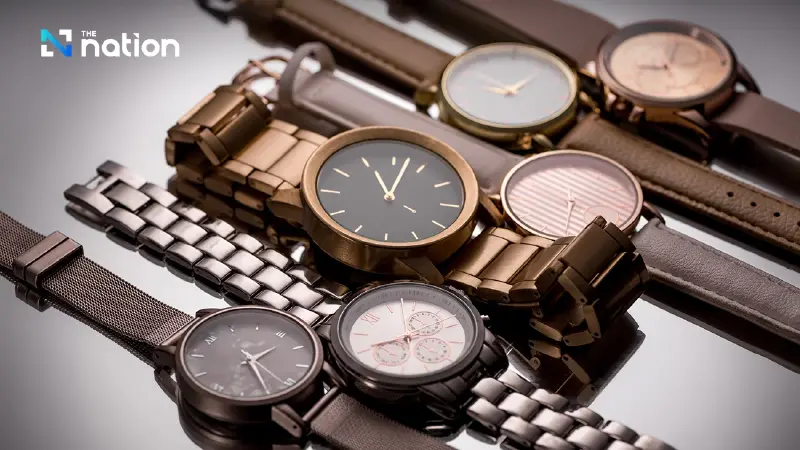


As Swiss brands struggle, Casio's dual strategy targeting both nostalgia and premium markets signals a seismic shift in horology's power balance
- Casio is challenging the traditional luxury watch market with a dual strategy that revives its "Casio Vintage" line to appeal to nostalgia and younger consumers, while simultaneously pushing into the premium sector with high-end G-Shock models.
- Instead of relying on centuries-old prestige like Swiss brands, Casio's approach focuses on "cultural storytelling," using pop culture collaborations and leveraging organic adoption by fashion communities to build contemporary relevance.
- This strategy is capitalizing on a shift in consumer priorities towards technological craftsmanship, authenticity, and sustainability, leading to sales growth for Japanese watchmakers while some Swiss competitors are in decline.
As Swiss brands struggle, Casio's dual strategy targeting both nostalgia and premium markets signals a seismic shift in horology's power balance.
The global luxury watch industry stands at a crossroads.
Whilst heritage Swiss brands grapple with declining sales, Japanese manufacturers are capitalising on a fundamental shift in consumer priorities—one that favours technological craftsmanship and cultural authenticity over centuries-old prestige alone.
At the heart of this transformation is Casio, whose recently unveiled strategy in Bangkok demonstrates how Japanese watchmakers are methodically dismantling conventional wisdom about what constitutes luxury in 2026.
The contrast in market performance is striking. Whilst Swiss mid-market stalwarts like Tudor and Oris have seen sales plummet by 34% and 23% respectively, Japan's "Big Three"—Citizen, Seiko, and Casio—are posting growth. Citizen's sales rose 2.3% to CHF 1.28 billion, whilst Casio achieved CHF 0.94 billion in annual timepiece revenue.
An A.T. Kearney survey reveals that 94% of younger luxury consumers are unwilling to spend more than $1,500 on a smartwatch, effectively leaving premium territory open for traditional watchmakers who can articulate a compelling value proposition.

Cultural Storytelling as Strategic Weapon
At a recent Bangkok event themed "Back In Time, Ahead In Style", Casio executives articulated a vision placing cultural resonance at the centre of their market approach.
The event transformed a warehouse into an immersive 1970s-1990s experience complete with Back to the Future and Stranger Things collaborations.

"We place great importance on cultural storytelling," explained Marie Yoshizawa, Brand Marketing Strategy specialist at Casio. "To resonate with today's young people, our Casio Vintage communications strive to convey the history and culture of a brand that has been loved and used by many for nearly 50 years."
Tomoaki Nakamura, regional general manager of Casio's Sales and Marketing Timepiece Division, added: "CASIO VINTAGE is positioned as more than a watch—it's a lifestyle statement for people who value reliability and heritage and express themselves through fashion."

Two Consumer Motivations
Mizuki Nomura, Brand Product Strategy specialist, identifies two key drivers behind vintage watch appeal: "The desire not to look like everyone else and to express one's individuality is timeless. The second is a sustainability perspective. Among younger generations, value appears to be shifting toward good products that can be used for a long time."

Shinji Saito, general manager of Product Planning, explained the brand's revival strategy: "Some models in the CASIO VINTAGE line began gaining popularity in Europe, so rather than chasing entirely new designs, we researched our archives and revived designs that would appeal to today's younger generation."

The company refined these heritage pieces "by applying colour schemes and band materials—such as Milanese mesh—that reflect current minimal, modern fashion trends, and by introducing collaboration models with well-known brands," Saito added.

Fashion Communities Drive Growth
Casio's relationship with fashion communities represents a curious evolution.
"When we first developed these watches, we focused on practicality and functionality, not fashion," Yoshizawa admitted. "But somehow fashion-conscious people and creative community discovered Casio Vintage and started wearing it, and that helped build its image as a fashion watch."
This organic adoption has become central to Casio's marketing approach, with the company now actively cultivating relationships through collaborations timed to cultural moments—including the Stranger Things collection launching alongside the series' final season.

Premium Push Continues
Simultaneously, Casio has aggressively pushed into premium territory with its G-Shock MR-G series and metal collections.
These timepieces feature hand-finished components and advanced functionality, offering what industry observers describe as "digital poetry"—a modern narrative competing directly with Swiss mechanical romanticism.
Central to this approach is what Saito describes as "universal value—convenience and practicality that can surprise and move people—no matter the era." When asked about the role of trends, he was emphatic: "Trends are truly the starting point of development."

Strategic Targets Through 2026
According to the Medium-Term Management Plan, Casio aims to increase its G-Premium net sales ratio from 15% to 30% by March 2026, expand its India and ASEAN presence from 14% to 18% of sales, and grow direct-to-consumer channels from 7% to 12%.
These metrics reflect broader industry challenges.
An A.T. Kearney study found only 23% of younger consumers are satisfied with luxury watch brands' social media efforts, whilst 50% would consider grey markets as alternatives to primary retail.
"Our customers are constantly sharing user-generated content on social media that praises Casio Vintage's functionality, quality, and durability," noted Yoshizawa, highlighting how the brand has turned this challenge into an advantage.

The Road Ahead
The luxury watch market of 2026 will be fundamentally different. Heritage alone no longer guarantees success; it must be paired with contemporary relevance and demonstrable value.
As Nakamura reflected: "For Gen Z and Gen Alpha, CASIO VINTAGE may be the watch their parents wore, but its iconic design and reliable quality align with their values and the way they dress today."

Yoshizawa framed the brand's long-term ambition: "We want to share the message that Casio Vintage will continue to offer style and value that transcend generations and borders—and that we aim to remain a 'companion in time,' by your side in everyday life."
The battle for horological supremacy is no longer about who has the longest heritage but who can most authentically connect with consumers who demand both substance and style—a shift that may permanently alter the industry's balance of power.
