
SCG seeks non-Hormuz feedstock as supply disruption hits operations
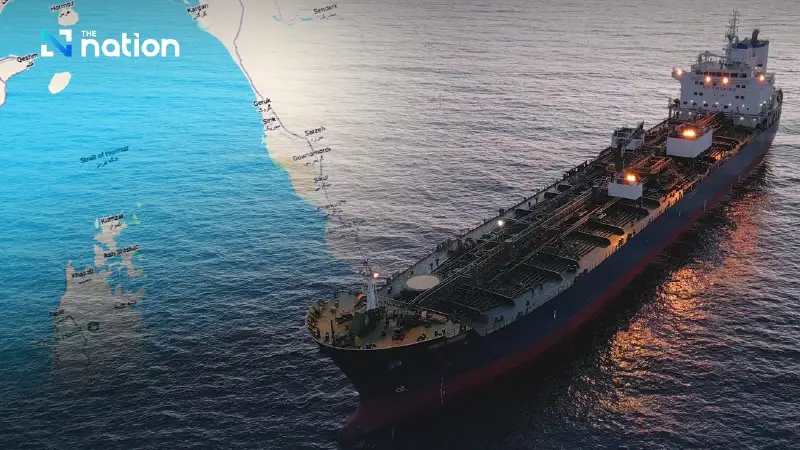


Middle East conflict disrupts SCG supply chain, forcing plant halt, force majeure declaration and urgent shift to alternative raw material sources
Siam Cement Group (SCG) is facing severe disruption to its supply chain after the closure of the Strait of Hormuz, forcing the company to suspend operations at part of its olefins production and accelerate a shift towards alternative raw material sources.
The crisis has affected between 50% and 60% of SCG’s feedstock supply, particularly key inputs such as naphtha and propane, which are essential for olefins production. As a result, the company has temporarily halted operations at its Rayong Olefins Company (ROC), a subsidiary within its chemicals business.
The disruption stems from the closure of the Strait of Hormuz — one of the world’s most critical routes for transporting oil and natural gas — which has constrained the flow of raw materials. Some shipments have been unable to reach their destinations as planned due to the ongoing conflict in the Middle East.
In response, ROC has declared force majeure to its trading partners and customers, citing circumstances beyond its control under contractual provisions.
Despite the disruption, SCG noted that ROC is a highly efficient facility that utilises automation and digitalisation technologies to manage costs effectively. Even so, the company estimates that the shutdown will increase costs by around 150 million baht per month.
Meanwhile, SCG’s other olefins plant, Map Ta Phut Olefins Company (MOC), continues to operate as normal, with adjustments made to redirect available feedstock from ROC to support production.
Speaking at the company’s annual general meeting on March 25, 2026, SCG president and CEO Thammasak Sethaudom acknowledged that the situation is placing significant pressure on the business, particularly the chemicals segment, which relies heavily on feedstock imports from the Middle East.
He described the closure of the Strait of Hormuz as one of the most serious challenges in recent years, given that 50-60% of the company’s raw materials are transported through the route. As supply disruptions intensified, ROC was forced to partially suspend operations and declare force majeure from March 6, 2026, in order to manage limited feedstock availability.
The situation has been compounded by logistical constraints, with two of SCG’s cargo vessels currently stranded in high-risk areas, further limiting short-term production capacity.
To mitigate the impact, SCG has moved quickly to secure feedstock from alternative sources that do not rely on the Strait of Hormuz.
Non-Hormuz sourcing strategy:
- The company has already secured three cargo shipments from alternative routes
- Additional negotiations are ongoing to expand supply sources
- Efforts are being made to diversify procurement away from high-risk geopolitical routes
At the same time, the Thai government is supporting SCG through diplomatic coordination aimed at facilitating the safe passage of the two stranded vessels out of high-risk zones. If successful, this could help restore production capacity more quickly.
Amid prolonged uncertainty, SCG has stepped up its risk management strategy by implementing comprehensive scenario planning. This covers a range of possible outcomes, from a rapid easing of tensions to worst-case scenarios, with the aim of maintaining business stability and financial liquidity under all conditions.
The company is also restructuring its supply chain through a “regional optimisation” approach, leveraging production strengths across different countries to spread risk.
Under this strategy:
- Vietnam is positioned as an export base benefiting from free trade agreements
- Thailand remains the hub for high value-added and green products
In parallel, SCG is accelerating the use of digital technologies to improve operational efficiency. This includes deploying artificial intelligence and automation systems to forecast demand, manage inventory and optimise logistics, enabling more precise allocation of limited resources during the crisis.
On the customer side, SCG has adopted a proactive communication strategy, providing advance notice and prioritising product deliveries, with domestic markets taking precedence to prevent shortages of plastic resins in downstream industries.
In the medium term, the company expects sustained pressure from rising energy costs to contribute to unavoidable inflation. In response, SCG is restructuring its energy usage, particularly by increasing the share of alternative fuels in its cement business, which currently stands at around 50% and is expected to rise further to reduce reliance on fossil fuels.
The group is also continuing with major overseas projects, including the Long Son Petrochemicals (LSP) complex in Vietnam. Although the petrochemical cycle remains in a downturn, the project offers flexibility in feedstock use and is currently developing an ethane enhancement project, expected to be completed in 2027, which could reduce costs by up to 200 million US dollars per year.
At the same time, SCG is streamlining its business portfolio by exiting or suspending non-performing operations that do not align with its long-term strategy. Most recently, the company has divested its stake in the NocNoc platform to its joint venture partner, allowing it to focus resources on high-growth sectors such as clean energy, high-performance materials and sustainability technologies.
Despite facing multiple pressures simultaneously, SCG emphasised its strong financial position, with more than 52 billion baht in cash reserves, providing a critical buffer against ongoing volatility.
The company also expressed confidence that, with the stability of the new government and prudent management, it will be able to navigate the current challenges and position itself for renewed growth once the industry cycle recovers.
