
AirAsia places record‑breaking 150‑aircraft Airbus order worth $19bn
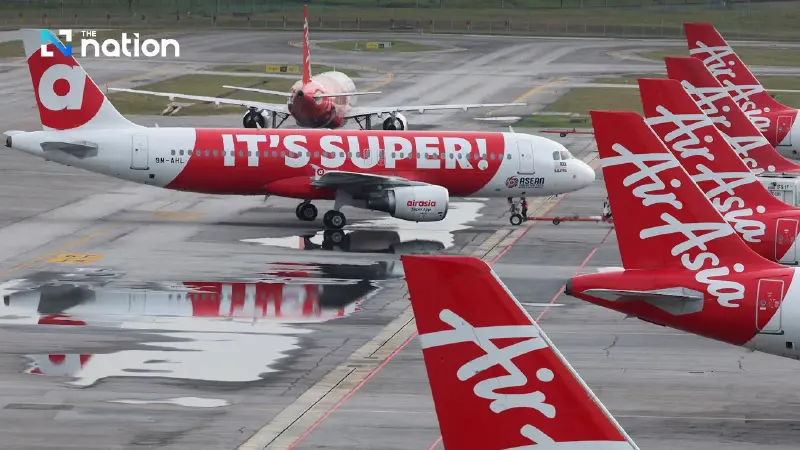


AirAsia X signs the world’s largest A220 purchase — 150 jets worth $19bn — as part of a bold plan to expand its cost‑efficient global network
AirAsia X Berhad, a subsidiary of AirAsia, has secured a 150‑aircraft order for the Airbus A220‑300, a deal valued at approximately US $19 billion (around THB 612 billion), making it the largest single order for the Airbus A220 aircraft in commercial aviation history.
This deal also includes an option for AirAsia to increase its commitment to a total of 300 A220 jets to accommodate future growth, marking a major step in the airline’s strategy to expand its cost‑efficient global network. The Airbus A220 is particularly well‑suited for AirAsia’s long‑term plans due to its ability to operate on shorter routes with low fuel consumption and high efficiency.
In making the announcement, AirAsia’s Group CEO, Tony Fernandes, hailed the purchase as a game‑changer for the airline. He emphasized that this order would not only expand AirAsia’s fleet but also transform the airline’s network by creating the world’s largest low‑cost carrier, connecting underserved markets and secondary cities worldwide.
Fernandes noted that AirAsia X aims to leverage the A220’s fuel efficiency and flexibility to expand its presence across more secondary cities throughout Asia and into Europe, the Middle East, and even Australia. The aircraft is specifically designed for routes where larger jets would be underutilized, such as shorter international routes and regional domestic connections.
AirAsia also points out the A220's lower operational costs, with its advanced aerodynamics and more efficient engines, offering savings of around 20 per cent compared to existing Airbus A320 models. This translates to reduced operating costs, which is crucial for the airline's profitability in the highly competitive low‑cost carrier segment. The A220 can carry up to 160 passengers, offering a comfortable cabin design that AirAsia will utilise to provide affordable travel without compromising on comfort.
As part of its strategy, AirAsia plans to phase out some older aircraft and replace them with a fleet of narrow‑body jets. The A220s will join the A321neo, A321LR, and A321XLR models, enhancing AirAsia’s ability to operate on long‑haul routes more efficiently, and providing an overall boost to capacity without the need for larger, more expensive aircraft.
Airbus is set to begin delivering these new jets to AirAsia starting in 2028, and over time, the new A220 aircraft will become a core part of AirAsia’s low‑cost network, connecting smaller cities to larger international hubs. The deal with Airbus will help AirAsia enhance its flexibility in scheduling flights and increase the frequency of services, particularly on routes where demand has increased but the capacity of larger aircraft would not be fully utilised.
The order for 150 jets underscores AirAsia’s long‑term vision to maintain its leadership in the budget airline sector, continuing to provide affordable yet high‑quality travel experiences across the globe. In addition to improving fuel efficiency, AirAsia aims to expand its routes and bolster its competitive edge with this investment.
“Why let a crisis go to waste? Every crisis brings an opportunity,” said Fernandes in Montreal, Canada. “We can’t control what’s happening in the Middle East, but we need to assess the situation, which probably won’t last for two years.”
This statement is a bold bet, even for a company that has previously made out-of-the-box decisions. However, the choice to not hedge against fuel prices has contributed to a 35% drop in AirAsia’s stock since the onset of the Iranian conflict, making it the worst-performing stock on the Bloomberg World Airlines Index during that period.
Nevertheless, Fernandes remains firm in his stance on fuel price hedging, predicting that oil prices will eventually decline.
“Of course, those who hedge right now are making profits, but in the long run, hedging never really works,” Fernandes said. “So, we will continue not to hedge like many American airlines, and we believe oil prices will go down.”
Fernandes also revealed that to raise funds for expanding its business, AirAsia is preparing to issue a large bond worth US$600 million (approximately THB 19.3 billion) and is negotiating with banks in Malaysia to refinance a “rather large” loan, which will help reduce interest costs. Additionally, he plans to meet with Canadian pension funds to attract further investors.
Meanwhile, the airline expects short-term pressure, with the company likely not meeting its original profit target. The company will officially announce its financial results soon, and annual revenue is expected to be close to the original forecast.
Furthermore, Tony Fernandes stated that AirAsia is preparing to launch a “new airline”, betting that expanding its business amidst the high fuel price pressure in the aviation industry will generate future returns.
Fernandes told Bloomberg that the announcement about the new airline will be made in the next 1–2 months, with AirAsia planning to transfer some of its aircraft to the new business. However, no further details were disclosed.
Earlier reports indicated that AirAsia had discussed expanding its business in Vietnam, as the company currently operates in several Asian countries, including Malaysia, Thailand, and Indonesia, with a fleet of around 250 Airbus aircraft, mostly narrow-body planes. The latest order will increase the number of aircraft awaiting delivery to about 550.
