
Convenience and Cross-Cultural Tastes Reshape Corporate Strategies in the Thai Seasoning Sector
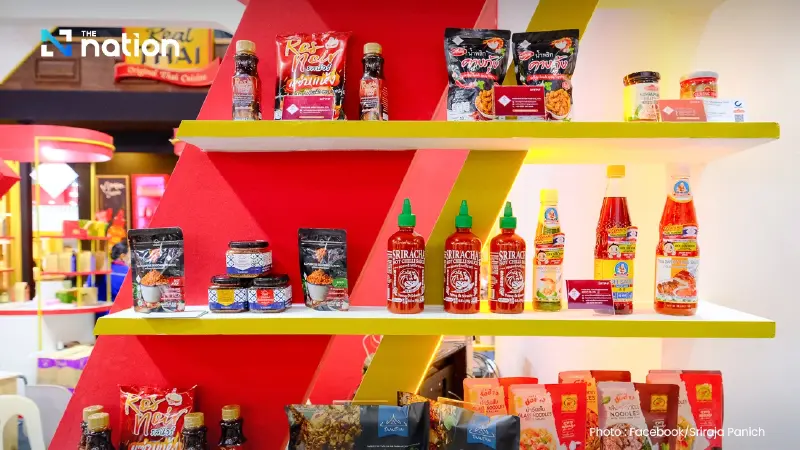


Legacy manufacturers at THAIFEX Anuga Asia 2026 adapt to demographic headwinds by decoupling business models from singular categories
- Thai seasoning companies are targeting time-poor urban consumers and single-person households with high-convenience, zero-prep-time products to adapt to modern lifestyles.
- In response to the global popularity of fusion foods, manufacturers are expanding their portfolios to include international flavor variants and aligning products with global standards to compete in mainstream Western markets.
- Legacy brands are abandoning reliance on single product categories, instead diversifying their portfolios, creating micro-segmented sub-brands, and using experiential marketing to engage younger demographics.
- A key export strategy involves bypassing traditional ethnic grocery stores to secure placement in mainstream Western supermarkets by specializing in high-margin, globally appealing products like chili sauce.
Legacy manufacturers at THAIFEX Anuga Asia 2026 adapt to demographic headwinds by decoupling business models from singular categories.
The accelerating shift towards urbanisation, the expansion of the "home cooking" economy, and the global popularity of cross-cultural fusion foods are driving radical strategic re-engineering among legacy Thai food manufacturers.
The high-stakes nature of this restructuring is underscored by macro market data. The domestic Thai seasonings and sauces market is projected to reach 58.5 billion baht ( $2.8 billion) in 2026, while the global sauces, dressings, and condiments market is estimated at a staggering $214 billion.
To capture a larger slice of these expanding sectors, exhibitors at the THAIFEX Anuga Asia 2026 trade exhibition reached a clear commercial consensus: relying on a singular historical category or a traditional, long-form cooking demographic is no longer viable.
To sustain growth, domestic FMCG conglomerates are shifting towards micro-segmented portfolios, premiumisation, and high-convenience alternatives engineered for time-poor urban consumers.
Micro-segmentation and cross-border alignment
For long-standing market players like Chua Hah Seng, mitigating intense domestic competition has prompted a structural migration towards price-and-use micro-segmentation.
The company has systematically unbundled its traditional corporate identity into distinct sub-brands tailored to specific operational niches, decoupling premium consumer lines from cost-optimised wholesale offerings.

"In 2026, our focus is on a 360-degree corporate upgrade to boost operational efficiency across our supply chain," notes Kanatpong Wattanaseriwongkul, general manager of Chua Hah Seng Food Product Co., Ltd. "By aligning our manufacturing standards with rigorous international compliance benchmarks, we are systematically positioning our new multi-purpose innovations to transition from local staples into highly scalable global exports."
Simultaneously, traditional above-the-line advertising is being abandoned in favour of collaborative experiential marketing.
To bridge the gap between legacy heritage and modern consumer touchpoints, the company is leveraging offline-to-online restaurant collaborations in urban centres, driving mass-market organic engagement across densely populated metropolitan areas.

The convenience shift: Targeting single-person households
The structural reality of Thailand’s demographic transition into an ageing, urbanised society has forced ambient food manufacturers to alter their core formats.
Companies that have historically spent decades dominating single categories—such as Gogi, which has anchored its business model on tempura flour since 1978—are diversifying into the complete seasoning market.
Gogi’s new focus marks a major pivot toward addressing the "meal-nimalist" lifestyle: young metropolitan professionals, condominium dwellers, and single-person households who demand zero prep time and minimal clean-up.
By embedding functional convenience directly into its delivery format, the brand aims to insulate itself from slowing core categories and successfully create premium sub-categories driven by urban consumer data.

Culture food experiences and cross-cultural menus
This push to capture every culinary moment is further illustrated by industry heavyweight Thaitheparos Public Company Limited (SET: SAUCE).
The company has executed a massive portfolio expansion by introducing 16 new stock-keeping units (SKUs) simultaneously, a move designed to keep the heritage brand relevant among younger demographics through "Culture Food Experience" and "Collaboration Marketing."
Varanya Winyarat, deputy managing director of Thaitheparos, highlights that the surge in social-media-driven home cooking and fusion food trends has fundamentally altered consumer behaviour.
In response, the firm has split its latest rollout into two distinct ready-to-cook strategic pipelines: one focused on street-food-inspired bases designed to eliminate prep work and another dedicated to international fusion variants.

This strategy directly reflects how consumer tastes are rapidly blending across borders, forcing local brands to compete directly in the broader global flavour market.
Bypassing ethnic niches for mainstream global retail
While legacy players adapt to changing domestic habits, export-led manufacturers like Exotic Food Public Company Limited (SET: XO) are rewriting the playbook for cross-border expansion.
Generating roughly 2 billion baht in annual revenue across more than 80 countries, the producer has focused its long-term strategy entirely on high-margin product specialisation and mainstream market dominance.
Unlike traditional Thai exporters that historically limited distribution to low-risk, diaspora-focused Asian grocery stores abroad, Exotic Food committed to securing direct placement on the shelves of mainstream Western supermarkets over two decades ago—a play that has yielded dominant market shares in core European countries.
"The global sauce and condiment market remains vast, yet no Thai brand has historically scaled to match the multi-billion-dollar revenues of Western global giants," says Jittiporn Jantarach, CEO of Exotic Food. "By systematically trimming lower-margin categories to focus almost exclusively on our chilli sauce segment—which now accounts for 89% of our total revenue—we aim to more than double our annual sales to 4.5 billion baht within the next decade."

Analytical Outlook: Market Headwinds vs. Strategic Innovation
As witnessed at THAIFEX 2026, the global seasoning landscape is evolving through cross-cultural blending and a pronounced consumer preference for natural, clean-label ingredients.
For Thai brands, the path to maintaining international competitiveness requires navigating significant domestic hurdles, including strict regulatory crackdowns on sodium levels and steep agricultural import tariffs that inflate raw component costs.
The corporate strategies on display in Bangkok demonstrate that growth in the global seasoning landscape no longer depends on expanding production volumes of raw, unrefined cooking ingredients.
Instead, the future of the sector lies in corporate agility: the capacity to dissect urban consumer data, navigate regulatory hurdles regarding ingredient formulations, and deliver experiential convenience directly to a shifting global demographic.
