
PTT Group Agrees Fuel Supply Deal with Lao State Fuel Company


State-backed PTT moves to solidify its role as a regional energy anchor amid worsening Middle East supply shocks and depleting domestic reserves
- Thailand's state-backed PTT Group has signed a formal agreement to supply petroleum products to the Lao State Fuel Company (LSFC).
- The deal aims to stabilize the fuel supply chain for the landlocked nation of Laos.
- For Thailand, the agreement is a strategic move to solidify its role as a regional energy supplier amid global supply shocks and declining domestic reserves.
- The pact has official policy backing from both governments to shield the sub-region from global energy market volatility.
State-backed PTT moves to solidify its role as a regional energy anchor amid worsening Middle East supply shocks and depleting domestic reserves.
Thai state-backed energy conglomerate PTT Group has finalised a cross-border petroleum supply agreement with the Lao State Fuel Company (LSFC). The deal is part of a broader push to stabilise the fuel supply chain in neighbouring Laos.
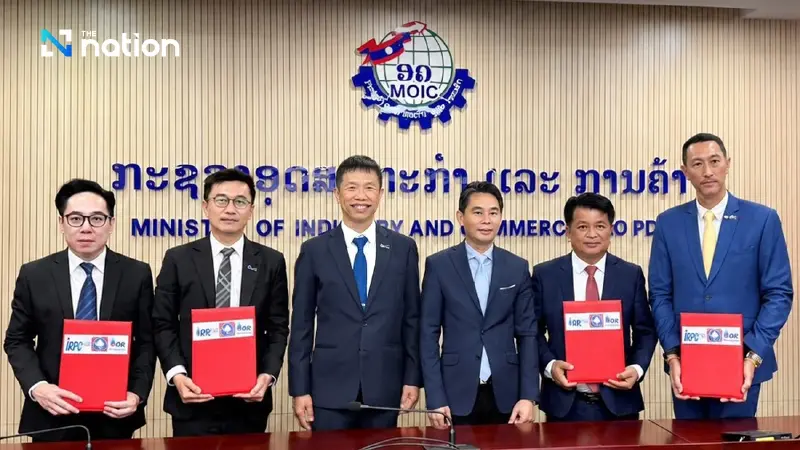
The agreement, signed at the Ministry of Industry and Commerce in Vientiane, establishes a formal commercial framework for PTT to export standardised petroleum products to the landlocked nation.
The signing ceremony was attended by senior figures from both jurisdictions, including Dr Manothong Vongsay, Laos’s deputy minister of Industry and Commerce, and Pirun Krimwongrut, senior executive vice president of PTT’s Downstream Petroleum Business Group Strategy.
The transaction involves a coordinated effort across PTT’s core subsidiaries. Key signatories included Viengthong Vongthavilay, director of LSFC; Songpon Thepnumsommanus, senior executive vice president of International Business at PTT Oil and Retail Business (OR); and Kwanchai Luengchaichan, senior manager of Petroleum Business at IRPC. While framed as a bilateral supply pact, the agreement underscores a strategic pivot for Thailand’s energy sector.
Facing acute geopolitical vulnerabilities in 2026, Bangkok is increasingly looking to deepen structural energy ties within the ASEAN bloc.
The fuel pact comes at a critical time for Thailand as the country grapples with structural shifts and supply vulnerabilities:
Maritime Chokepoint Vulnerability: Following the closure of the Strait of Hormuz, Thailand—which imports roughly 50% of its crude oil and 30% of its liquefied natural gas (LNG) via that route—faces heightened pricing and import pressures.
Depleting Domestic Reserves: With mature fields in the Gulf of Thailand naturally declining, the Department of Mineral Fuels has been forced to fast-track exploration into the deep waters of the Andaman Sea via its 26th Petroleum Concession Round.
Bilateral Trade Lever: By positioning itself as a reliable downstream supplier to neighboring economies like Laos, Thailand aims to maintain trade leverage and operational scale during a period of volatile global refining margins.
The operations will be executed under a strict commercial arrangement. Both the Thai Ministry of Energy and Lao state authorities have provided policy backing for the deal, signalling a shared intent to shield the immediate sub-region from broader global energy shocks through transparent, long-term trade mechanisms.
