
PTT Charts Course as Global LNG Player With 15m-Tonne Vision
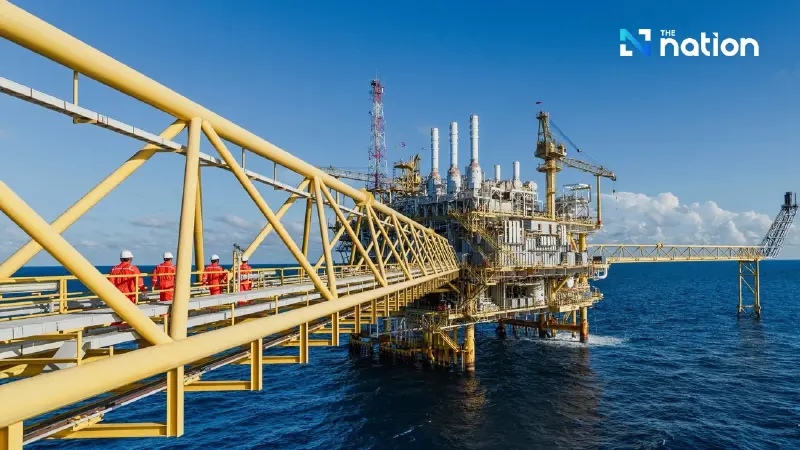


Thailand's state energy giant sets its sights on 15 million tonnes of LNG by 2035, as CEO Dr. Kongkrapan outlines a sweeping global trading strategy amid geopolitical turbulence
- Thailand's state-owned energy company, PTT, is launching a strategic pivot to become a top-tier global liquefied natural gas (LNG) trader.
- The company has set a target to handle 10 million tonnes per annum (MTPA) by 2030, with a long-term vision of reaching 15 MTPA by 2035.
- This shift transforms PTT's role from primarily a domestic importer to a global trader with a diversified portfolio of supply agreements and equity stakes in supply projects.
- The strategy is driven by a need to enhance long-term competitiveness and national energy security amid geopolitical instability and volatile prices.
Thailand's flagship state energy company is pushing far beyond its domestic mandate, setting an ambitious target to become a top-tier global LNG trader — even as geopolitical shocks and government price controls weigh on its bottom line.
PTT, Thailand's state-owned energy conglomerate, announced on Wednesday a bold strategic pivot to establish itself as a world-class liquefied natural gas (LNG) trader, with a target of handling 10 million tonnes per annum (MTPA) by 2030 and 15 MTPA by 2035 — a move that would transform the company from a domestic energy supplier into a significant force in global gas markets.
Dr Kongkrapan Intarajang, PTT's Chief Executive Officer, laid out the vision at a press conference on Wednesday, framing the LNG ambition as central to the group's long-term competitiveness and energy security strategy.
"The world's 'pocket money' for development is diminishing," Dr Kongkrapan said. "When energy prices rise from $60 to over $100 per barrel, capital that should be earmarked for national development and economic stimulation is instead consumed by basic energy costs."

A pivot from importer to trader
PTT's LNG strategy marks a fundamental shift in how the company operates in global energy markets. Rather than acting primarily as a buyer to meet Thailand's domestic gas demand, the group intends to build a diversified portfolio of Sale and Purchase Agreements (SPAs) spanning long-term, short-term, and spot markets while also pursuing direct equity stakes in global LNG supply projects.

The company is targeting supply from the United States, Australia, and Malaysia and will leverage its existing trading offices in London, Houston, Abu Dhabi, and Singapore to execute real-time global arbitrage.
Contract structures mixing Free-On-Board (FOB) and Destination Ex-Ship (DES) terms will provide the flexibility needed to redirect cargoes across markets as price differentials shift.
The strategy takes on added urgency in the current environment. Geopolitical instability surrounding the Strait of Hormuz — through which roughly 20 per cent of global LNG trade passes — has exposed the vulnerabilities of supply chains reliant on a single transit corridor.
PTT has responded by cutting its dependence on crude oil transiting the Strait of Hormuz from 60 per cent to 30 per cent, pivoting sourcing to West Africa, the Red Sea, and the United States.
"In a crisis, the role of the state must lead," Dr Kongkrapan said. "Our priority is to ensure the country does not run out of energy, even if we must bear the additional financial costs."

A strategy built on three pillars
PTT's global LNG expansion rests on what the company describes as a triangular asset philosophy of scale, diversification, and flexibility.
It is pursuing aggressive SPA volumes across market segments, broadening its geographic footprint in key trading hubs, and deploying hybrid contract indexation — linking supply agreements to both competitive gas indices and traditional oil benchmarks — to navigate volatile pricing environments.
The LNG push sits within a wider corporate transformation programme. PTT is simultaneously investing in an AI and digital transformation drive, tightening its governance frameworks, and pursuing a net-zero emissions target by 2050 – objectives the company says are complementary rather than competing.

Petrochemical consolidation adds another strategic pillar
Alongside the LNG pivot, PTT is leading a consolidation effort in Thailand's petrochemical sector to counter the threat of Chinese overcapacity.
The group is facilitating a strategic collaboration between PTT Global Chemical (GC) and SCG Chemicals (SCGC), integrating infrastructure including storage tanks and pipelines to maximise returns and strengthen supply chain resilience.
A five-year capital expenditure commitment of 200,000 million baht ($5.6 billion) has been set aside to fund these strategic growth nodes, infrastructure upgrades, and the group's decarbonisation pathway through 2030.

Dividends and credit rating maintained
Despite absorbing significant financial pressure as a state buffer — including a monthly interest burden of roughly 600 million baht ($16.7 million) from liquidity support provided to stabilise domestic fuel prices — PTT's credit standing remains intact.
Ratings agency Moody's recently revised the company's outlook in line with Thailand's sovereign baseline.
Shareholders approved a total dividend of 2.30 baht per share at this year's Annual General Meeting, comprising a regular dividend of 2.10 baht and a special dividend of 0.20 baht, representing a yield of 7.2 per cent based on full-year 2025 figures.
For the full year 2026, PTT is guiding for higher upstream sales volumes, improved petrochemical spreads, and stronger Singapore gross refining margins, though these gains are expected to be partially offset by elevated spot LNG procurement costs and the continued impact of domestic fuel price regulations.

Q1 profit climbs 10 per cent year-on-year
PTT Group reported a net profit of 25,738 million baht ($716 million) for the first quarter of 2026, a 10 per cent increase from 23,315 million baht in the same period a year earlier.
The result was bolstered by the group's internal efficiency programme, Mission X, which delivered gains of approximately 3,000 million baht in the quarter through cost reductions and process improvements.
Gas and trading operations were the largest contributor to group profit at 38 per cent, followed by exploration and production at 31 per cent. The Q1 figures were previously reported.
