
“For skin, not injections” — Cosmetics sold as injectable skin drugs seized
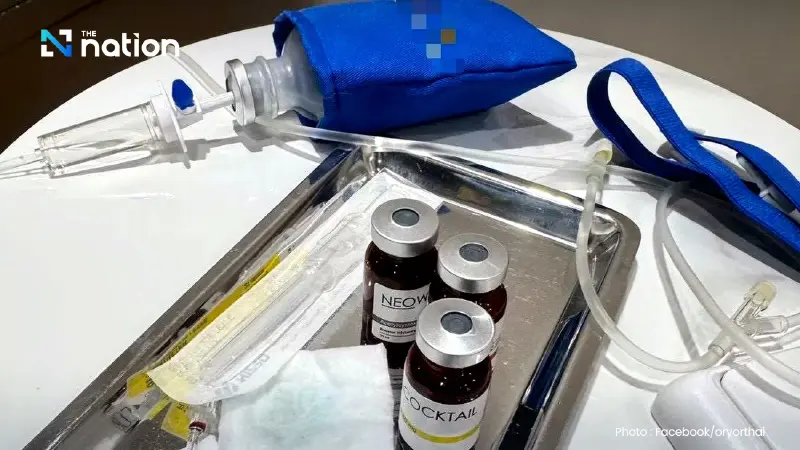


Thai police and the FDA seize over 35,000 illegal cosmetics, drugs and medical devices worth more than 22 million baht
Thailand’s Central Investigation Bureau (CIB) and the Food and Drug Administration (FDA) have raided a suspected fake cosmetics network accused of selling misused beauty products to aesthetic clinics for injection treatments.
Authorities seized 35,645 items, including cosmetic products, unregistered drugs and medical devices, with a total value of more than 22 million baht.
On May 20, 2026, Pol Lt Gen Nattasak Chaowanasai, commissioner of the Central Investigation Bureau, ordered Pol Maj Gen Khongkrit Lertsittikul, commander of the Consumer Protection Police Division (CPPD), and Pol Col Weeraphong Klaithong, superintendent of Sub-Division 4 of the CPPD, to lead the operation in cooperation with the FDA.

Officers armed with court warrants searched three locations: an aesthetic clinic on Kanlapaphruek Road in Bang Bon subdistrict, Bang Bon district, Bangkok; a product storage site on Nawamin 111 Alley in Nawamin subdistrict, Bueng Kum district; and an import and distribution site operating from a house in Moo 17, Bang Ramat subdistrict, Taling Chan district.
The operation followed complaints from members of the public and the FDA asking Sub-Division 4 of the CPPD to investigate sales of Neowhite cosmetics.

The product was allegedly being misused by mixing it with saline solution and injecting it into the body. It was also advertised for sale on social media and distributed to aesthetic clinics.
Investigators found that the product owner had hired a company in Thailand to manufacture a glutathione-type product but registered it as a cosmetic because cosmetic notification is easier than drug registration.
The products were allegedly sold to aesthetic clinics as glutathione medicine, with false claims that they had been imported from overseas. Clinics then allegedly used them for skin-nourishing injections for customers.
Investigators from Sub-Division 4 of the CPPD will summon those involved to acknowledge charges.
In the case of the importer, the alleged offences fall under the Cosmetics Act BE 2558 (2015). The offences include importing cosmetics without Thai-language labels, importing cosmetics with false labelling, importing cosmetics with incomplete mandatory label information, importing products without passing through an FDA checkpoint, importing cosmetics that do not match their registered notification details, and importing fake cosmetics falsely presented as properly notified products.
In cases involving the sale of fillers without a licence and without product-detail notification, the alleged offences fall under the Medical Device Act BE 2551 (2008) and its amendments. These include selling medical devices without authorisation and selling medical devices that have not been properly licensed or registered.
For unregistered drugs and unauthorised drug sales, the alleged offences fall under the Drug Act BE 2510 (1967), including selling medicine without a licence and selling drugs that have not been registered.
FDA secretary-general Supattra Boonserm said the operation found that offenders had used the route of “cosmetic notification” instead of drug registration because the approval process was easier.
They then allegedly advertised and sold the products to aesthetic clinics, claiming they were imported products or injectable skin vitamins.
She warned that using such products incorrectly or for unintended purposes was extremely dangerous because they had not been assessed for safety for injection into the body.
Supattra urged operators to comply with the law, warning that the FDA would take legal action to the fullest extent against violators.
She also advised aesthetic clinics, hospitals, service providers and customers to carefully check labels and the use of products in ampoule or vial form.
She stressed that any product injected into the body is considered high-risk and must undergo strict FDA registration and assessment for quality, safety and efficacy.
Pol Lt Gen Nattasak said the operation was aimed at preventing possible harm to the public.
He said cosmetics are designed to be “applied”, not “injected”.
Injecting products that have not met safety standards into the body, he warned, puts consumers at risk of bloodstream infection or severe allergic reactions without their knowledge.


