
FDA recalls canned fish after factory fails GMP checks
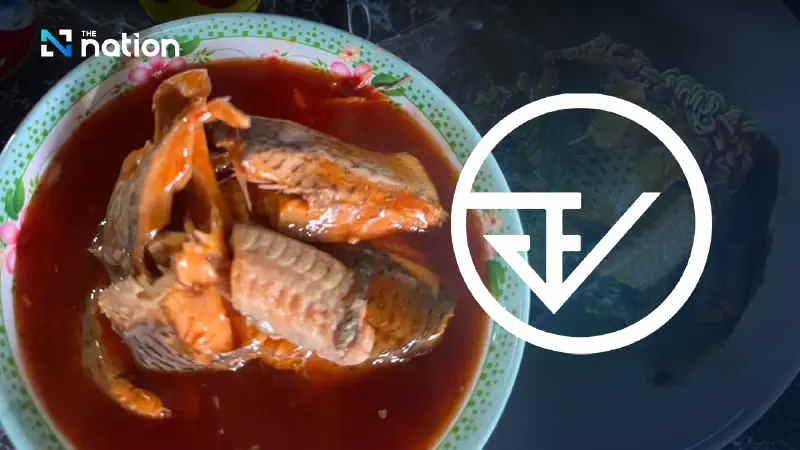


Thai FDA orders a recall and seizes more than 13,000 canned fish products after a Samut Sakhon factory fails GMP checks.
Thailand’s Food and Drug Administration has ordered a market recall and seized more than 13,000 canned fish products after an inspection found that a Samut Sakhon factory failed Good Manufacturing Practice standards and had produced canned fish using a fish species that may not match the label.
The action follows a recent canned fish scandal that went viral in Thailand after a consumer complained online that a product labelled as mackerel in tomato sauce appeared to contain tilapia instead.
The case has triggered wider public concern because canned fish is a common low-cost staple for many households, while tilapia is a cheaper freshwater fish than mackerel. Public reporting has identified the case as involving tilapia allegedly found in products labelled as mackerel.
FDA inspects Samut Sakhon factory
Pharmacist Supattra Boonserm, secretary-general of the FDA, said on Tuesday (May 5) that the agency had coordinated with the Samut Sakhon Provincial Public Health Office to inspect the factory producing the canned fish brand in question.
The inspection covered food production quality and the raw materials used, including whether they were safe, of good quality and consistent with what had been declared on the food label.
Officials inspected Sri Rungngam Food Co Ltd, located at 89/98 Moo 2, Kalong subdistrict, Mueang Samut Sakhon district, Samut Sakhon province. The company’s official English registration name is listed as Sri Rungngam Food Company Limited.
More than 13,000 cans seized
The inspection found that the production facility did not meet GMP standards for food production. Officials also found finished products using another type of fish, in line with media reports.
The FDA ordered the company to recall all products from the market and seized products from the brand reported in the news, as well as other brands found at the factory.
A total of 12,760 cans were seized at the production site, while another 250 cans were found and seized at retail outlets, bringing the total to 13,010 cans.
Fish samples sent for testing
The FDA has also coordinated with the Department of Fisheries to collect samples of the canned fish for testing to determine which species was used in production.
The test results are still pending.
The issue has become a major talking point in Thailand in recent days after the viral complaint raised questions over whether consumers had been misled by products labelled as mackerel while allegedly containing tilapia.
Mislabelled raw materials could carry jail term
Supattra said that if a product used a fish species that did not match the information declared on the food label, the case could fall under the offence of producing food that does not correspond to its label, or providing incorrect labelling information.
Using raw materials that do not match what was declared carries a penalty of six months to 10 years in prison and a fine of 5,000 to 100,000 baht.
Incorrect food labelling carries a fine of up to 30,000 baht and imprisonment of up to six months.
Prime Minister’s Office Minister Supamas Isarabhakdi has also ordered consumer protection officials nationwide to act against producers using tilapia in products labelled as mackerel.
