
PTTEP forecasts record sales, braces for Middle East energy risks
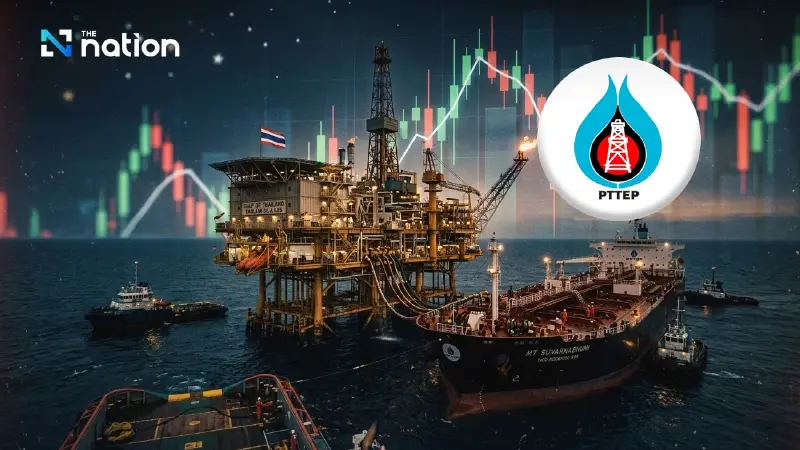


PTTEP expects its average sales volume in the second quarter of 2026 to reach a new record high of around 560,000 barrels of oil equivalent per day.
PTT Exploration and Production Plc (PTTEP) expects its average sales volume in the second quarter of 2026 to reach around 560,000 barrels of oil equivalent per day, setting a new record high after achieving sales of 553,000 barrels of oil equivalent per day in the first quarter.
Sermsak Satchawannakul, Senior Vice President of the Finance Division at PTTEP, said the company’s second-quarter performance is expected to be supported mainly by higher crude oil loading in Africa and stable gas production in the Gulf of Thailand, as the company continues to respond to domestic energy demand.
Dubai crude prices in the second quarter of 2026 are expected to remain highly volatile, moving in a range of US$90-110 per barrel, due to unrest in the Middle East, which has affected energy supply and transport routes.
Natural gas prices are expected to average around US$6 per MMBtu. Meanwhile, unit cost in the quarter may rise to around US$30 per barrel of oil equivalent, compared with US$28 in the first quarter, as the company gradually begins some maintenance shutdowns that had been postponed from earlier in the year.
Sermsak said PTTEP continues to target significant sales volume growth this year, with average sales expected to reach 560,000 barrels of oil equivalent per day, up from 510,000 barrels of oil equivalent per day in the previous year.
Key growth drivers include the full-year recognition of sales volumes from projects acquired in 2025, including the SK408 project in Malaysia, the G1/61 Erawan project, the Arthit project in the Gulf of Thailand and projects in Abu Dhabi, United Arab Emirates.
As a result, the company is maintaining its earnings before interest, taxes, depreciation and amortisation (EBITDA) margin target at around 70%, while managing unit cost for the full year at approximately US$30 per barrel of oil equivalent.
PTTEP is also continuing its risk management strategy. Although the company recorded a hedging loss in the first quarter of 2026, most of it was caused by mark-to-market adjustments. The company has hedged only 13% of its total sales volume for 2026, mainly to manage cash flow risk.
Regarding the UAE’s announcement that it would withdraw from OPEC and OPEC+, Sermsak said the move would have an indirect impact and that the company would continue to monitor how it affects the direction of crude oil and gas prices.
He said PTTEP remains focused on investment in petroleum resources in Malaysia and neighbouring countries, while also continuing to invest in Algeria.
At present, production and sales volume from the Middle East account for around 10% of the company’s portfolio, mainly from Oman. In the UAE, PTTEP has four projects that are currently under exploration and construction.
On energy security, Sermsak said PTTEP continues to play a key role in securing energy supply for Thailand. The company currently supplies natural gas equivalent to 57% of Thailand’s demand and is focused on managing its reserve life at 5-7 years through just-in-time investment, ensuring continuous and efficient production amid global energy market volatility.
In addition, PTTEP plans to issue five-year US-dollar bonds with an annual interest rate of 4.5% from May 18-21 via the Paotang application. Proceeds will be used to refinance maturing bonds and improve the efficiency of the company’s financing cost management.
For the first quarter of 2026, PTTEP reported a net profit of 11.84 billion baht, down from the same period last year and 32% lower than the previous quarter. The decline was mainly due to a hedging loss of 8.8 billion baht.
This came despite a 3% quarter-on-quarter increase in sales volume to 553,000 barrels of oil equivalent per day and an 8% rise in average selling price from the previous quarter, in line with oil prices. Unit cost fell by 13%, while the company is preparing to recognise revenue from new projects on an ongoing basis.
PTTEP said its first-quarter sales volume was the highest in its history, driven by accelerated domestic gas production to strengthen Thailand’s energy security amid geopolitical tensions and volatile global energy prices.
Although the company recognised a loss from oil price hedging, most of which was non-cash, PTTEP said it continued to maintain strong profitability and a solid financial position, while expanding its overseas investment portfolio and preparing for future growth.
