
Stablecoins drive ASEAN remittances and account for over 50% of digital asset flows
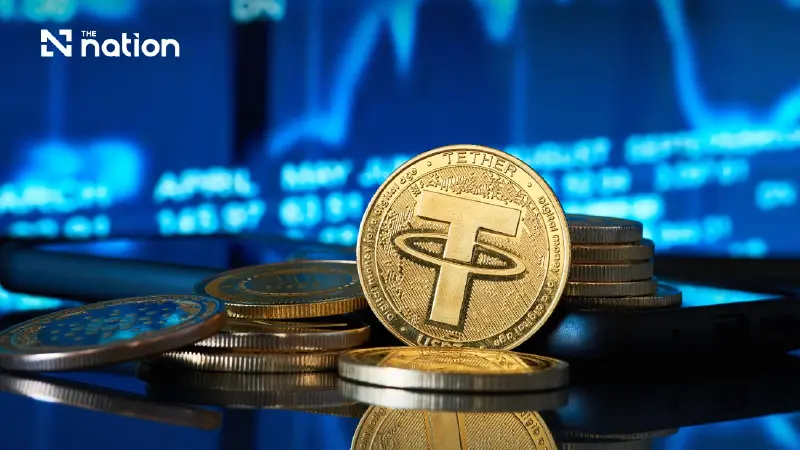


OECD’s Asia Capital Markets Report 2026 highlights the growing role of stablecoins in ASEAN, from cross-border remittances and liquidity management to DeFi access.
- Stablecoins account for more than 50% of all digital asset flows in ASEAN countries, a share which has been increasing.
- They are a key driver for international remittances in the region by providing a cheaper, faster, and less volatile alternative to traditional money transfer channels.
- Other factors fueling their high usage include hedging against local currency fluctuations, facilitating cross-border transactions, and providing access to decentralized finance (DeFi).
- The region's young, tech-savvy population and growing internet user base are key demographic factors supporting stablecoin adoption.
The OECD’s Asia Capital Markets Report 2026 shows that Asian capital markets continued to face pressure from geopolitical conflicts and trade tariff policies from 2025 into early 2026, while still playing an important role in global fundraising.
At the same time, the report reflects the rapid growth of digital asset markets in the region, particularly stablecoins, which are playing an increasingly important role in cross-border remittances, liquidity management and access to digital financial services.
Stablecoins have become especially important for international remittances within ASEAN, particularly as demand for cross-border transactions continues to rise.
One key factor is their role as an alternative channel that can reduce money transfer costs, especially in high-cost corridors. Stablecoins, particularly Tether (USDT), can effectively replace traditional remittance channels in such cases.
Stablecoins are also less price-volatile than other digital assets because their value is pegged to reference assets such as fiat currencies. This makes them more suitable for value transfer and payments.

Why stablecoins are gaining popularity in ASEAN
The growth of stablecoins in ASEAN has been supported by several factors. They provide a low-cost channel for international money transfers, have lower price volatility than other digital assets, and can be used as a hedge against fluctuations in local currencies in emerging markets.
They can also facilitate cross-border transactions in areas with capital controls, act as a bridge between fiat money and other digital assets, and support trading, lending and liquidity activities within the decentralised finance, or DeFi, ecosystem.
Another key factor is ASEAN’s demographic structure. The region has a rapidly growing internet user base and a young, tech-savvy population that is open to decentralised financial systems.
Data indicate that stablecoins accounted for at least 50% of all digital asset flows in ASEAN countries during 2020-2022. That share increased further after the digital asset market entered a downturn in 2022.
Factors supporting the high usage of stablecoins include their ability to lower cross-border transfer costs, lower price volatility, use as a hedge against currency risks, function as a basic tool for accessing DeFi systems, and demand from retail investors seeking new opportunities in digital asset markets.
Retail investor participation in ASEAN has also been driven by speculation and fear of missing out, or FOMO, with stablecoins serving as one of the key tools enabling access to such activities.
Data show that in 2025, Asia accounted for 30% of global stablecoin trading activity, reflecting the growing acceptance and popularity of stablecoin usage across the region.
Although the data do not identify which country uses stablecoins the most as a hedge against inflation or currency risk, they show that Vietnam stands out most clearly in terms of digital asset activity relative to the size of its economy.
During 2024-2025, Vietnam recorded digital asset inflows equivalent to as much as 55% of GDP. It was also among the world’s top 10 countries for crypto adoption in 2024.
At the same time, the data show that crypto activity in countries such as Pakistan and Cambodia is linked to reliance on foreign currencies, digital channels for remittances and limitations in conventional financial systems.
Why Vietnam has such a high level of digital asset transactions relative to GDP
Several key factors explain why Vietnam’s digital asset inflows reached 55% of GDP during 2024-2025.
1. Smaller GDP than larger economies
When digital asset transaction values are compared with a GDP base that is still smaller than those of major economies, the resulting ratio appears higher than in many countries with larger economies.
2. Reliance on digital channels and foreign currencies
Vietnam has long relied on digital channels and foreign currencies for transactions and payments, and digital assets can meet these needs.
3. High crypto adoption
Vietnam ranked among the world’s top 10 countries for crypto adoption in 2024, reflecting widespread use among the public.
4. Supportive demographics
The country has a rapidly growing internet user base and a young, tech-savvy population interested in participating in decentralised finance.
5. Demand for international remittances
Digital assets, especially stablecoins, are being used as an alternative channel for sending money home because they are cheaper and faster than traditional methods.
6. Legal and policy clarity
Vietnam has pushed forward the Digital Technology Industry Law, which comes into force in 2026, to systematically regulate and promote the sector.
The data show that stablecoins are not used only for digital asset trading. They also play an important role in international remittances, hedging against currency volatility, facilitating cross-border transactions and supporting activities within the DeFi ecosystem.
With stablecoins accounting for more than 50% of digital asset flows in ASEAN, they have clearly become an important component of the region’s digital financial system.
